Rest starts with the room
10 Affordable Bedroom Upgrades for a Cozier Room
Make the bedroom warmer and more restful with better light, softer layers, useful storage, and changes that do not require a full makeover.
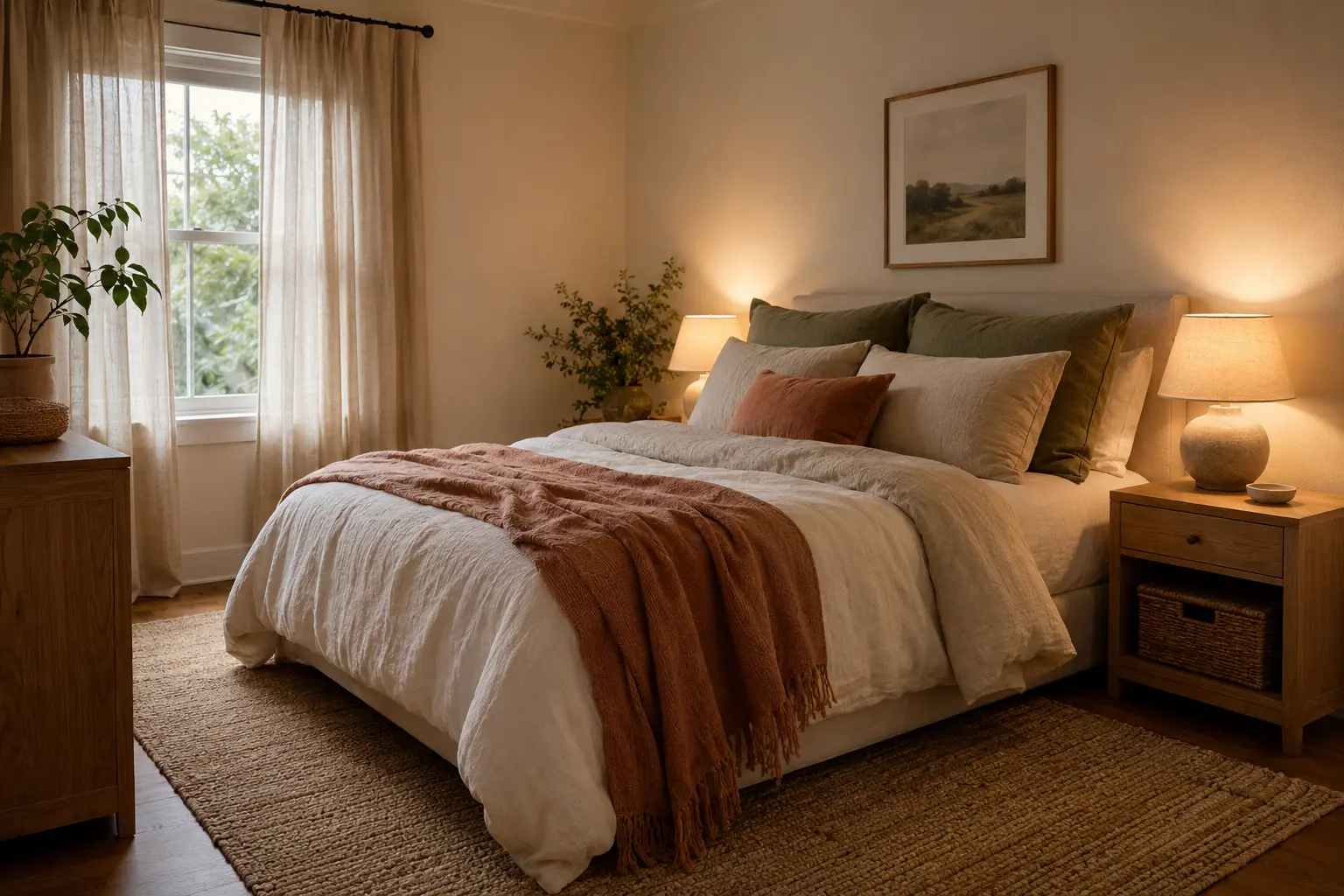
A cozier bedroom does not require replacing all the furniture. The most noticeable improvements usually come from warmer light, better textile layers, less visible clutter, and a calmer arrangement around the bed. Work through the room in that order so each purchase solves a clear comfort problem instead of adding another decorative object.
Spend in the order the room needs
Planning examples below are illustrative, not product tests or current price quotes.
Identify the problem at bedtime
Use the room for a normal evening before making a shopping list. Note whether the main frustration is glare, nowhere to put a glass, difficult access to clothing, or bedding that feels uncomfortable. A decorative throw will not correct an exposed bulb at eye level. Choose one problem, photograph the current arrangement for your own comparison, and move what you already own before adding another object.
An illustrative $100 spending plan
Treat $100 as a spending ceiling, not a promise about current prices. You might reserve $40 for the main comfort issue, $30 for task lighting, $20 for a small storage fix, and $10 for returns, delivery, or a missing fitting. If bedding is already comfortable, keep that $40 unspent. Check actual prices and total checkout costs before choosing products; the point is to fund the problem rather than complete a decorative shopping list.
Test bedside furniture with a cardboard footprint
Mark the proposed nightstand on the floor using its full width and depth. Open nearby drawers and wardrobe doors, walk around the bed, and check the route in low light. Measure from the floor to the mattress top, then compare it with the surface height you find comfortable for reaching a phone or glass. A slim top is useful only if the base and cables also stay outside the walking route.
Review after a week
Keep packaging until you have tried the change through ordinary mornings and evenings. Did you stop moving the lamp to read? Can the drawer open without touching the bed? Does the new basket make laundry easier to put away, or merely hide it? Return or relocate a piece that adds another daily task. Buy the next item only when you can name a remaining problem that the first change did not solve.
Buying notes
Before a product earns space in your home
Use these checks to avoid buying a piece that looks good in a photo but fails in daily life.
Measure the exact space
Check materials and cleaning
Match finish and light tone
Keep access and walkways clear
Use this guide to compare: Warm-white LED bulbs · Bedside table lamp · Breathable duvet cover · Textured throw blanket · Bedroom area rug · Blackout curtain lining
Replace harsh bulbs with warm, consistent light
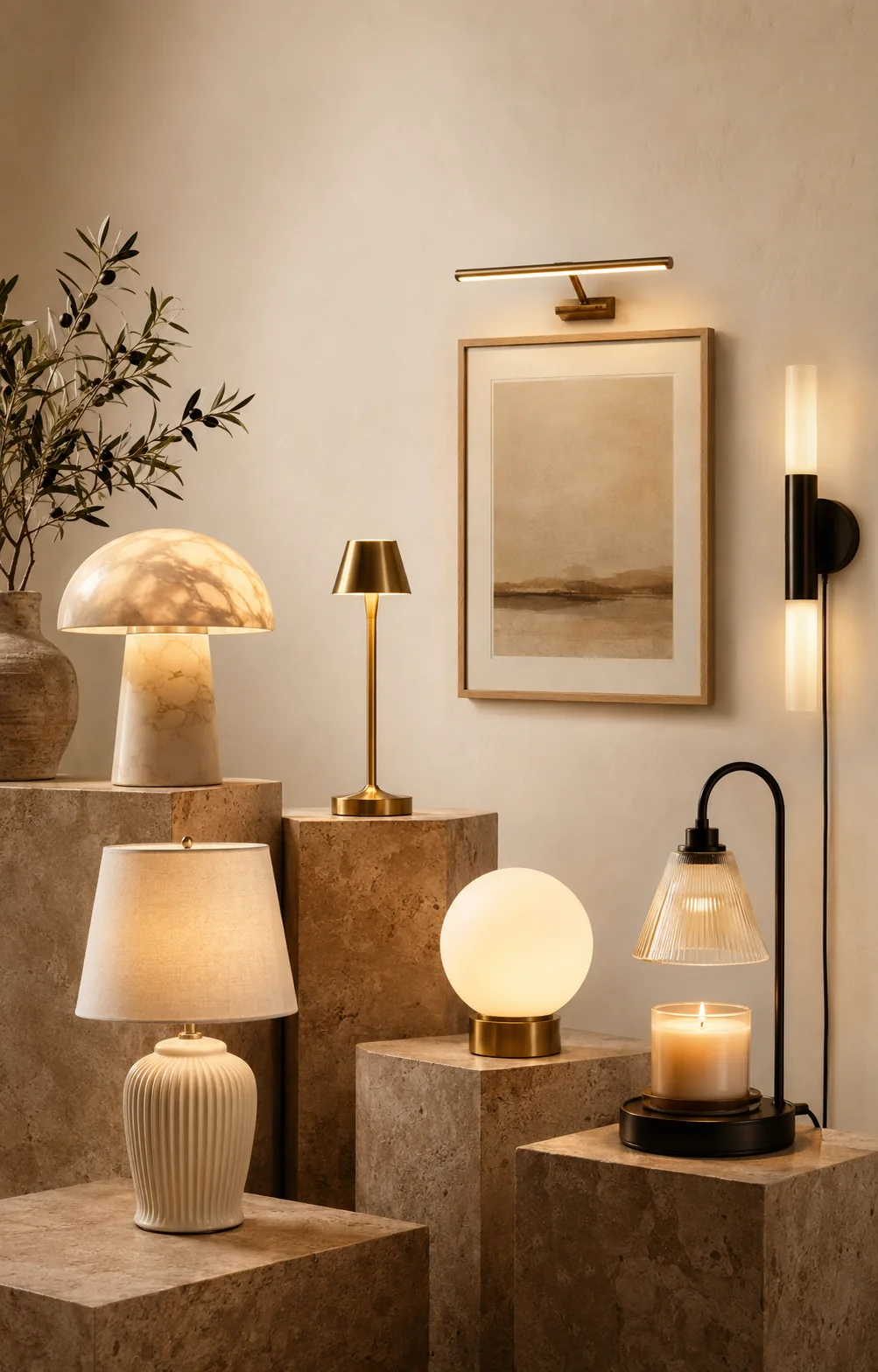
Use warm-white bulbs in the bedroom lamps and keep their color temperature consistent so the room feels settled rather than patchy. Check the lamp's maximum wattage and choose brightness appropriate for reading without depending on a strong ceiling light at night.
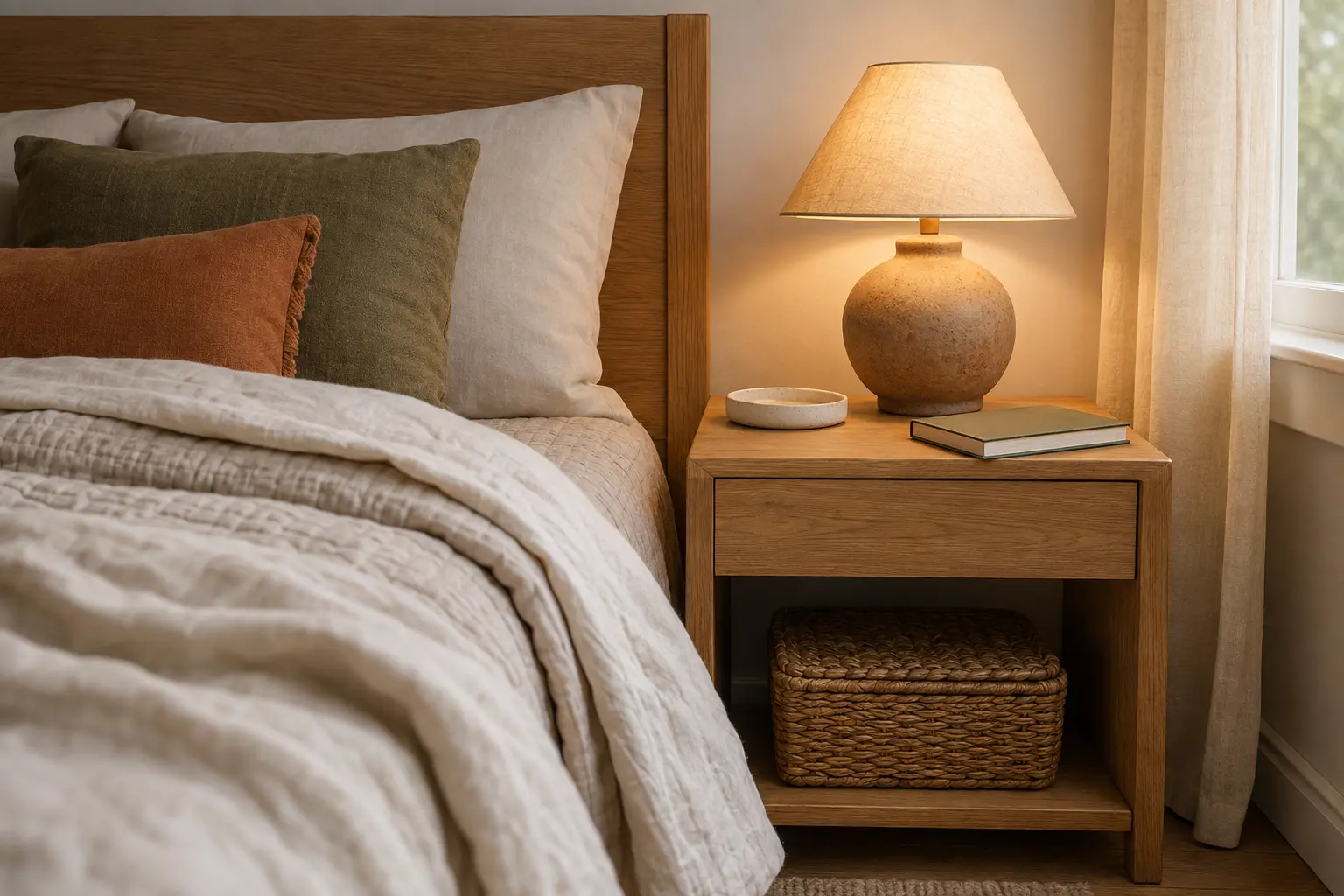
Add one bedside lamp at the right height
A lamp beside the bed creates a softer pool of light and prevents repeated trips to the main switch. Choose a stable base, a shade that diffuses glare, and a height that illuminates a book without shining directly into your eyes.
Refresh the bed with a breathable duvet cover
A cotton or linen-blend duvet cover changes the largest visual surface in the room and can be washed more easily than heavy decorative bedding. Start with a quiet color that works with the sheets you already own rather than buying an entirely new set.
Use one textured throw instead of many cushions
A light woven or brushed throw adds warmth and texture without creating a pile of pillows that must be moved every night. Fold it loosely across the lower third of the bed, where it is easy to reach on colder evenings.
Place a correctly sized rug around the bed
A rug softens the first step of the morning and visually grounds the bed. Measure before buying: the rug should extend far enough beyond the sides to be useful, while a smaller runner can be the more affordable choice when space is tight.
Add full-length curtains or a blackout lining
Curtains soften hard window lines and help control early light. If the existing curtains are attractive but too transparent, a separate blackout lining may cost less than replacing the whole set; make sure any new hardware suits the wall and window type.
Give the bedside surface a small tray
A simple tray keeps glasses, jewelry, lip balm, and other small evening items from spreading across the nightstand. Keep the tray smaller than half the surface so there is still room for a lamp, water, or a book.
Hide practical extras in one closed basket
A lidded basket or fabric box can hold spare cables, a blanket, or occasional accessories while reducing visual noise. Assign it one category and avoid using it as a place for everything that does not have a home.
Upgrade pillow covers before replacing pillows
New covers in linen, cotton, or a subtle woven texture can refresh existing decorative cushions at lower cost and with less waste. Measure the inserts, choose removable washable covers, and keep the total number easy to manage each night.
Finish with one meaningful wall element
A single correctly scaled print, textile, or personal photograph above a dresser can make the room feel finished without building a crowded gallery wall. Use secure fixings suited to the wall, or choose removable picture strips when the frame and rental rules allow them.
The takeaway
Keep the change easy to live with.
Start with light, then improve the layers you touch, and finally conceal the few practical items that create visual noise. A bedroom feels cozier when every change supports rest and remains easy to maintain at the end of the day.
Keep the guide close
Save all 10 ideas for your next home reset.
Keep this visual guide nearby and return when you are ready to make one simple, useful change at a time.
Save on Pinterest
Keep exploring