Style without overspending

10 Affordable Ways to Make Your Home Look Expensive
Thoughtful scale, better lighting, and restrained styling can make a room feel far more polished.
An elevated home is less about expensive objects and more about proportion, repetition, and editing. A few intentional changes can make an ordinary room feel calmer, more cohesive, and more finished without replacing everything you own.
Hang curtains higher and wider
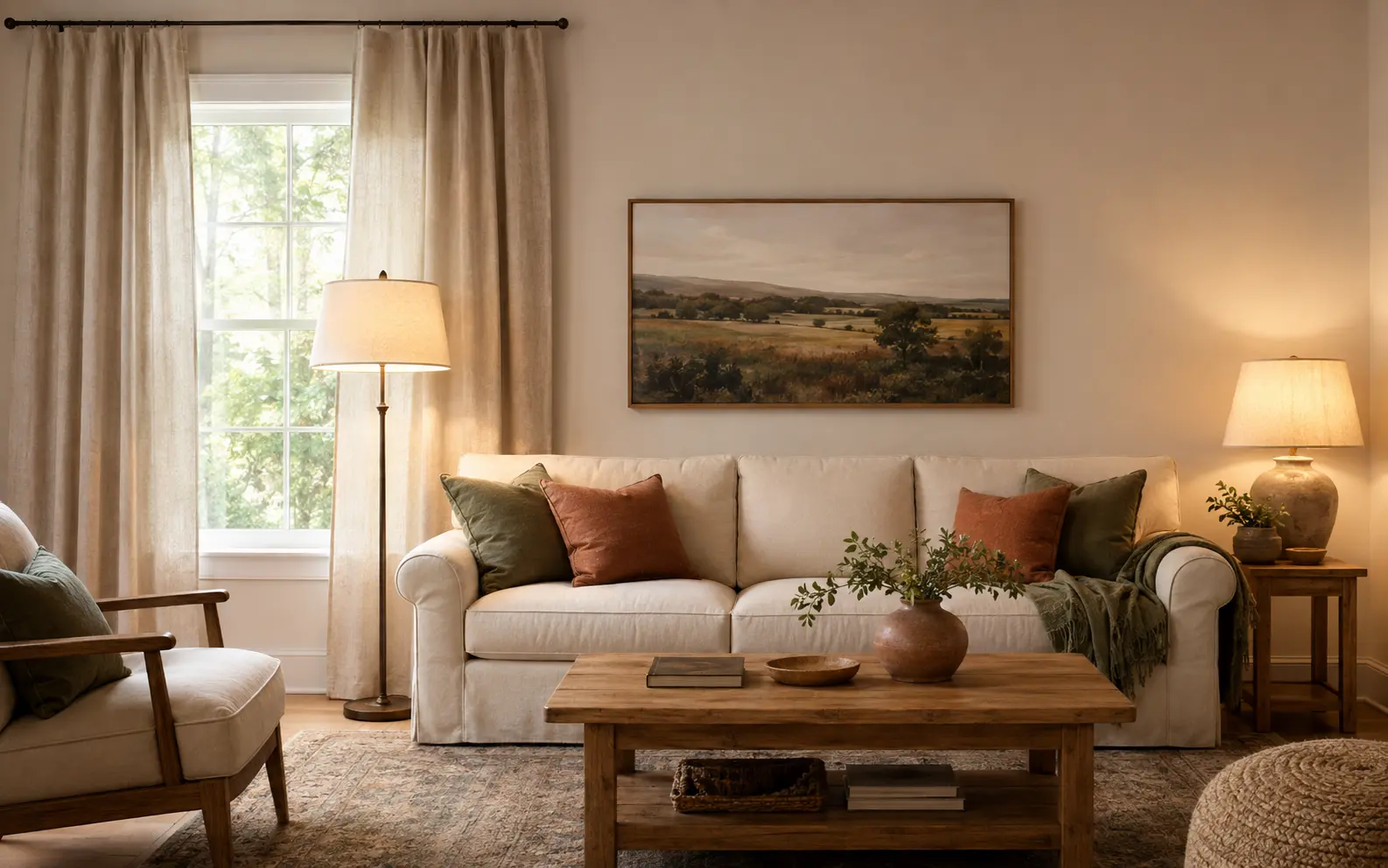
Mount the rod closer to the ceiling and extend it beyond the window frame. Full-length curtains create the impression of taller ceilings and larger windows, especially when the fabric lightly touches the floor.
Choose one larger piece of art
One correctly scaled artwork often looks more intentional than several small, unrelated pieces. Use a large print, textile, or framed downloadable artwork to anchor the room.
Layer your lighting
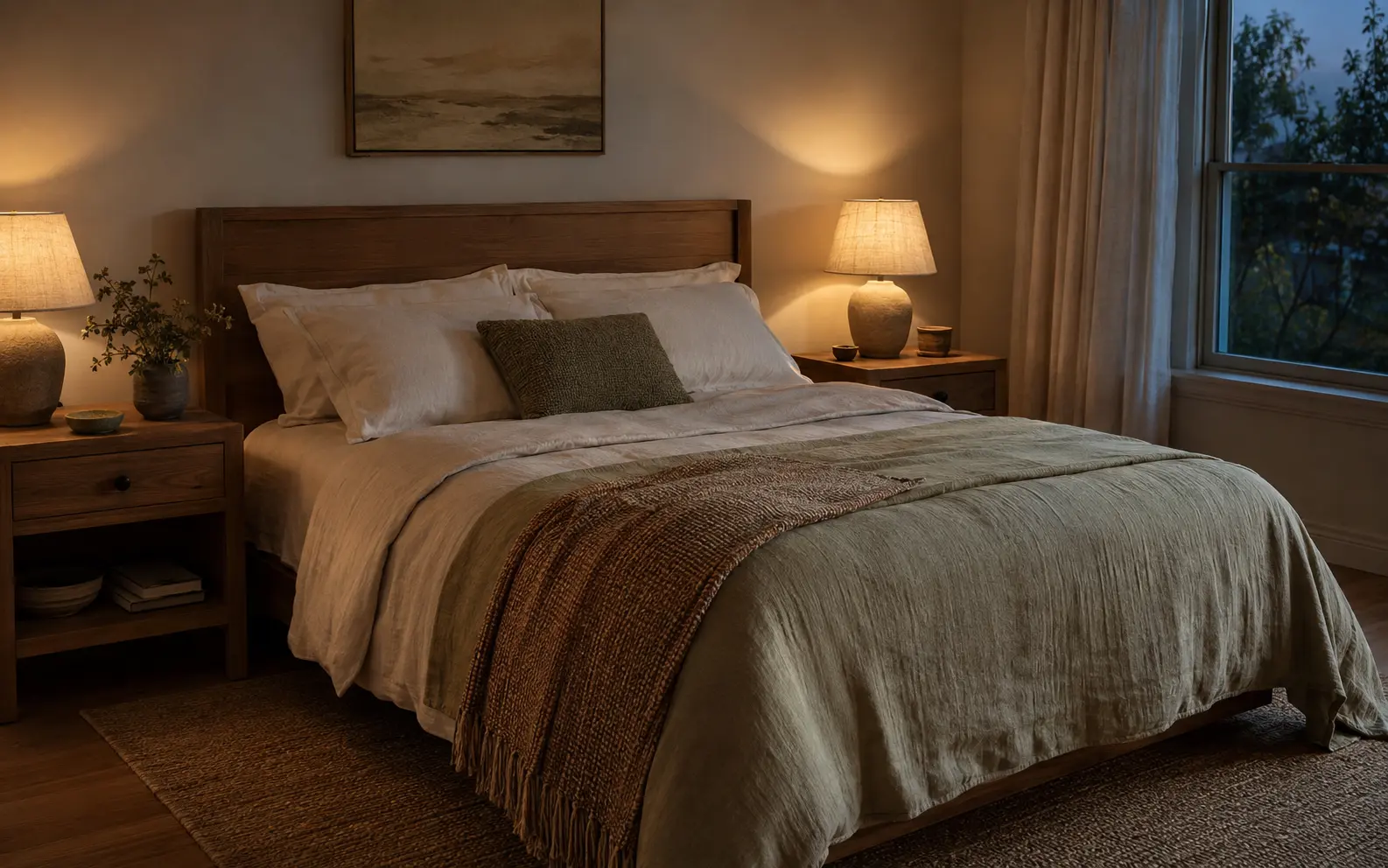
A single ceiling light can make a room feel flat. Combine ambient light with a floor lamp, table lamp, or wall light to create warmth and depth at different heights.
Repeat a restrained color palette
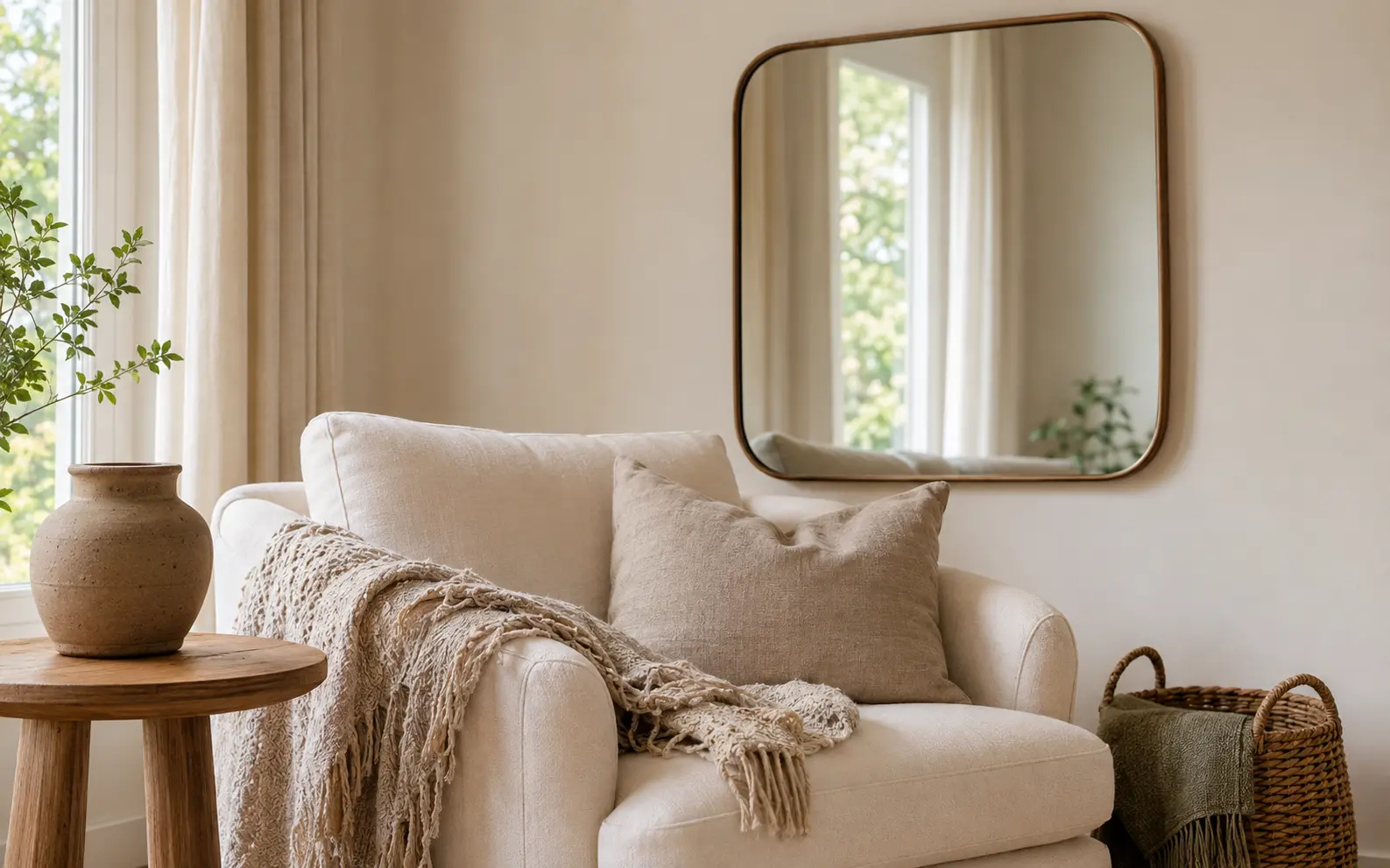
Select two or three main tones and repeat them in textiles, artwork, and small accessories. Repetition makes separate pieces feel related and reduces visual noise.
Mix textures instead of adding clutter
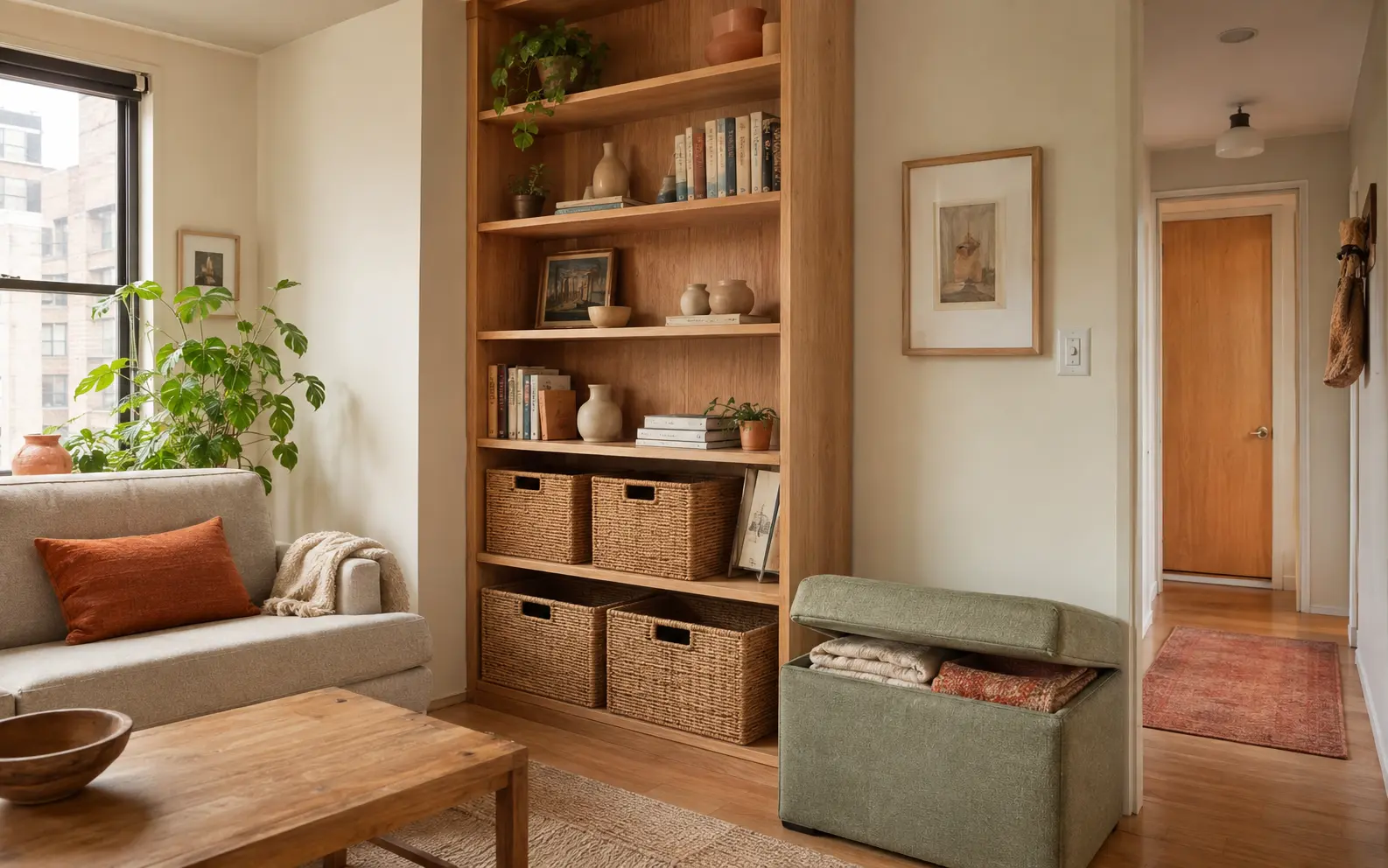
Linen, wood, woven baskets, ceramics, and a soft throw add richness without requiring many objects. A quiet palette can still feel layered when the materials have different textures.
Use mirrors with intention
Place a mirror where it reflects daylight, artwork, or greenery rather than a cluttered corner. A well-positioned mirror adds brightness and gives a small room more visual depth.
Upgrade small hardware selectively
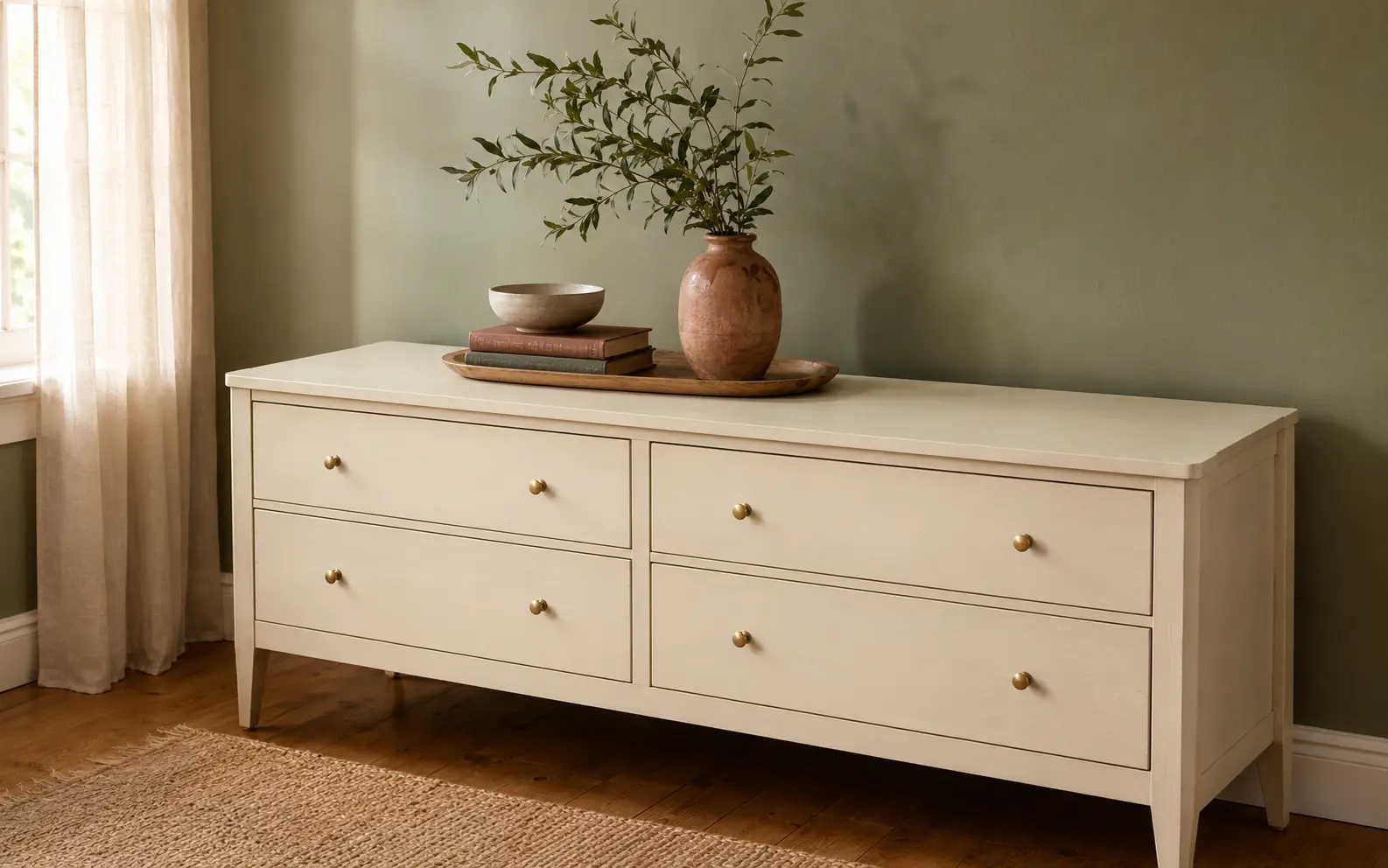
Matching knobs or handles can unify an older dresser, vanity, or cabinet. Measure the existing holes before buying and keep the original hardware in case you rent.
Style surfaces in small groups
Instead of spreading accessories across a table, group a book, a small bowl, and a vase on a tray. The surrounding empty space is what makes the arrangement feel intentional.
Use greenery as a finishing layer
A branch from the garden, a hardy plant, or a convincing faux stem adds life and softens straight lines. One larger arrangement generally feels calmer than many tiny plants.
Edit before you shop
Remove items that are broken, undersized, or unrelated to the room before buying anything new. A less crowded room often looks more expensive immediately because the strongest pieces have space to breathe.
The takeaway
Keep the change easy to live with.
Start by changing scale, lighting, and placement. Those three decisions usually have a greater visual effect than buying more decor, and they make future purchases easier to judge.
Keep the guide close
Save all 10 ideas for your next home reset.
Keep this visual guide nearby and return when you are ready to make one simple, useful change at a time.
Save on Pinterest