Style without overspending
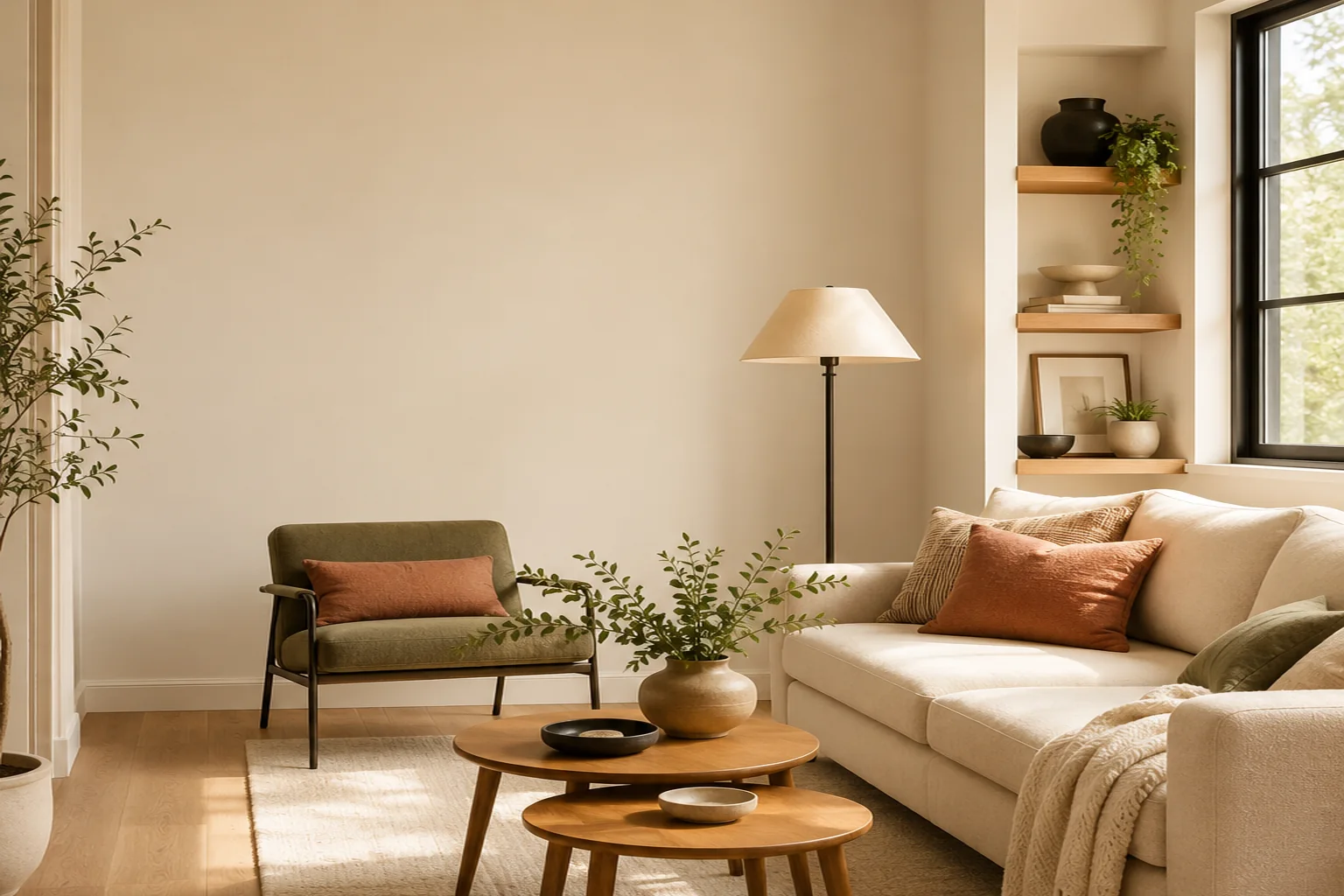
7 Small Living Room Layout Mistakes That Make Your Space Feel Smaller
Small living rooms often feel cramped because of layout choices, not size. Fix these seven mistakes before buying new furniture.
A small living room does not automatically need smaller style. Most rooms feel tight because the furniture blocks movement, the rug cuts the seating area in half, or every wall becomes a parking place for another piece. These layout fixes help the room breathe without a renovation, a new sofa, or a complete redesign.
Before you buy
Quick layout helper
Start with the problem you feel in the room, then move the piece that creates it.
| If the problem is | Try | Wait before |
|---|---|---|
| You step around the coffee table every day. | A smaller round table or nesting tables. | Buying another accent chair. |
| The seating area feels disconnected. | A larger rug that touches the front legs. | Adding more small decor pieces. |
| The room feels flat at night. | One floor lamp and one low lamp near the sofa. | Changing wall color first. |
Pushing every piece against the walls
It seems logical to push furniture to the edges, but a room can feel colder and more awkward when every piece hugs the wall. Pull the sofa or chairs forward just enough to create a real conversation zone. Even a few inches can make the arrangement look intentional instead of squeezed.
Choosing a coffee table that owns the room
A large coffee table can make the center of a small living room feel blocked. The table should support drinks, remotes, and a small tray, not dominate the walkway. Try a round table, nesting tables, or one slim rectangular piece with enough room to move around it comfortably.
Leaving no clear walking path
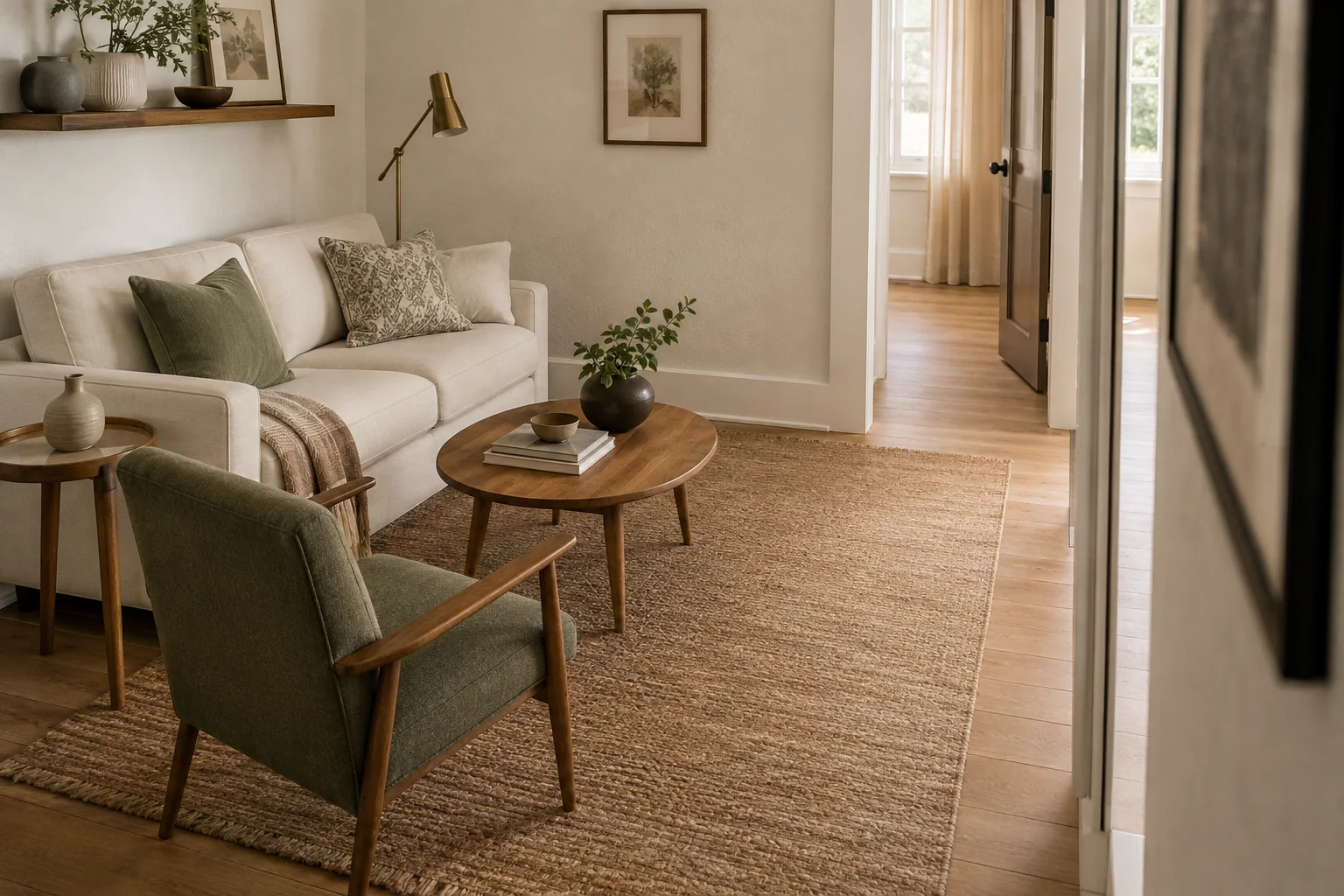
The quickest way to make a living room feel smaller is to force people to step around furniture. Walk from the door to the sofa, window, balcony, and storage pieces. If your knees or hips keep dodging the same corner, that item is in the wrong place.
Using a rug that is too small
A tiny rug can make the seating area look like separate floating pieces. In a small room, the rug does not need to cover every inch, but it should connect the front legs of the main seating pieces or at least sit confidently under the coffee table zone.
Blocking the window with heavy pieces
Natural light is one of the best space-making tools in a small living room. Avoid placing tall shelves, bulky chairs, or dark curtains where they cut across the window. Keep the brightest wall visually light and let the eye travel to the glass.
Adding too many tiny furniture pieces
Small furniture is not always the answer. Too many little stools, baskets, side tables, and accent pieces can make the room busy. Choose fewer pieces with clearer jobs: one useful side table, one flexible surface, one lamp, and enough seating for real life.
Relying on one ceiling light
One overhead light flattens the room and leaves corners feeling unfinished. Add a floor lamp, table lamp, or wall light to create layers. When the room has soft light near the sofa and a gentle glow in the corner, it feels deeper and more comfortable.
The takeaway
Keep the change easy to live with.
A small living room feels larger when the layout protects movement, connects the seating zone, keeps light open, and gives every piece a clear job. Before buying new furniture, fix the walkway, table size, rug placement, and lighting; those changes usually make the biggest difference.
Helpful answers
Questions readers often ask
What is the biggest layout mistake in a small living room?
The biggest mistake is blocking the natural walking path. A room feels smaller when people must step around corners, table legs, or chairs every time they move.
Should a sofa touch the wall in a small room?
It can, but it should not look crushed into place. Even a small gap or a pulled-forward seating zone can make the layout feel more intentional.
Keep the guide close
Save all 7 ideas for your next home reset.
Keep this visual guide nearby and return when you are ready to make one simple, useful change at a time.
Save on Pinterest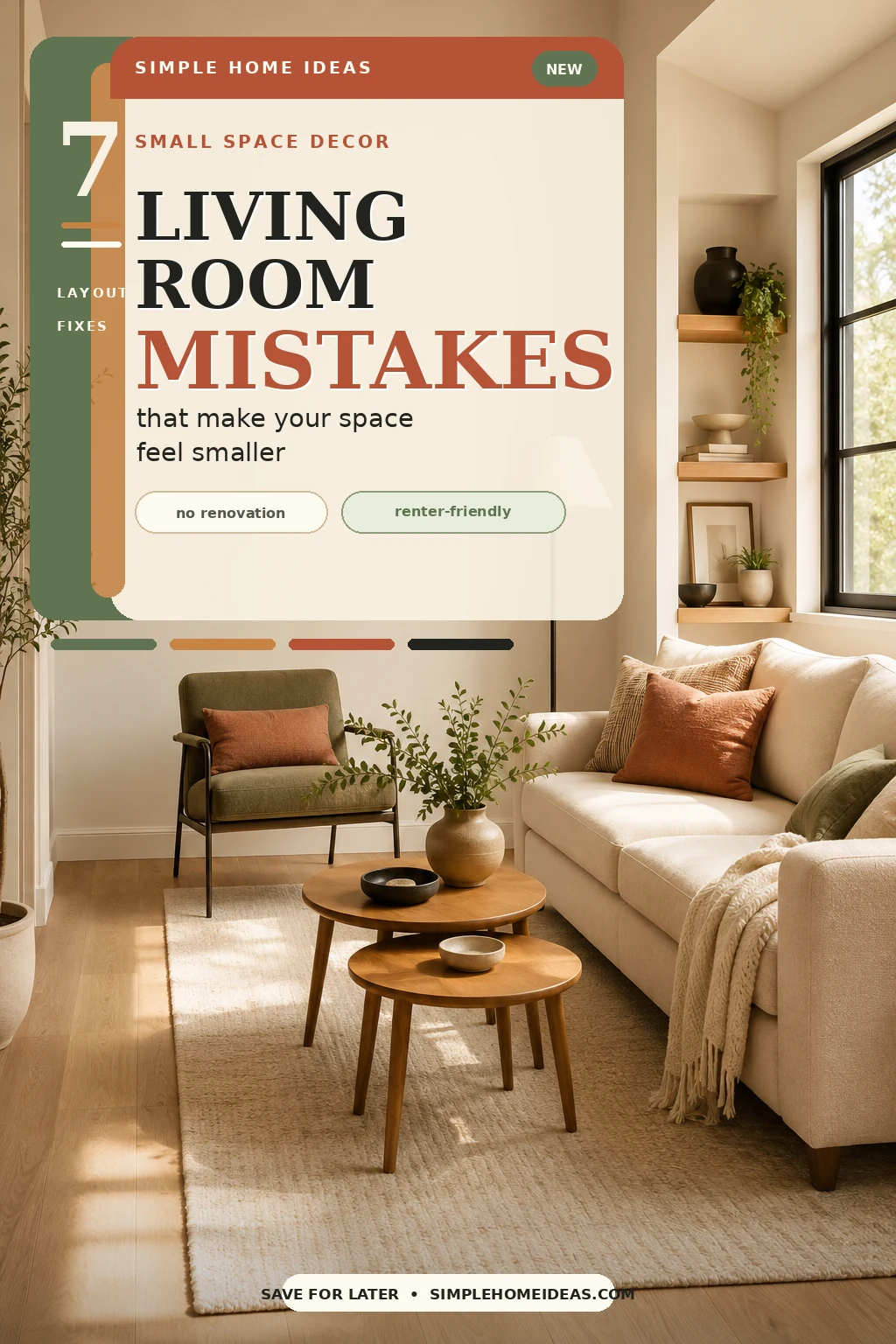
Keep exploring