Less clutter, more room
Before You Buy More Storage: 8 Small Apartment Fixes That Work Better
Stop adding bins to the same clutter. These small apartment fixes make the room work better before you buy another organizer.
Buying more storage can feel productive, but it often hides the real problem. A small apartment usually needs fewer loose surfaces, better habits at the door, and furniture that earns its footprint before it needs another basket or shelf. Start by fixing the way things move through the room, then buy only the storage that solves a repeated problem.
Before you buy
Quick decision helper
Fix the habit first, then choose the smallest storage piece that supports it.
| If the problem is | Fix first | Wait on |
|---|---|---|
| Everything lands on one chair or table. | Create an entry tray, hooks, and one closed bench. | A large basket that mixes every category. |
| The room feels smaller after adding furniture. | Clear the main walkway and replace one wide piece. | Any cabinet that narrows the path. |
| You keep storing things you do not use. | Add one donation basket and empty it when full. | More hidden storage for unwanted items. |
Remove one clutter magnet before adding a new organizer
Look for the surface that collects everything: the coffee table, the chair near the door, the top of a dresser, or the end of the sofa. Clear it completely for one day and watch what tries to return. That category, not the surface itself, is what needs a real home.
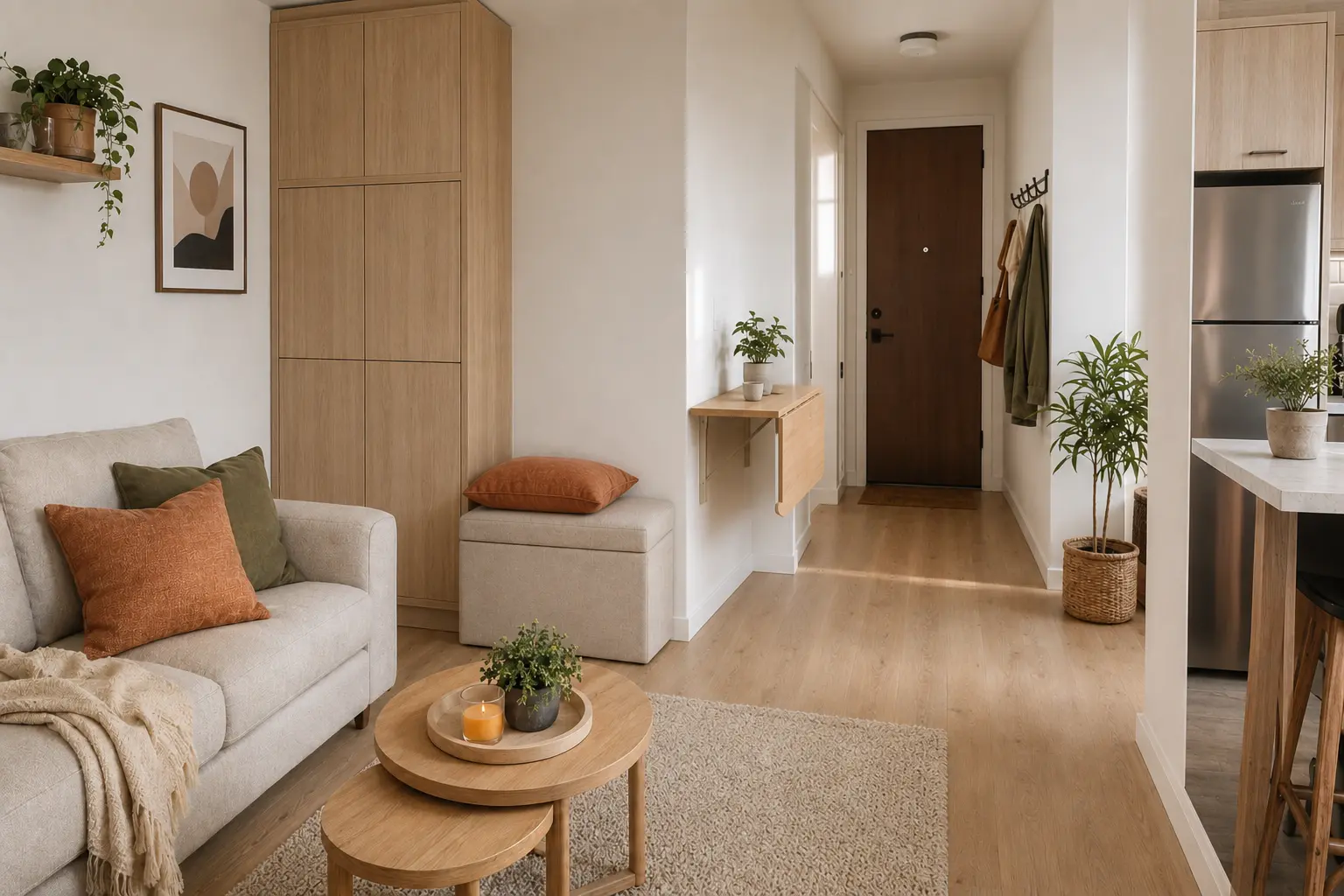
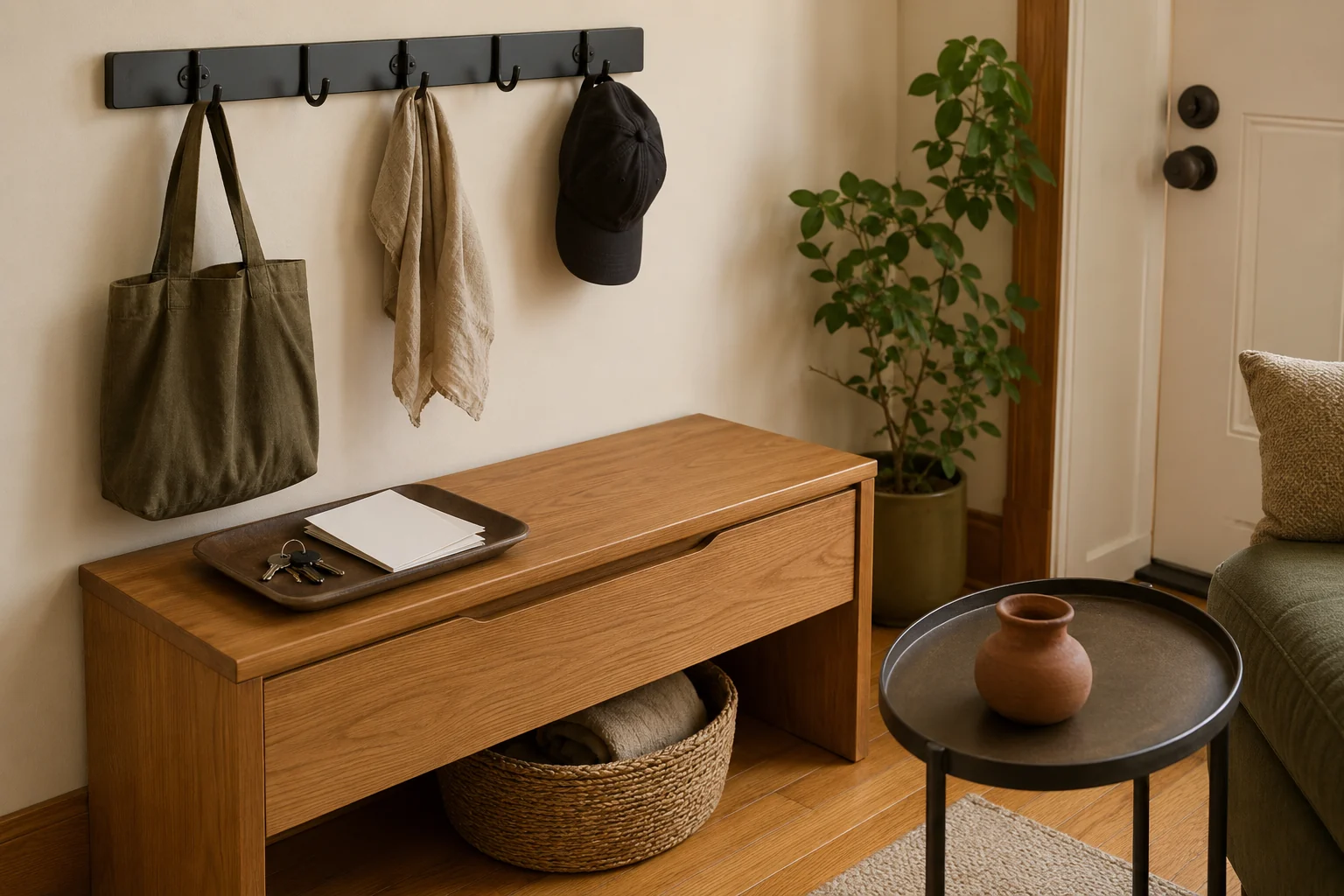
Give the front door a landing zone
Keys, bags, shoes, mail, and sunglasses often become whole-home clutter because they have no first stop. A shallow shelf, two hooks, a narrow bench, and one small tray can protect the rest of the apartment from daily spillover.
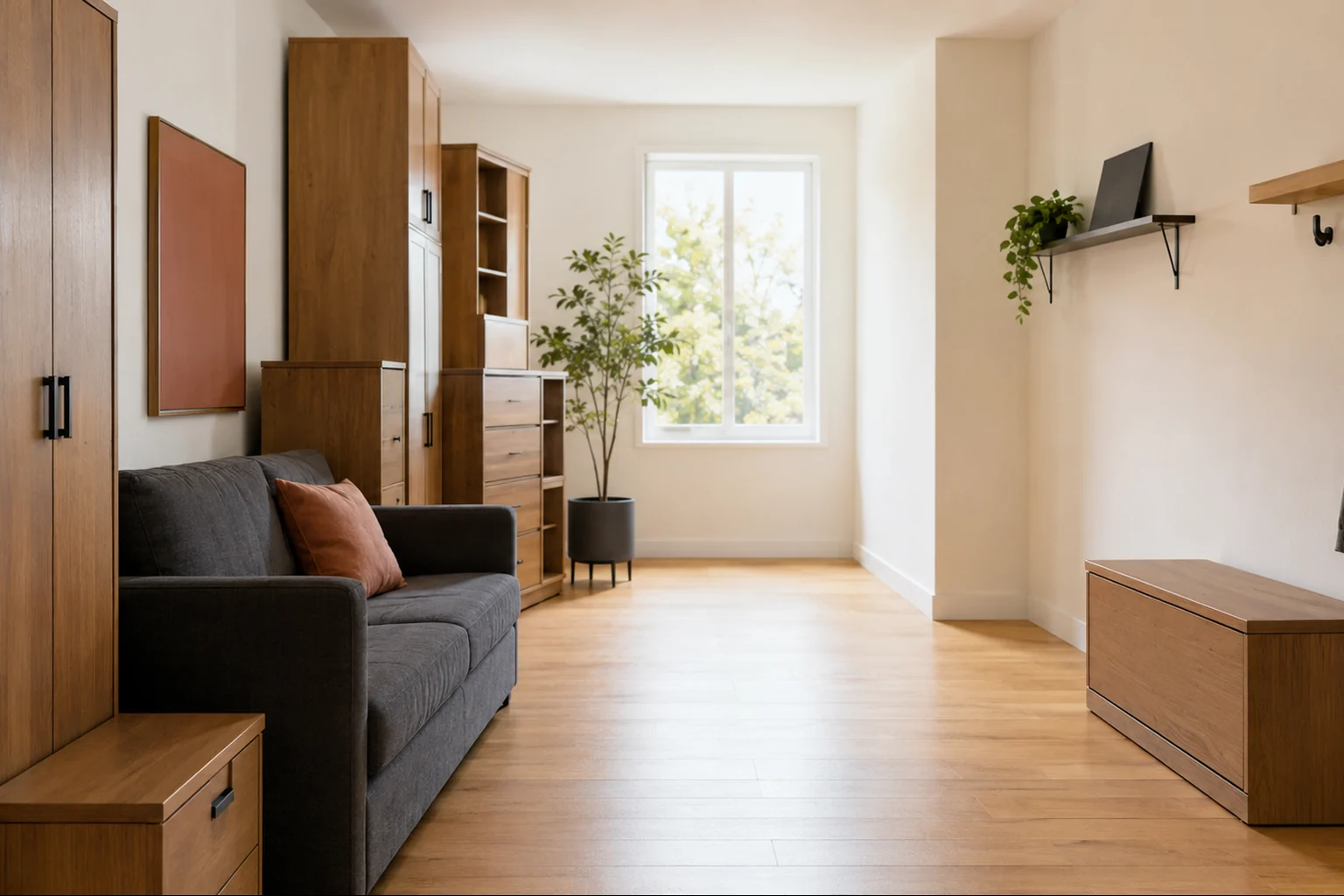
Keep the walkway empty on purpose
A small room feels crowded when storage sits in the path your body naturally uses. Walk from the door to the sofa, bed, kitchen, and bathroom. Anything you step around every day is too expensive in floor space, even if it stores a lot.
Choose closed storage for visual noise
Open shelves can look beautiful when they hold a few calm objects, but they rarely hide everyday mess. Use closed storage for chargers, papers, spare textiles, games, tools, and anything with mixed colors or packaging. Save open shelves for objects you actually enjoy seeing.
Replace a wide coffee table with flexible surfaces
One large coffee table can steal the center of a small living room. Nesting tables, a small side table, or a lightweight tray can give you a place for drinks without turning the whole floor into furniture storage.
Use one donation basket as a release valve
Small homes become stressful when every unwanted item returns to a drawer. Keep one modest basket for things to donate, return, repair, or give away. When the basket is full, deal with it before buying a new storage piece.
Buy storage only after you know the category
A container should have a job before it enters the room. Name the exact category first: winter throws, work papers, shoes worn weekly, pet supplies, or cables. If the category is vague, the new organizer will become a prettier version of the same clutter.
Measure the open position, not just the closed footprint
Benches, drawers, lift-top tables, folding desks, and storage beds all need room to open. Measure the piece in use, not only in the product photo. A small apartment does not need storage that works only when nobody is walking through the room.
The takeaway
Keep the change easy to live with.
Before buying more storage, remove one clutter magnet, protect the entry, keep the walking path open, and choose closed storage for the things that create visual noise. When you finally buy an organizer, it should solve a named problem rather than simply make the clutter easier to keep.
Helpful answers
Questions readers often ask
Should I declutter before buying storage?
Yes. Remove one clutter magnet first, then name the category that keeps returning. Storage works best after you know what problem it must solve.
What is the fastest small apartment fix?
Protect the entry with a small landing zone and keep the main walking path open. Those two changes make the apartment feel calmer quickly.
Keep the guide close
Save all 8 ideas for your next home reset.
Keep this visual guide nearby and return when you are ready to make one simple, useful change at a time.
Save on Pinterest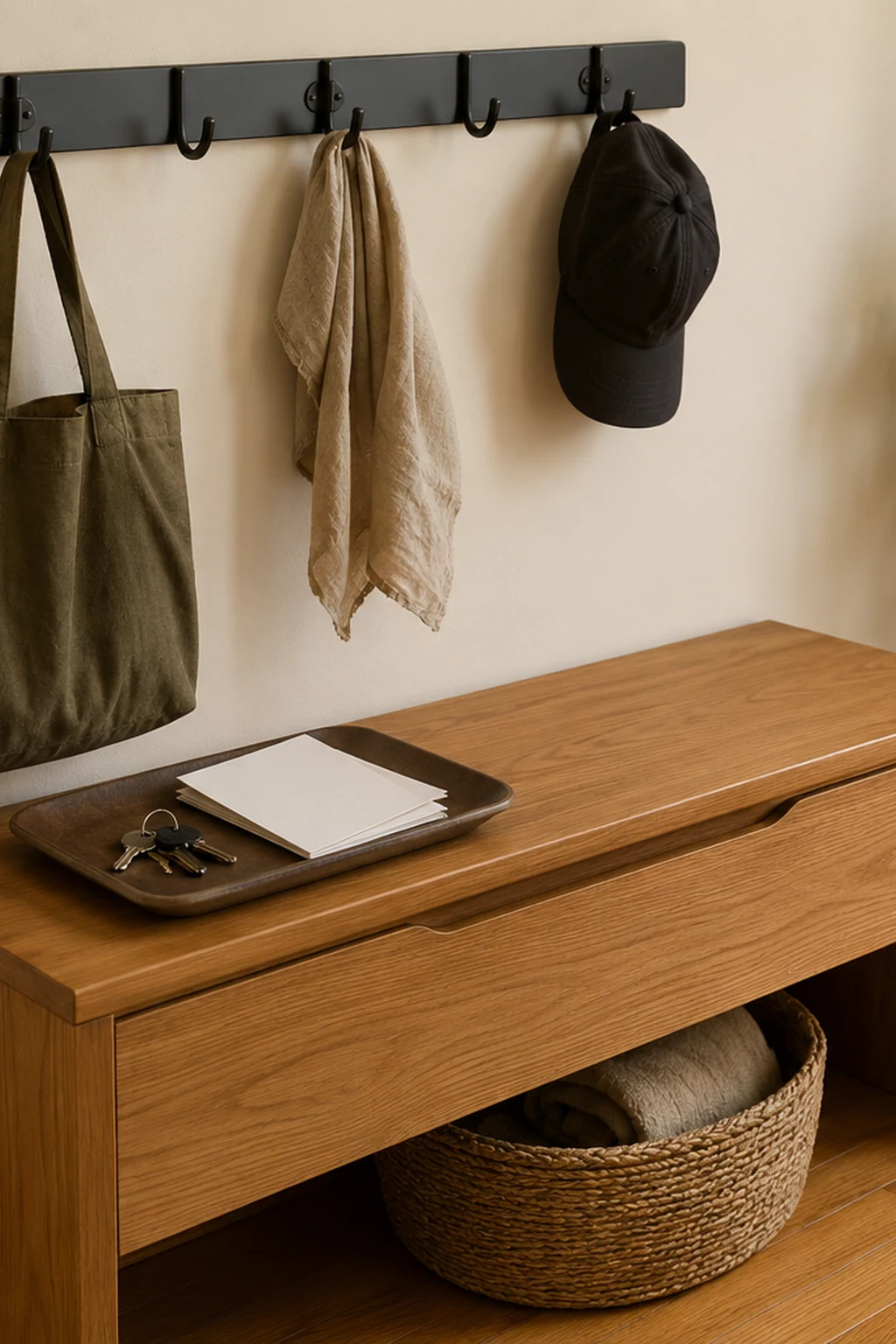
Keep exploring