Less clutter, more room
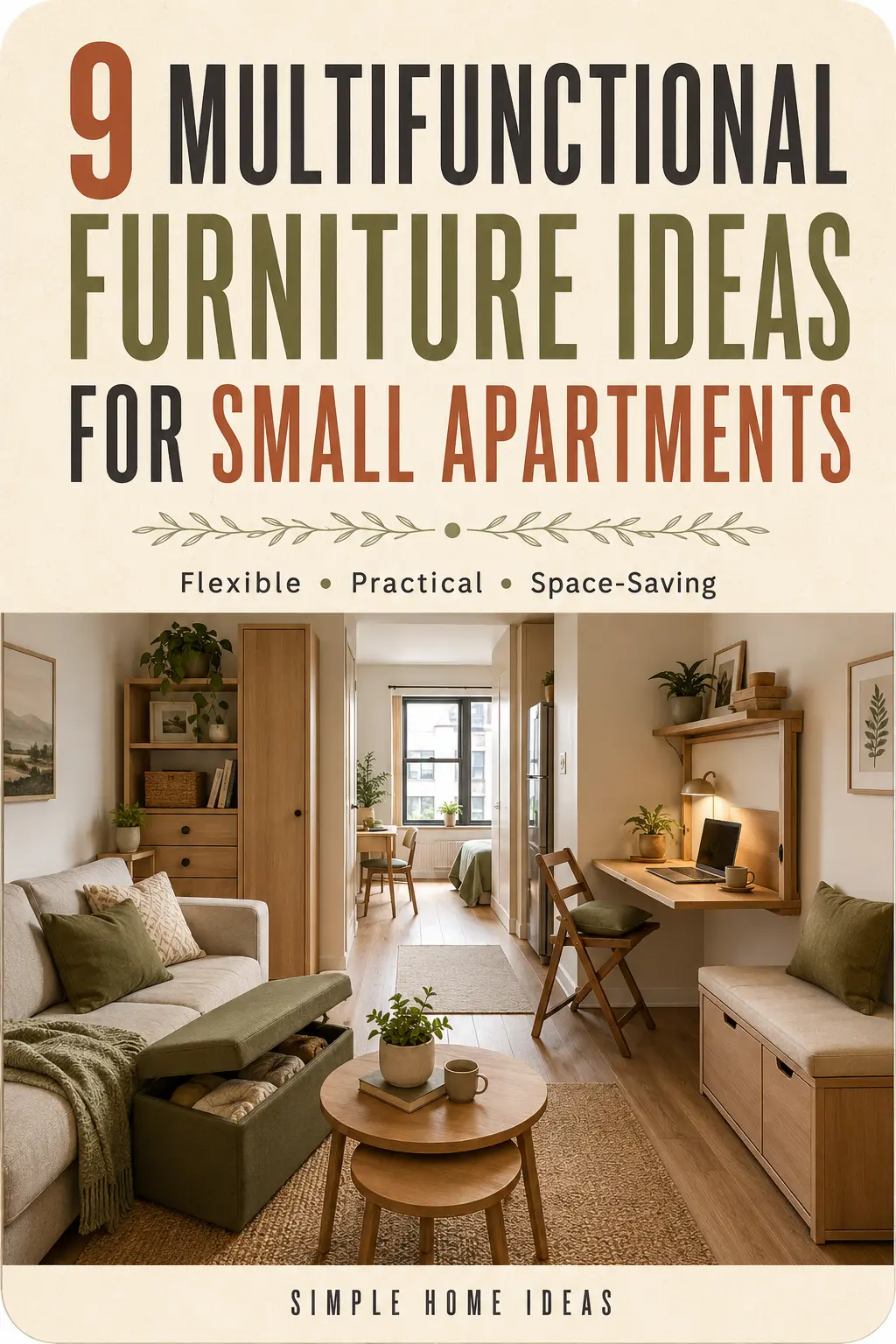
9 Multifunctional Furniture Ideas for Small Apartments
Choose furniture that earns its footprint through storage, flexibility, or two useful functions—without blocking the room.
Multifunctional furniture can make a small apartment easier to live in, but only when both functions are genuinely useful. A bulky transforming piece is not automatically space-saving. Measure the room, map the doors and walking routes, and choose furniture that changes simply enough to use on an ordinary weekday.
Before you buy
Quick decision helper
The right multifunctional piece should simplify the room in its normal position and its expanded position.
| If the problem is | Start with | Wait on |
|---|---|---|
| Extra blankets and small items need a home. | A storage ottoman or bench with easy lifting. | Heavy lids that are annoying to open daily. |
| You need a dining surface sometimes. | A drop-leaf table with clear chair space. | Large folding tables with nowhere to store chairs. |
| Guests need a place to set drinks. | Nesting tables that tuck away fully. | Wide coffee tables that narrow the walking path. |
Measure the furniture in every mode
Planning examples below are illustrative, not product tests or current price quotes.
Record closed, open, and working footprints
A compact product photo usually shows the smallest configuration. Write down its closed dimensions, the space it occupies when extended, and the space a person needs to use it. For a sleeper sofa, include the unfolded bed and access beside it. For a lift-top table, include the moving top and your seated position. For storage seating, check where the lid moves and whether the compartment stays accessible once the piece is against a wall.
Worked example: an extending table
A table that grows from 32 to 56 inches needs another 24 inches along its length. If centered, that adds 12 inches at each end; if one end is fixed against a wall, the full 24 inches projects from the other end. Tape both outlines on the floor, then place the actual chairs around the larger one. Product dimensions alone do not include chair pull-out space or establish a safe circulation route.
Rehearse the conversion before purchasing
List what must move each time: a rug, drinks, a laptop, cushions, or another chair. If a desk becomes a dining table every evening, decide where work equipment will go while the table is in use. A piece that performs two functions but requires a third storage unit may not save space. When possible, try the mechanism in person and check the manufacturer's instructions for locking, lifting, and pinch points.
Check delivery and maintenance
Compare packaged dimensions with your doorway, stairs, elevator, and turning points, rather than checking only the assembled width. Confirm assembly requirements, replacement hardware, removable-cover care, and the return terms before ordering. Keep the maximum load and anti-tip instructions with the product. A useful multifunctional piece must work on a rushed weekday, not just in a staged room.
Buying notes
Before a product earns space in your home
Use these checks to avoid buying a piece that looks good in a photo but fails in daily life.
Measure the exact space
Check materials and cleaning
Match finish and light tone
Keep access and walkways clear
Use this guide to compare: Storage ottoman · Nesting side tables · Lift-top coffee table · Entryway storage bench · Drop-leaf dining table · Wall-mounted folding desk
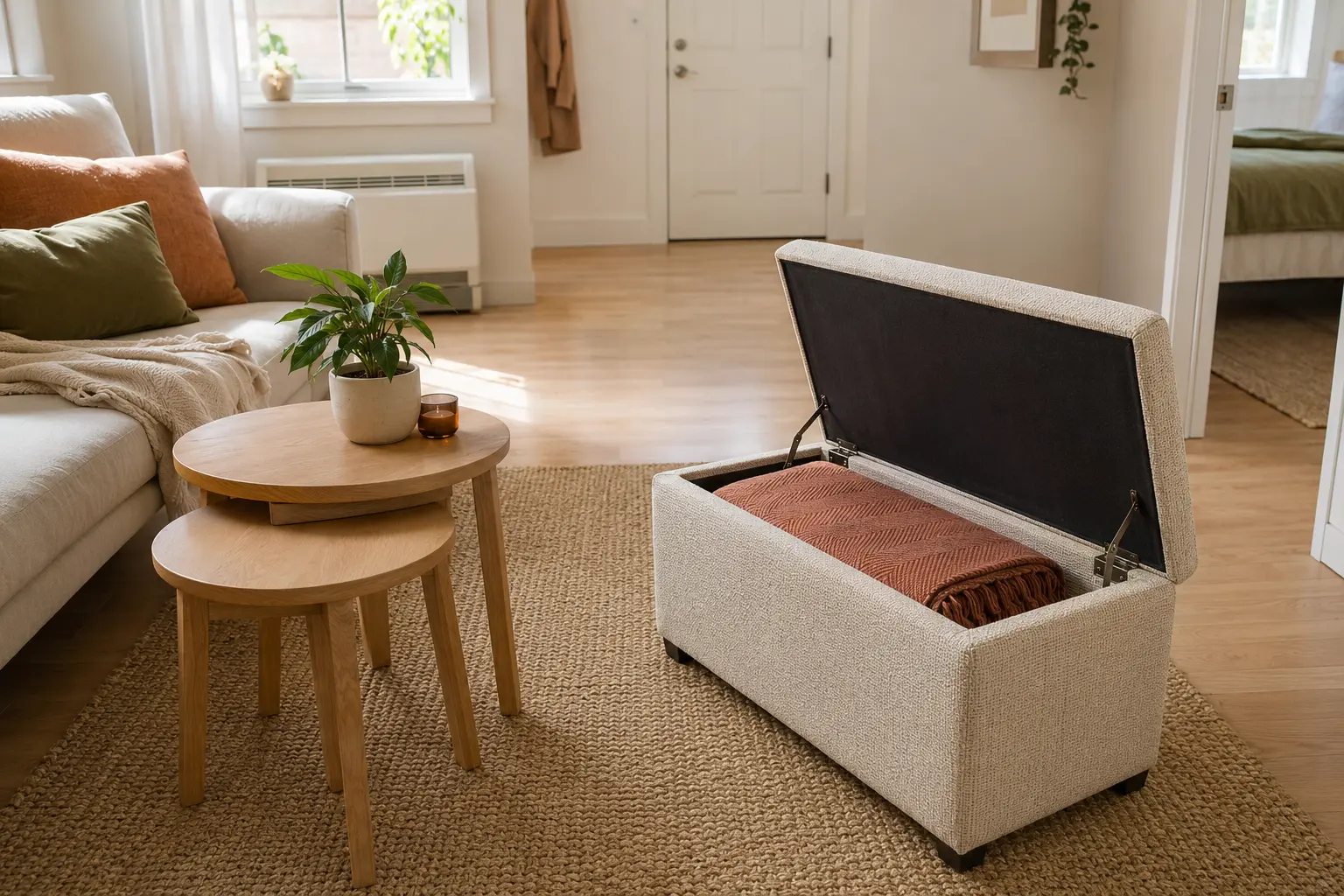
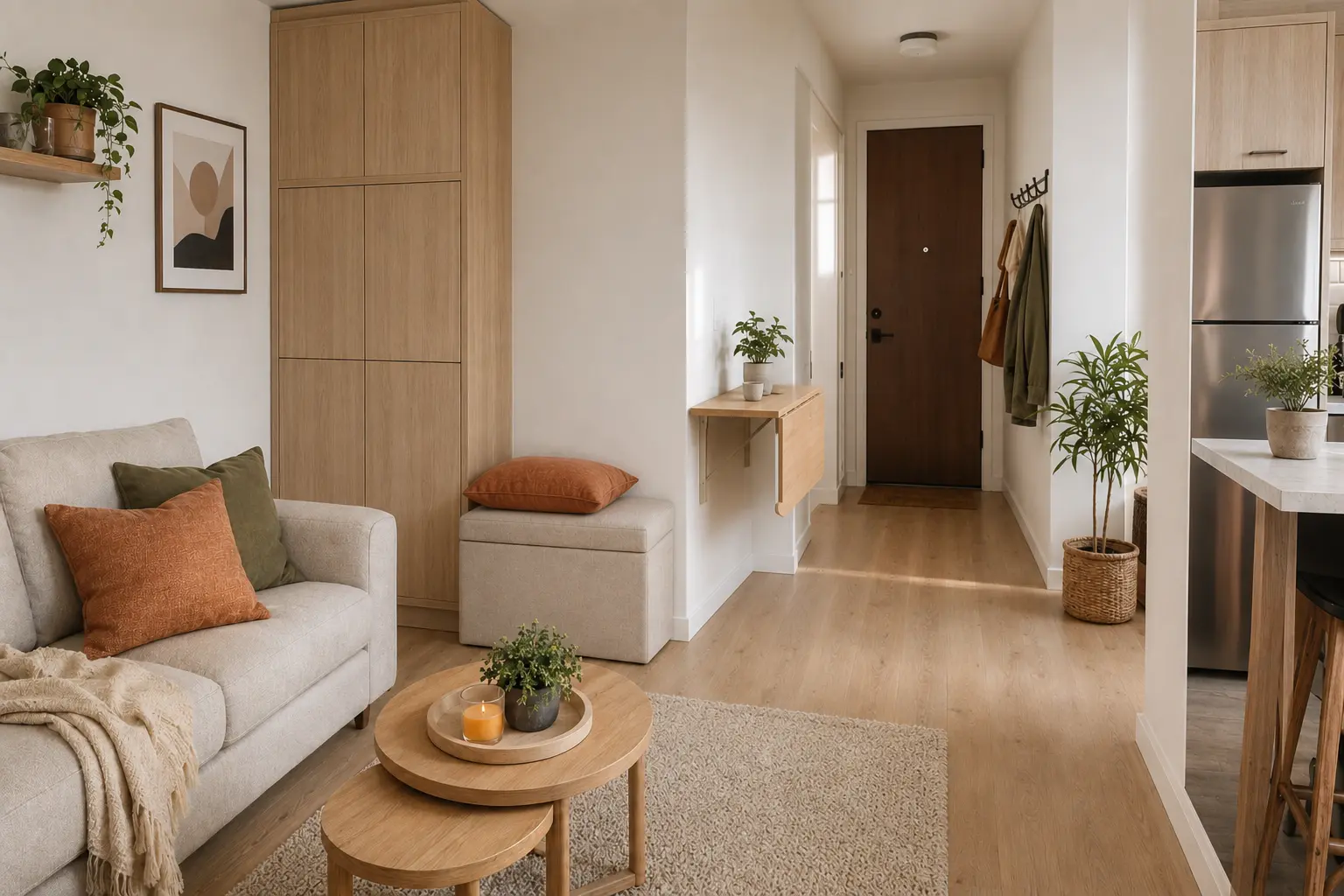
Use a storage ottoman as a flexible extra seat
A sturdy storage ottoman can hold throws or games while serving as a footrest and occasional seat. Look for a lid that opens safely, a washable or durable surface, and dimensions that let the ottoman tuck beside the sofa instead of living in the main walkway.
Choose nesting tables instead of one wide coffee table
Nesting tables separate when guests need a drink surface and stack together when the floor should stay open. Select a stable set with enough difference in height to slide smoothly, and test whether the stacked footprint suits the room better than a conventional coffee table.
Try a lift-top coffee table when you work from the sofa
A lift-top surface can create a temporary desk or dining height while the base stores chargers, notebooks, or remote controls. Check the lifting mechanism, knee clearance, open dimensions, and stability; skip it if the raised top would block the only route through the room.
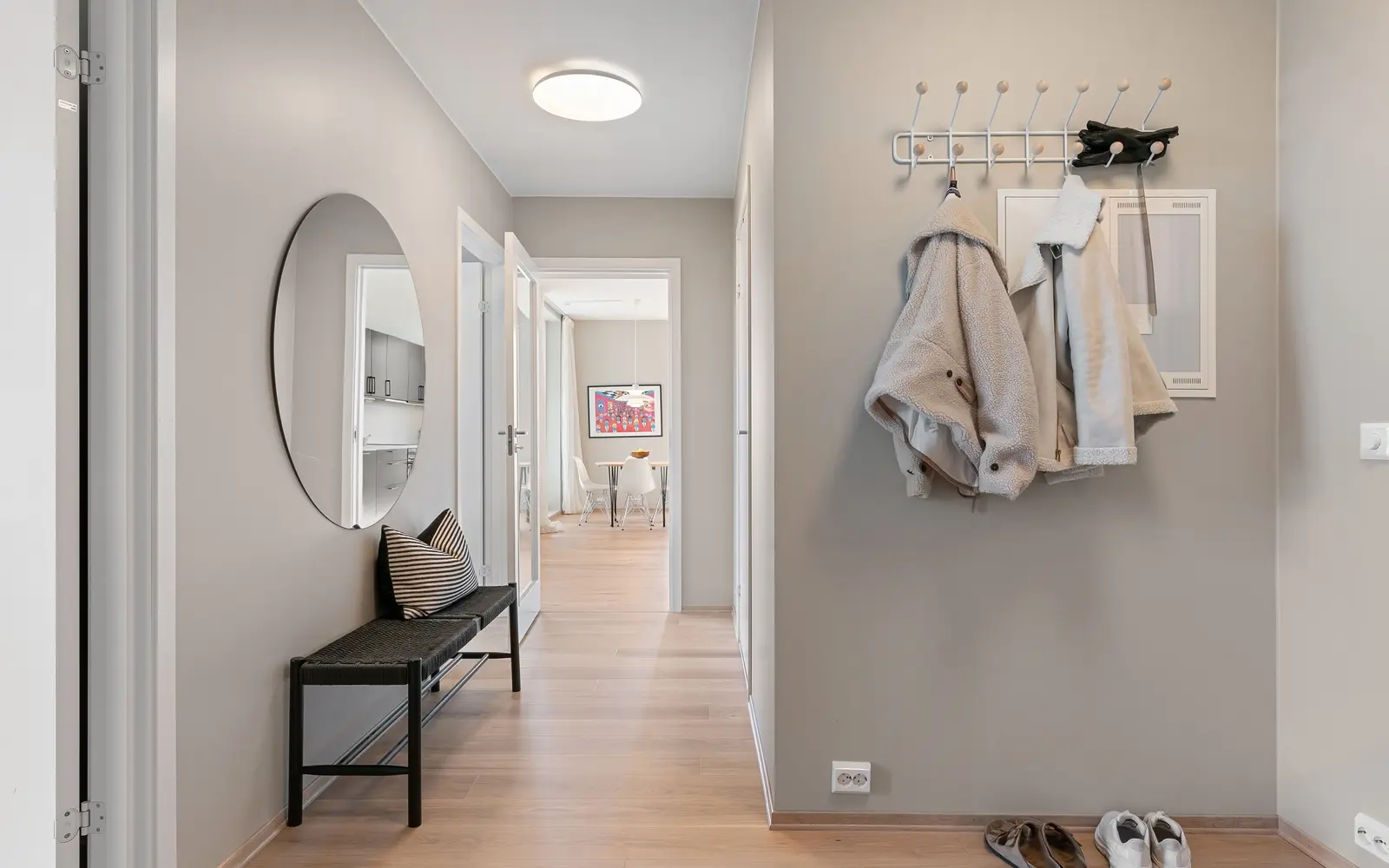
Place a storage bench at the entry or foot of the bed
A bench can provide a place to sit while putting on shoes and conceal bags, linens, or seasonal items. Choose a depth that does not narrow the passage and a lid or drawers that can open fully without hitting a wall or bed frame.
Use a drop-leaf table for occasional dining
A drop-leaf table stays narrow for everyday use and expands when more surface is needed. Measure both the folded and open footprint, including chair clearance, and choose a mechanism simple enough that opening the table does not require rearranging the entire room.
Consider a wall-mounted desk with closed storage
A fold-down desk can create a focused work surface, then close to reduce visual clutter. It must be fixed correctly for the wall type and expected load, so renters should obtain permission or choose a freestanding secretary desk when wall mounting is not suitable.
Choose a bed with drawers only when they can open
Built-in drawers can hold bedding and off-season clothing without adding another cabinet. Confirm the drawer direction, handle clearance, and space needed to stand beside the bed; in a very narrow room, lift-up storage may be easier than side drawers.
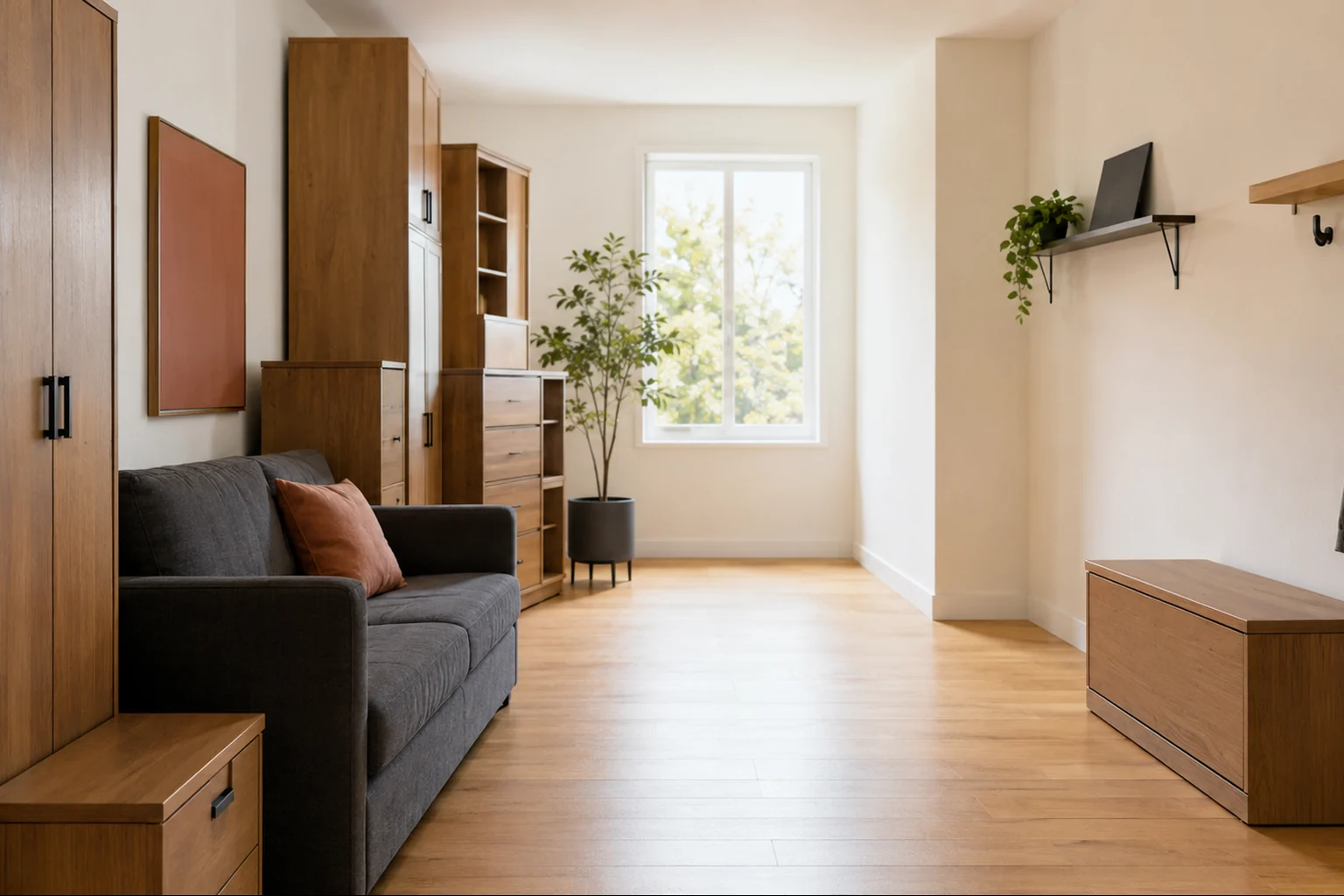
Use a tall narrow cabinet to combine display and concealment
A cabinet with closed storage below and one or two open shelves above can hide practical items while displaying a small number of objects. Anchor tall furniture according to the manufacturer's instructions and place heavier items on lower shelves for stability.
Judge the furniture in both of its modes
Before buying, evaluate the piece closed, open, occupied, and moving between functions. Ask where displaced objects and chairs will go, how often the mechanism will be used, and whether one excellent function with useful storage is better than several awkward promises.
The takeaway
Keep the change easy to live with.
Small-apartment furniture should protect movement, reduce the number of separate pieces, and be simple to change. Measure every operating position—not only the showroom footprint—and choose two reliable functions over a complicated list of features.
Helpful answers
Questions readers often ask
What makes multifunctional furniture truly space-saving?
Both functions should be useful, quick to switch, and workable without blocking doors or walking paths. Measure the piece closed and fully open.
Which multifunctional piece is easiest to start with?
A storage ottoman, nesting tables, or a bench is usually simpler than a complex transforming unit because it works without rearranging the room.
Keep the guide close
Save all 9 ideas for your next home reset.
Keep this visual guide nearby and return when you are ready to make one simple, useful change at a time.
Save on Pinterest