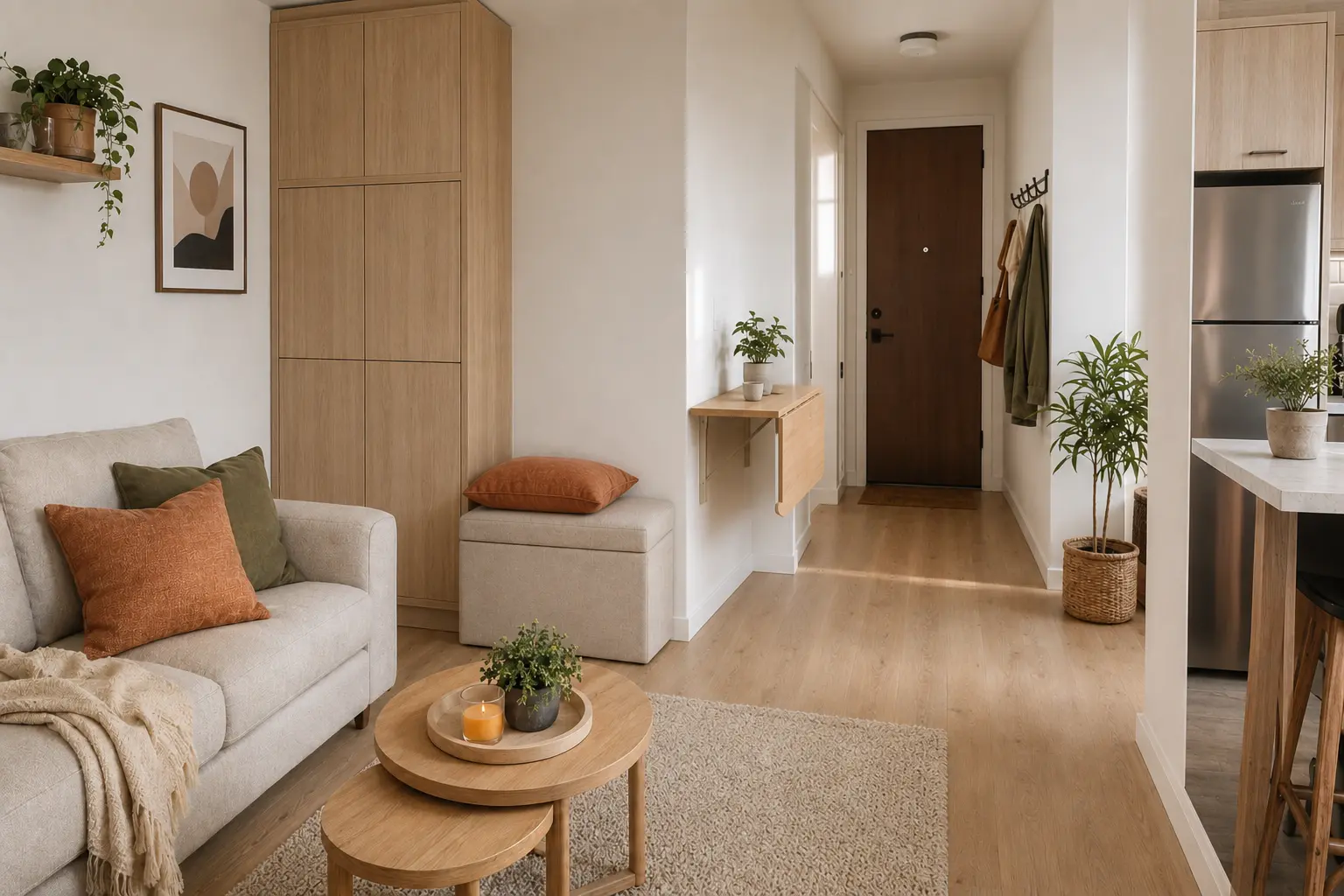
Less clutter, more room
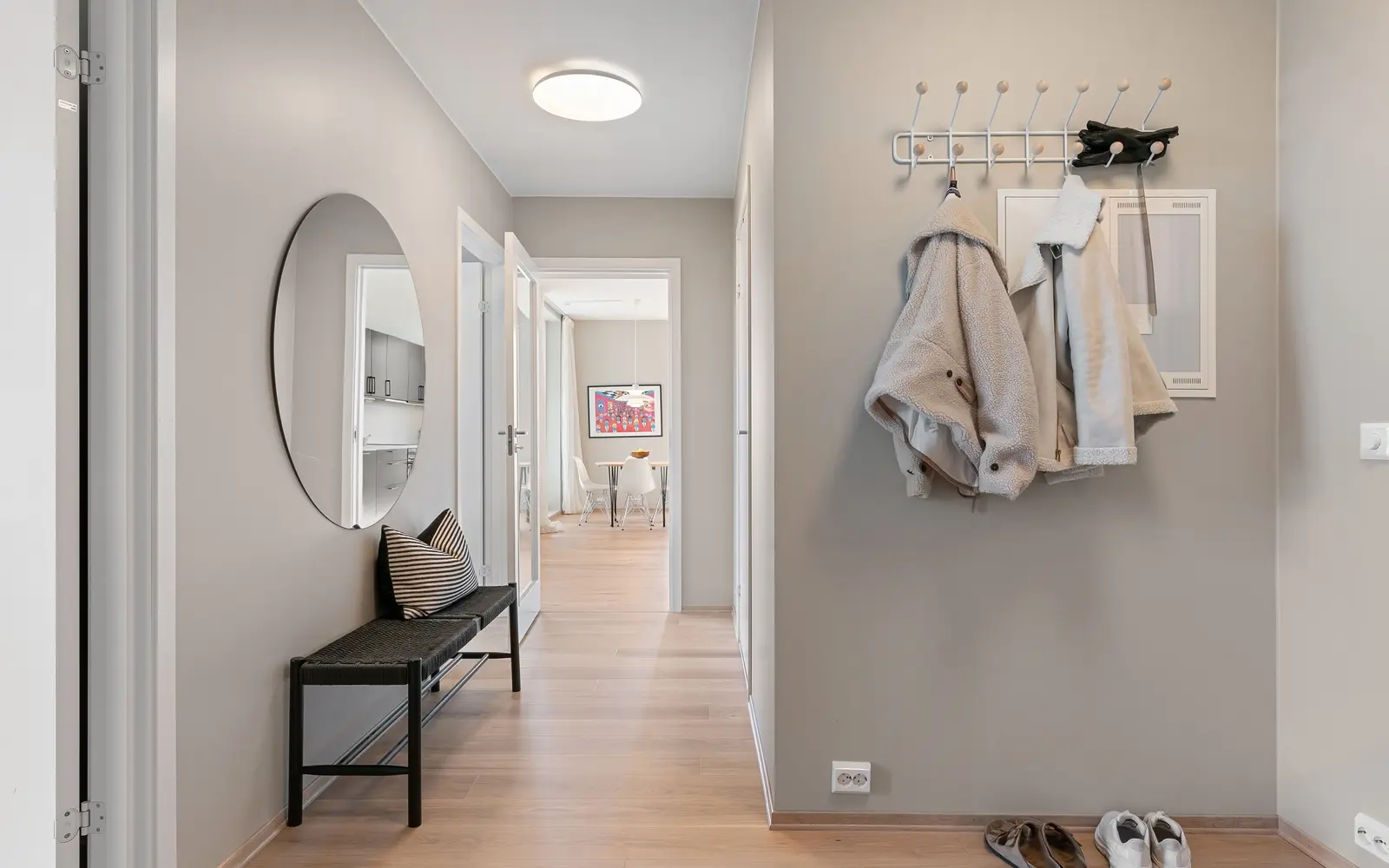
8 Small Entryway Organization Ideas for a Clutter-Free Home
Create a calmer entrance with practical hooks, a slim bench, simple shoe limits, and a two-minute daily reset.
A small entryway has to manage several jobs in very little space: shoes, coats, keys, bags, mail, and the first impression of home. The most useful setup is not the one with the most organizers. It is the one that protects the walkway, gives everyday items an obvious landing place, and takes only a few minutes to reset. Begin by removing everything, check the full swing of the door, and measure the clear path before adding storage.
Buying notes
Before a product earns space in your home
Use these checks to avoid buying a piece that looks good in a photo but fails in daily life.
Measure the exact space
Check materials and cleaning
Match finish and light tone
Keep access and walkways clear
Use this guide to compare: Slim entryway bench · Wall hooks · Woven storage baskets · Low shoe rack · Washable shoe tray · Shallow wall shelf
Define one landing zone and keep the floor clear
Choose one compact area beside the door for the items that arrive with you. A tray for keys, one hook for the current bag, and a small shoe zone are usually enough. Keep the door swing, stairs, and route through the home completely clear so the entrance remains safe and easy to use.
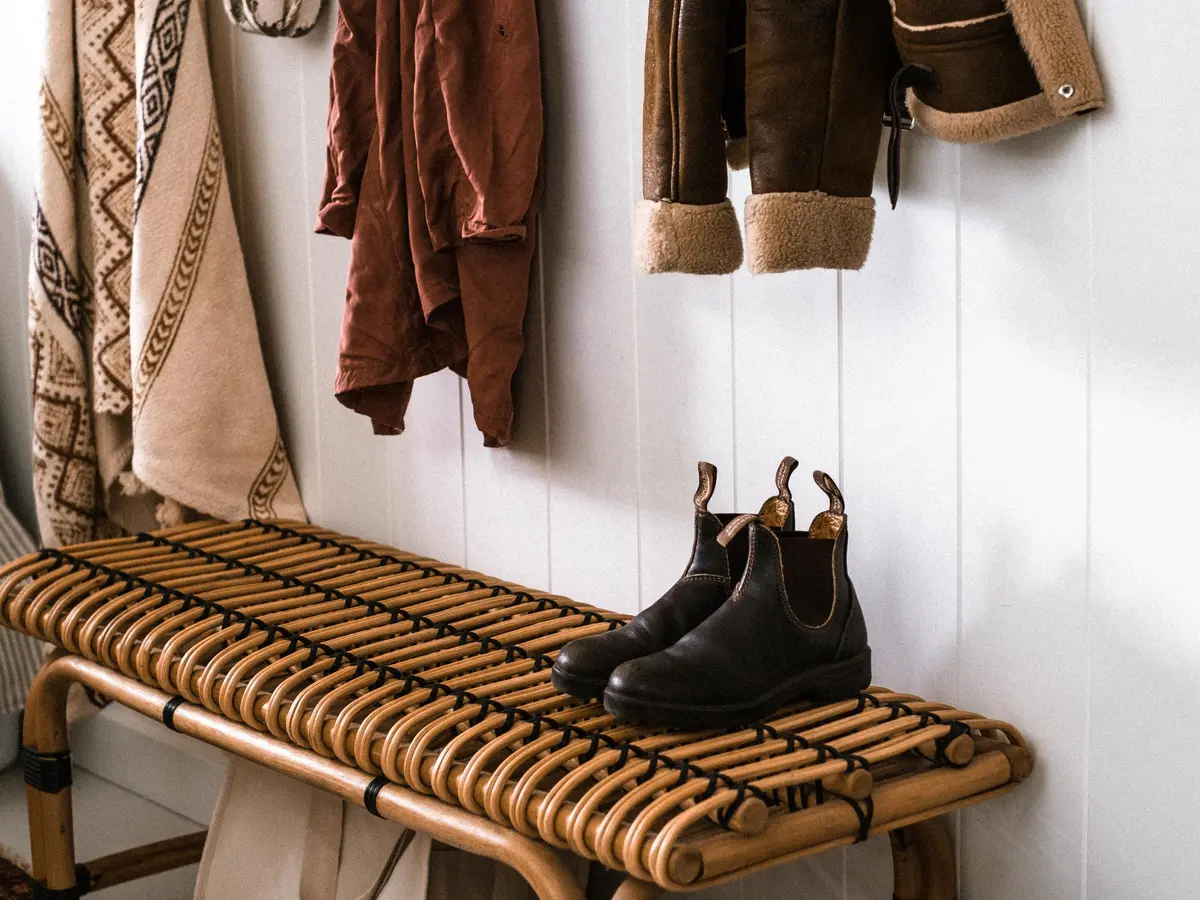
Add hooks at two useful heights
Place sturdy hooks where adults and children can reach them without stretching. Give frequently used coats and bags the easiest positions, then move occasional items to a closet or another room. Use fixings suited to the wall, respect the stated weight limit, and do not overload removable hooks.
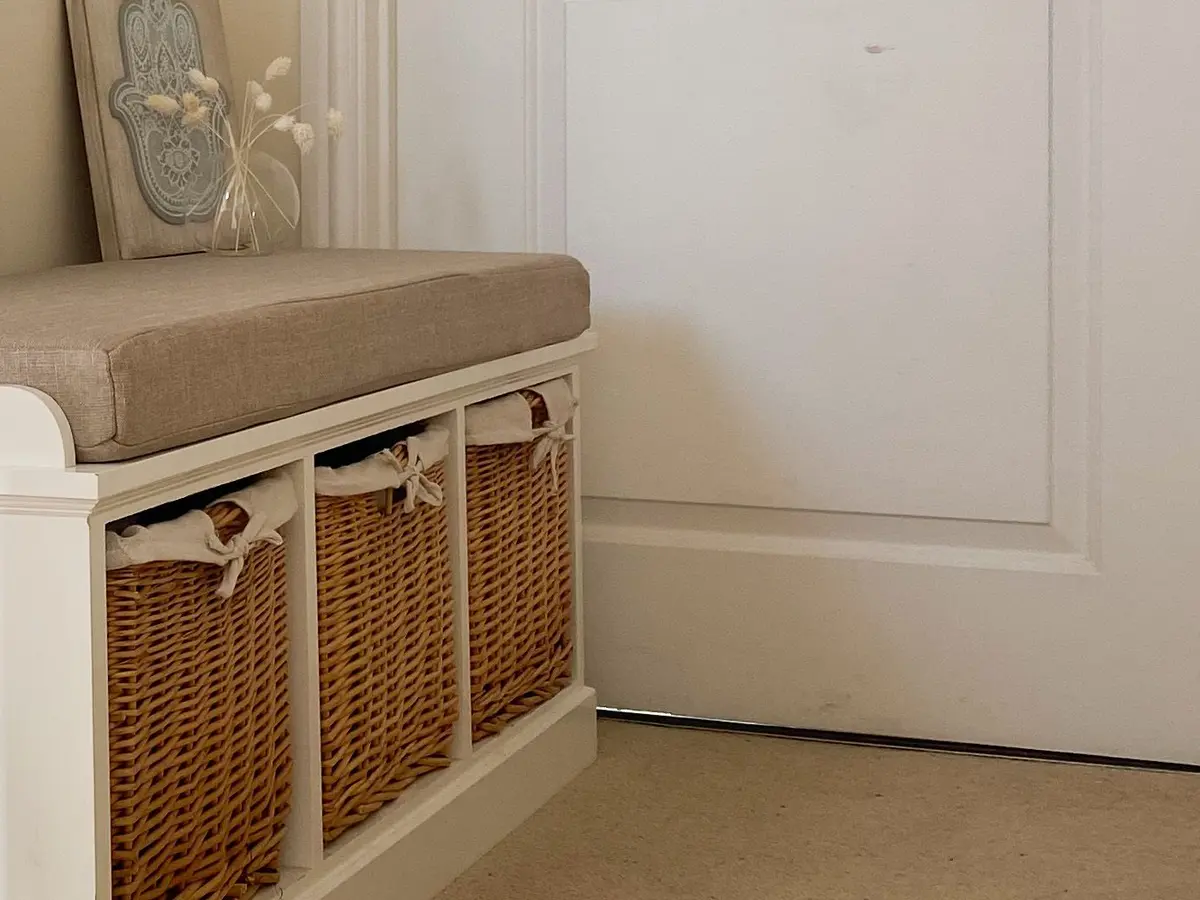
Use a narrow bench that earns its footprint
A bench is useful when it provides a safe place to sit and a defined space below for shoes or baskets. Measure both the depth and the seated height, leave enough room to pass comfortably, and choose a stable piece. Anchor furniture when the manufacturer or local safety guidance requires it.
Give each person one basket or cubby
Assign one easy-to-reach basket or cubby to each household member, or divide by category when that suits the home better. Hats and gloves can share one basket, while reusable bags or pet-walk supplies use another. The fixed limit prevents the entry from becoming overflow storage.
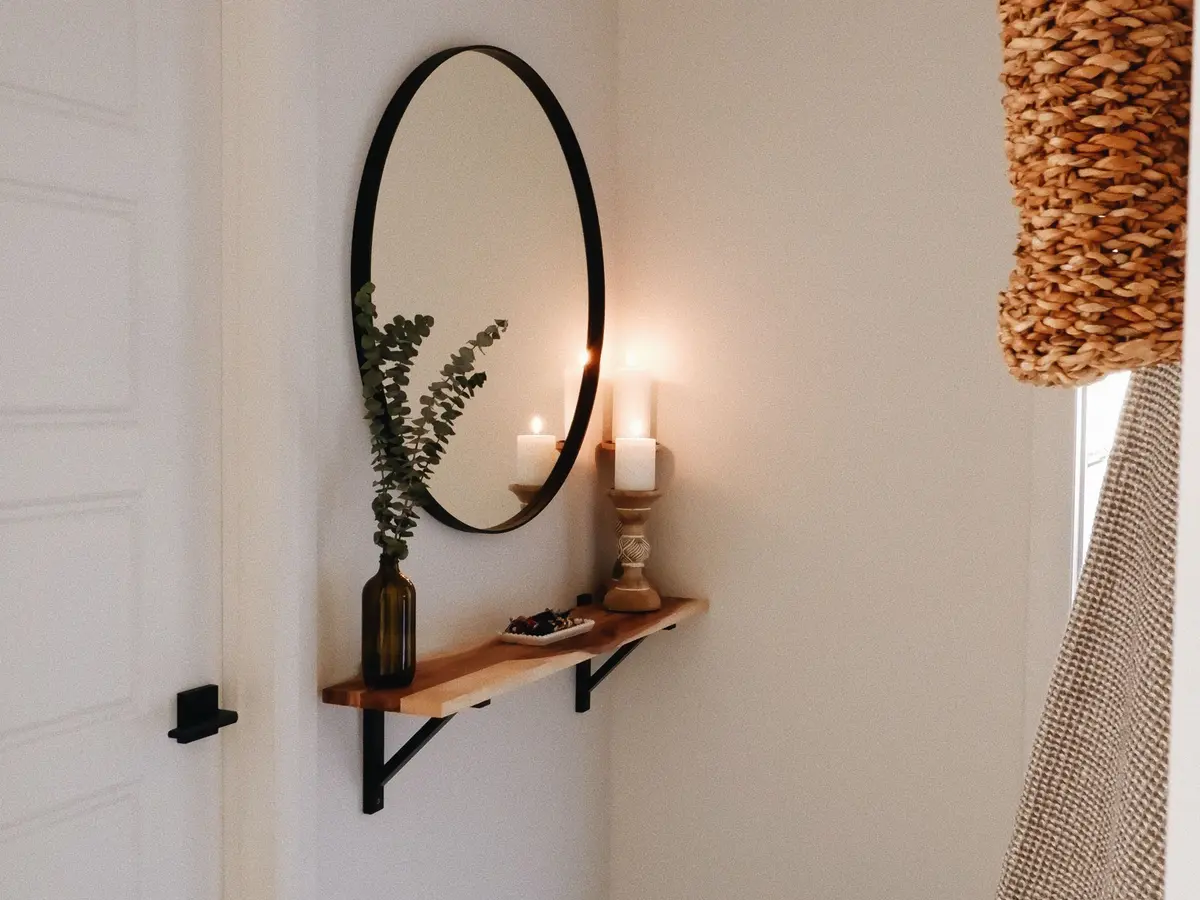
Add a shallow shelf or slim console for small essentials
A narrow wall shelf or compact console can hold a key dish and one small tray for outgoing items. Keep the surface intentionally sparse and move unopened mail elsewhere. Check that corners and handles do not narrow the path or catch clothing as people pass.
Use a mirror to support the routine, not create clutter
A mirror near the door makes a final check convenient and can reflect light into a darker hall. Choose a size that suits the wall, mount it securely, and avoid surrounding it with several decorative objects. One practical surface and one visual focal point are enough in a tight entrance.
Limit shoes to the current rotation
Keep only the shoes used this week at the entrance and move seasonal, special-occasion, or outgrown pairs elsewhere. A low rack, washable tray, or ventilated basket keeps the group contained. Leave wet shoes where they can dry without damaging the floor or trapping moisture.
Finish with a two-minute evening reset
Return keys to the tray, hang coats, pair the shoes, recycle unwanted paper, and move anything that belongs in another room. This tiny reset keeps the system visible and stops yesterday's arrivals from becoming tomorrow's pile.
The takeaway
Keep the change easy to live with.
A small entryway feels calmer when the walkway is protected, daily items have one obvious landing place, and storage has a clear limit. Measure before buying, use walls safely, keep only the current shoe and coat rotation nearby, and close the day with a two-minute reset.
Keep the guide close
Save all 8 ideas for your next home reset.
Keep this visual guide nearby and return when you are ready to make one simple, useful change at a time.
Save on Pinterest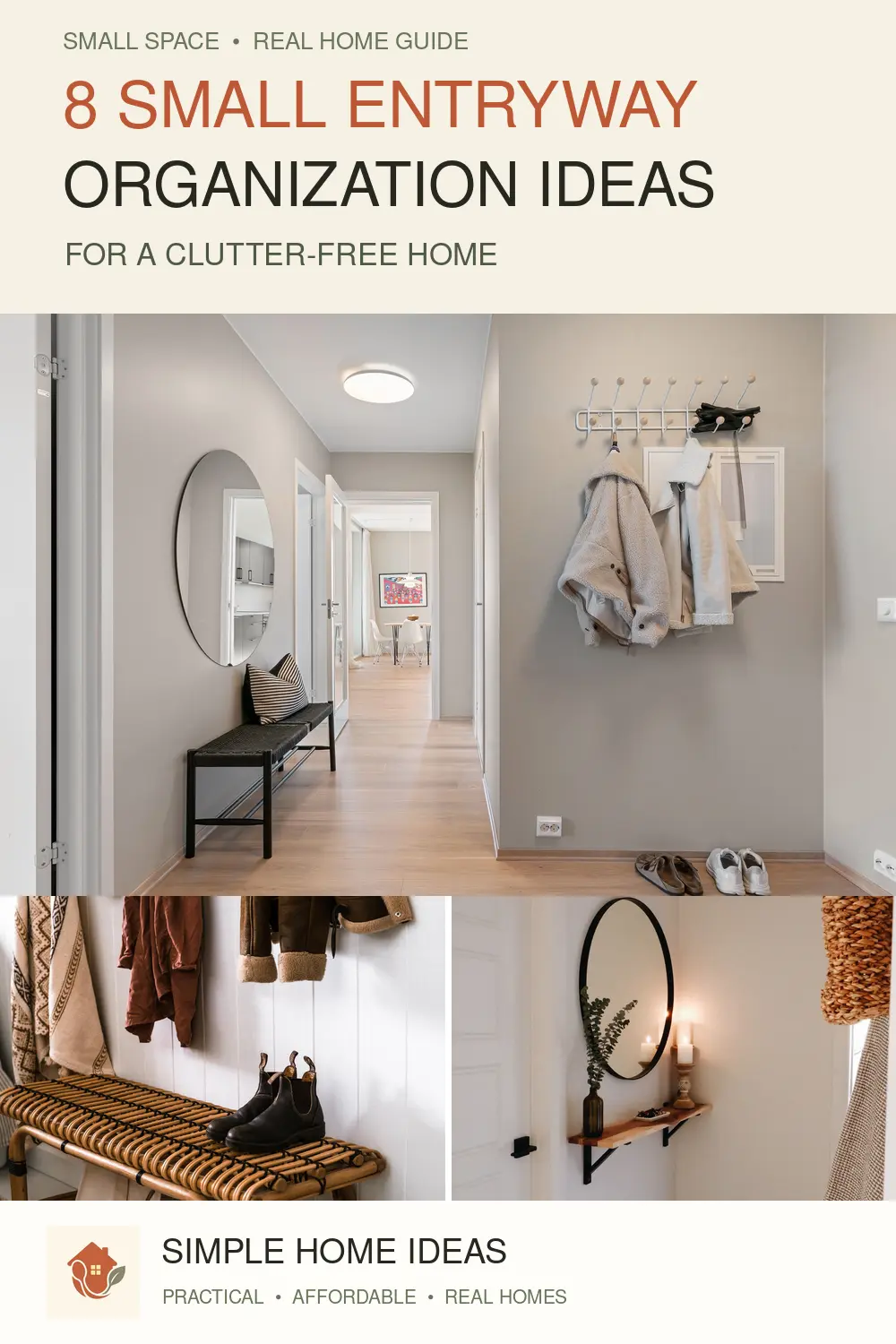
Keep exploring