Make every inch count
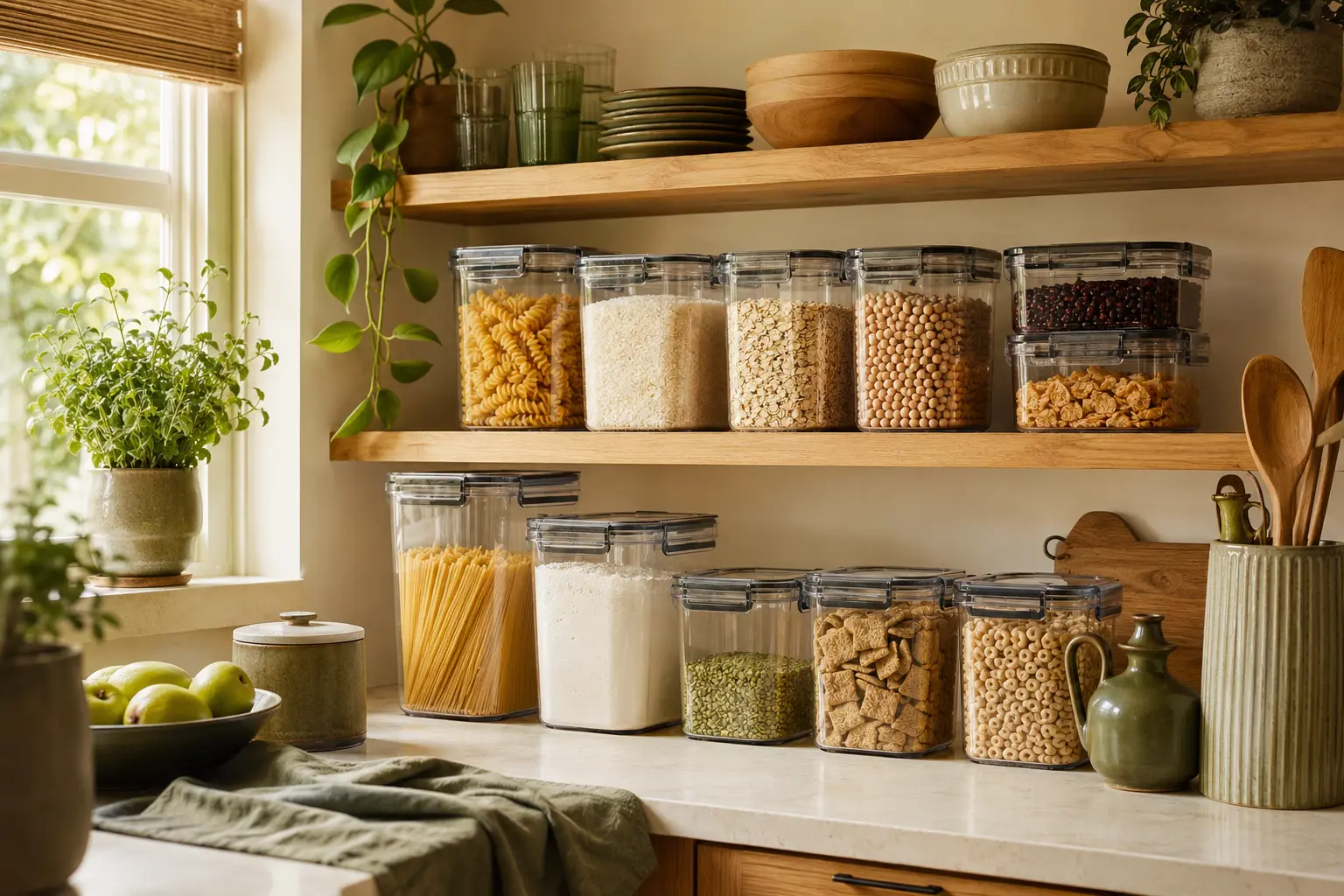
10 Best Kitchen Storage Containers for a Small Organized Kitchen
Choose practical container types for dry food, snacks, the freezer, and awkward packets without wasting shelf space.
The best kitchen storage container is not the prettiest matching jar. It is the container that fits your shelf, protects the food, opens easily, and gets refilled often enough to earn its space. This guide compares ten useful container types by the problem they solve so you can organize a small kitchen without buying a large set you will not use.
Build a container set from shelf measurements
Planning examples below are illustrative, not product tests or current price quotes.
Start with one shelf and one food category
Empty a single shelf and group what you actually replenish together, such as baking ingredients or breakfast foods. Keep the original packages until you have recorded cooking directions, allergens, lot details, and best-before dates. Decanting everything on day one creates extra washing and can remove information you still need. Foods already convenient in their packaging can stay in a washable basket.
Worked example: fitting a row
Imagine a shelf with 24 inches of clear width and containers measuring 4.5 inches across at their widest point. Five occupy 22.5 inches, leaving 1.5 inches in total; six would need 27 inches and will not fit. The remaining space must still allow you to grip a container. Measure lids and handles as well as bodies, and check whether you can remove a container without lifting it into the shelf above.
Capacity is not the same as fit
A volume in liters or quarts does not tell you the container's outside dimensions, and a bag weight does not translate to one universal container volume. Flour, rice, and cereal pack differently. Check the product's stated food-capacity examples where available, or measure the volume of your usual refill before buying. Leave working room for the scoop or pouring action instead of choosing a container filled to its rim.
Test one before buying the matching set
Try opening the lid with dry hands, pouring a small amount, and reaching the corners with your normal cleaning brush. Follow the manufacturer's food-contact, dishwasher, freezer, and heat-use instructions; a container suitable for pantry storage is not automatically suitable for reheating. Let every part dry fully before refilling. If a seal traps residue or replacement lids are unavailable, a cheaper set can become the more expensive choice over time.
Buying notes
Before a product earns space in your home
Use these checks to avoid buying a piece that looks good in a photo but fails in daily life.
Measure the exact space
Check materials and cleaning
Match finish and light tone
Keep access and walkways clear
Use this guide to compare: Rectangular airtight containers · Tall pasta containers · Medium flour and rice containers · Small snack boxes · Handled pantry bins · Lazy Susan turntable
Choose rectangular airtight containers for repeat-buy dry staples
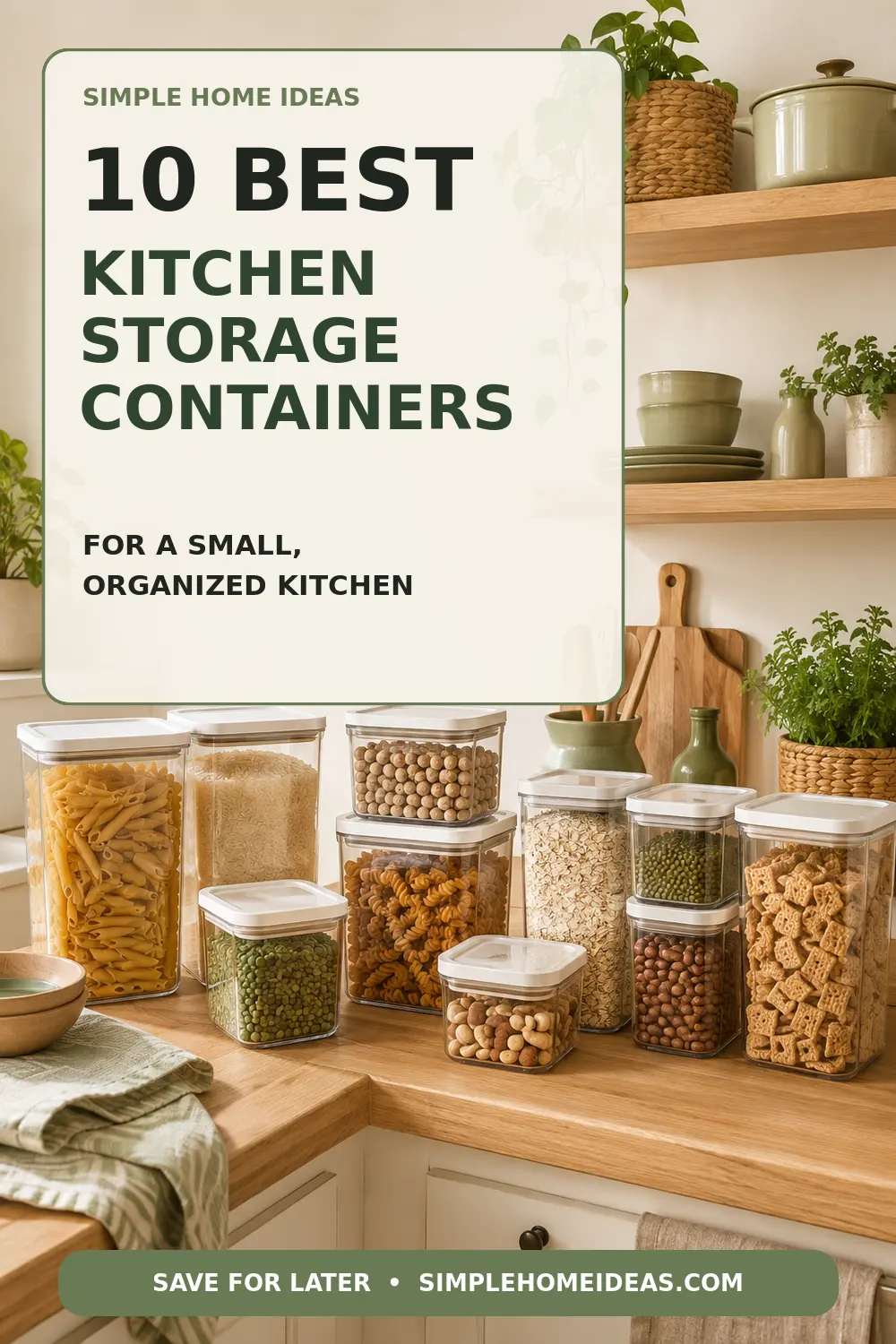
Straight-sided rectangular containers use shelf width more efficiently than round jars and make quantities easy to see. They work well for rice, oats, flour, sugar, and other staples you buy repeatedly. Choose food-safe containers with lids that are simple to remove, then keep the original cooking, allergy, and expiry information you still need.
Use tall narrow containers only for pasta and deep shelves
Tall containers can keep spaghetti and long noodles upright while using a narrow footprint. They are useful only when the shelf has enough height and the opening is wide enough for comfortable filling and cleaning. On a shallow shelf, a lower container may be easier to lift and safer to handle.
Pick medium containers for flour, rice, and oats
Medium containers are often more practical than oversized bins because they stay light enough to lift and fit under standard shelves. Match capacity to the package you normally buy, allowing a little empty space rather than mixing a new bag with an older batch.
Use small clear boxes for snacks and baking extras
Small boxes keep nuts, dried fruit, baking decorations, and individually wrapped snacks visible without allowing loose packets to spread. Give each box one broad category and avoid creating a separate labeled container for every tiny ingredient.
Choose handled bins for packets and breakfast items
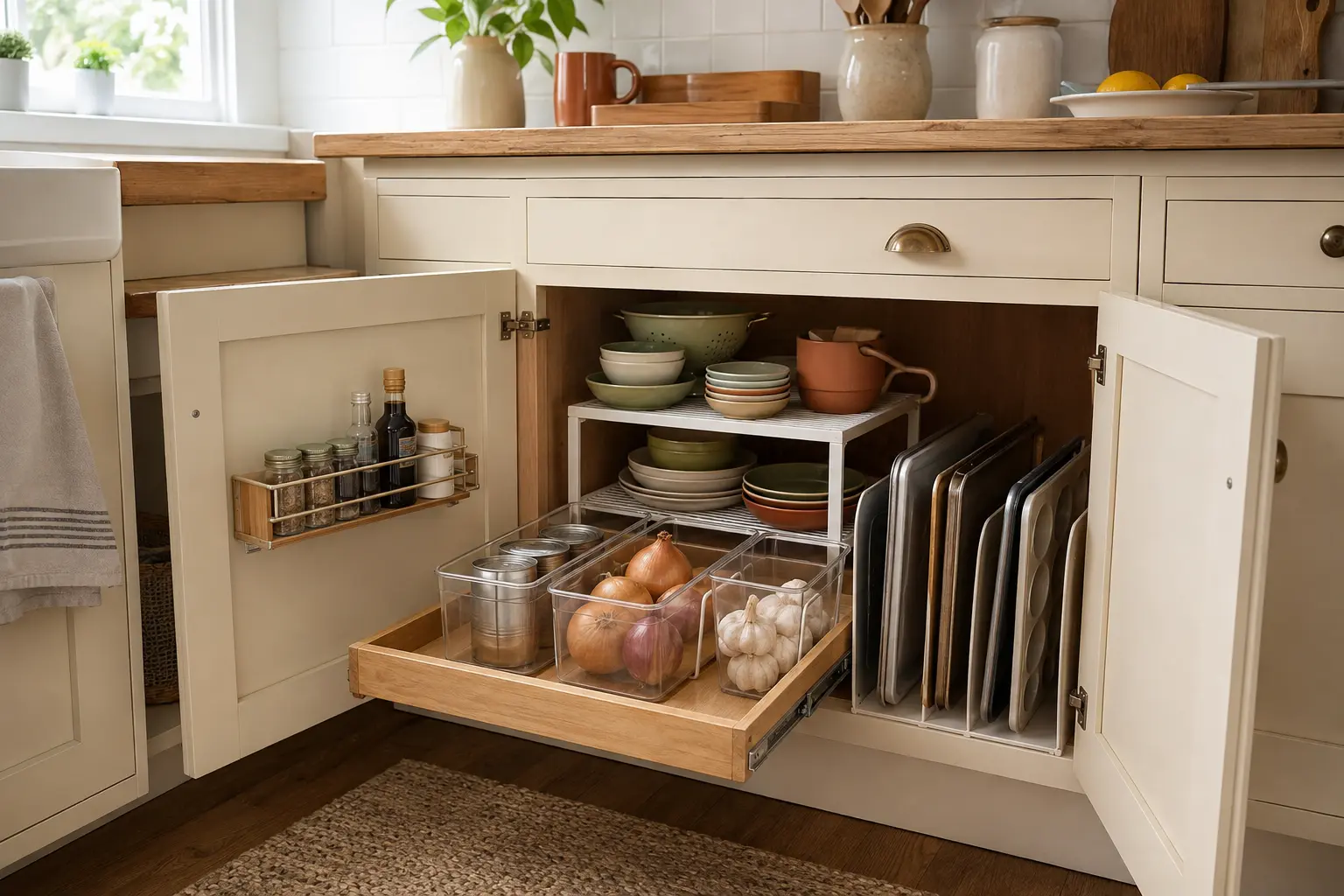
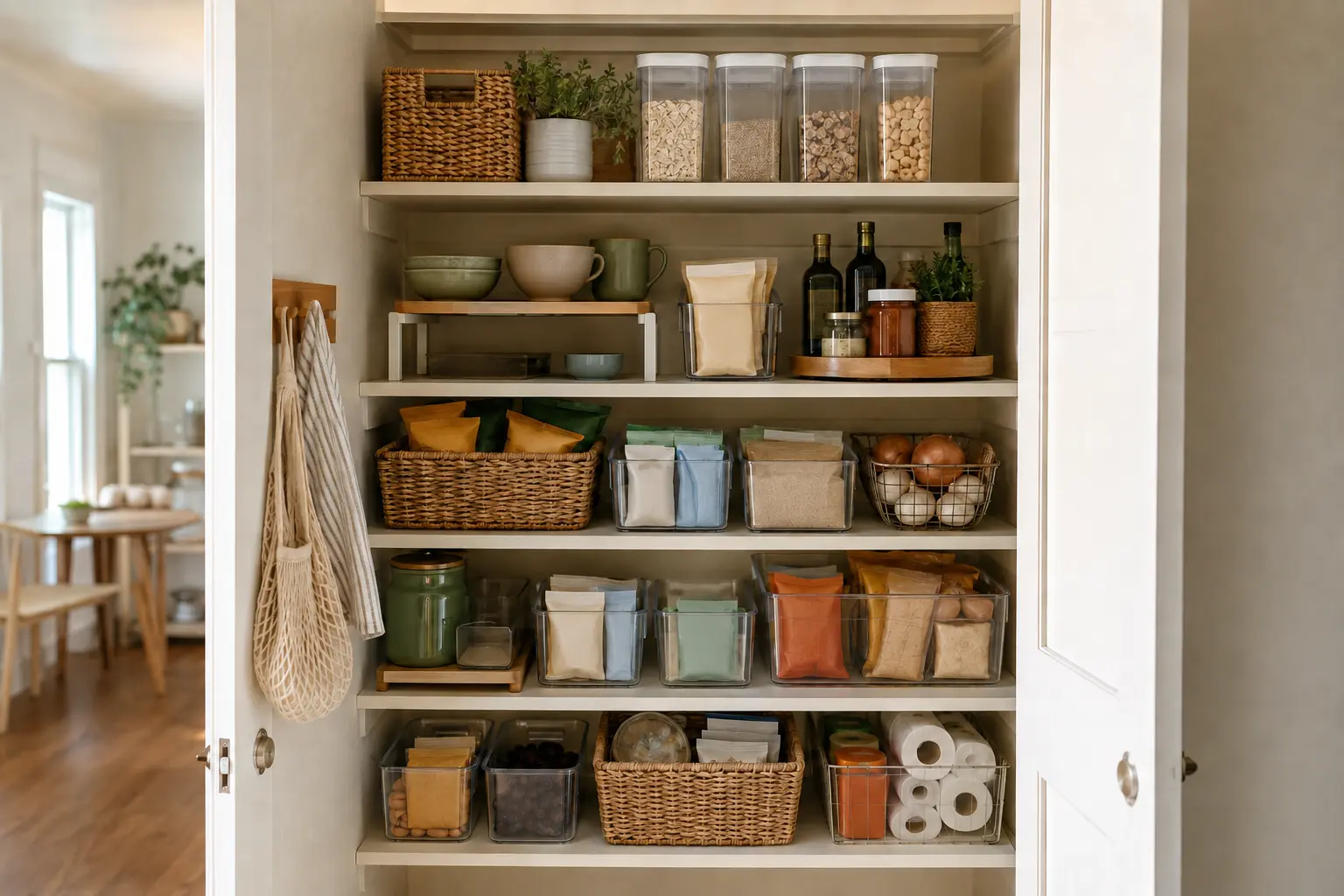
An open handled bin turns tea, oatmeal packets, snack bars, or breakfast supplies into one removable group. It is especially useful on a high or deep shelf because the whole category comes forward at once. Keep the bin light enough to lift safely and short enough that its contents remain visible.
Use a turntable for jars, sauces, and small bottles
A turntable can improve access in a cabinet corner or on a deep shelf where small bottles disappear behind each other. Choose a raised edge, confirm the full spinning diameter, and avoid loading it with tall unstable glass bottles that may tip when rotated.
Buy produce containers only when ventilation matches the food
Produce containers can help protect delicate fruit or separate washed items, but not every food benefits from a sealed box. Follow storage guidance for each type of produce, use ventilation where appropriate, and avoid washing items early if trapped moisture will shorten their life.
Choose freezer-safe containers that stack when full
Freezer containers should be clearly rated for low temperatures, close securely, and stack without sliding. Leave expansion room for liquids, label the contents and date, and use shapes that fit the real shelf or drawer rather than a large mixed set with unusable pieces.
Use labels for dates and contents, not decoration
A simple removable label helps distinguish similar foods and keeps refill dates visible. Include the product name and a useful date, then place the label where it can be read without lifting the container. Wash and dry the container fully before refilling it.
Measure the shelf and the food package before buying
Measure usable shelf width, depth, height, door clearance, and the package sizes you buy most often. Compare those dimensions with the container including its lid and handles. The right set should leave enough room to remove one container without unloading the entire shelf.
The takeaway
Keep the change easy to live with.
A useful container system begins with real food habits and accurate measurements. Prioritize straight sides, easy cleaning, visible contents, safe materials, and sizes that match what you buy. A small collection of well-chosen containers will organize a kitchen better than a large decorative set.
Keep the guide close
Save all 10 ideas for your next home reset.
Keep this visual guide nearby and return when you are ready to make one simple, useful change at a time.
Save on Pinterest