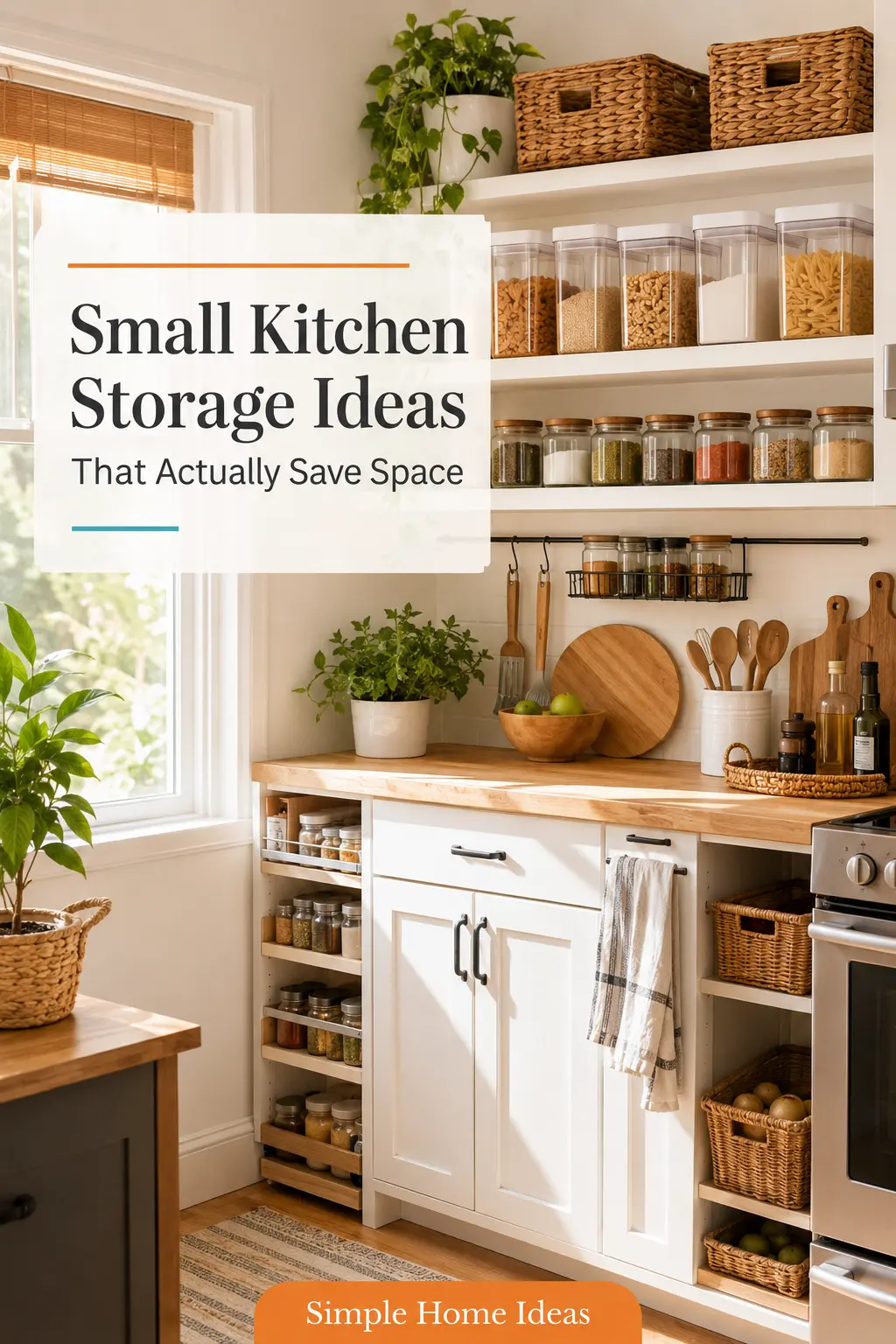
Make every inch count
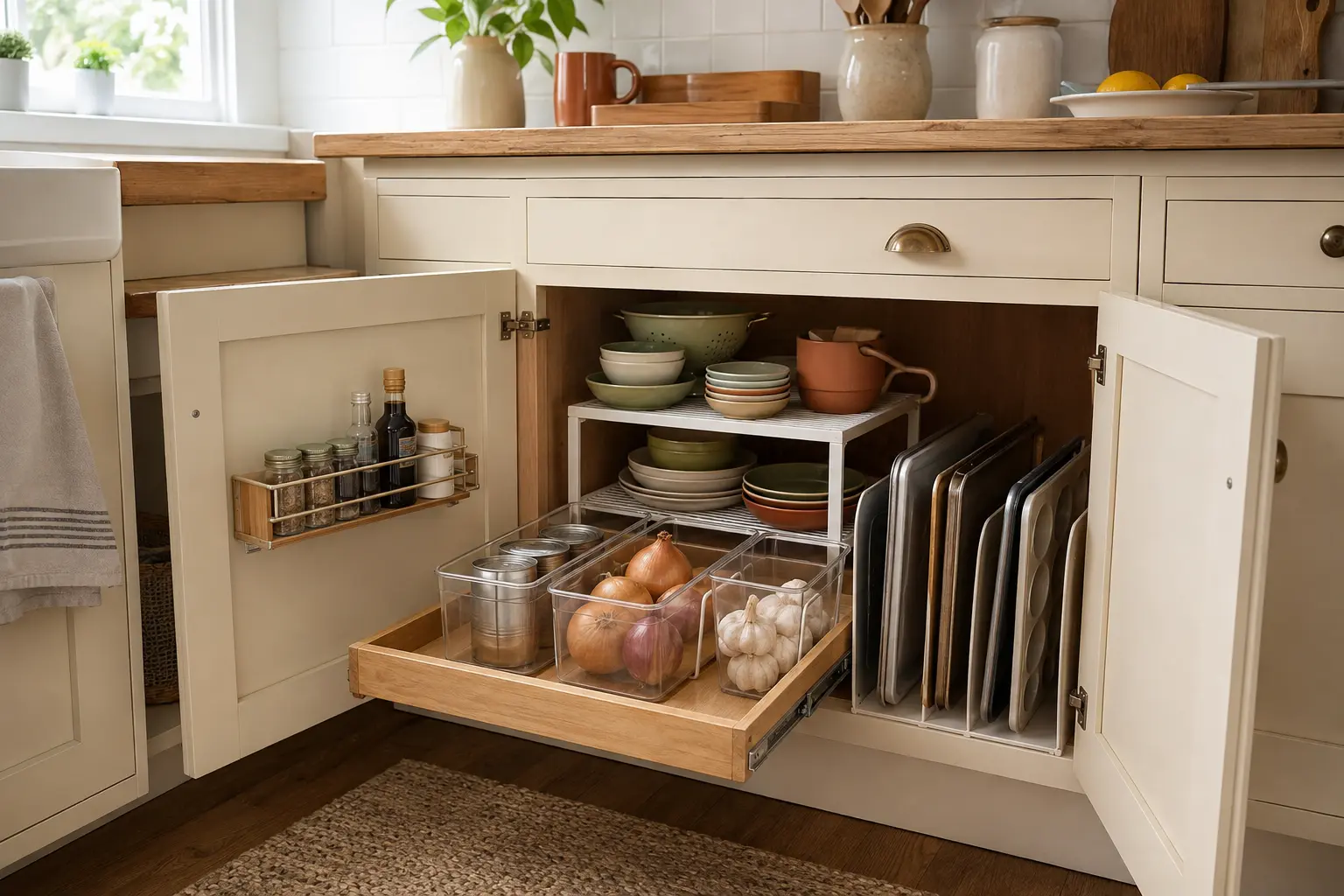
10 Small Kitchen Storage Ideas That Actually Save Space
Discover practical small kitchen storage ideas that help you save space, reduce clutter, and make your kitchen easier to use every day.
A small kitchen usually does not need more storage everywhere. It needs storage in the exact spots where food, tools, and cleaning supplies get hard to see or hard to return. These ideas focus on compact organizers that earn their space, protect your main prep zone, and make everyday routines easier without turning the room into a product display.
Before you buy
Quick storage helper
Match the product type to the space problem, then choose the smallest organizer that keeps the item visible and easy to return.
| If the problem is | Start with | Wait on |
|---|---|---|
| Food packets and staples waste shelf space. | Stackable containers or clear pantry bins sized to the shelf. | Large matching sets before you know which sizes you refill. |
| Cabinet height or corners are hard to use. | Shelf risers or a small Lazy Susan that works when full. | Deep organizers that hide the back row. |
| Tools and spices slow down cooking. | Drawer dividers, a compact spice rack, or a short wall rail. | Visible rails packed with tools you rarely use. |
Buying notes
Before a product earns space in your home
Use these checks to avoid buying a piece that looks good in a photo but fails in daily life.
Measure the exact space
Check materials and cleaning
Match finish and light tone
Keep access and walkways clear
Use this guide to compare: Stackable containers · Shelf risers · Spice rack · Drawer dividers · Clear pantry bins · Under-sink organizer
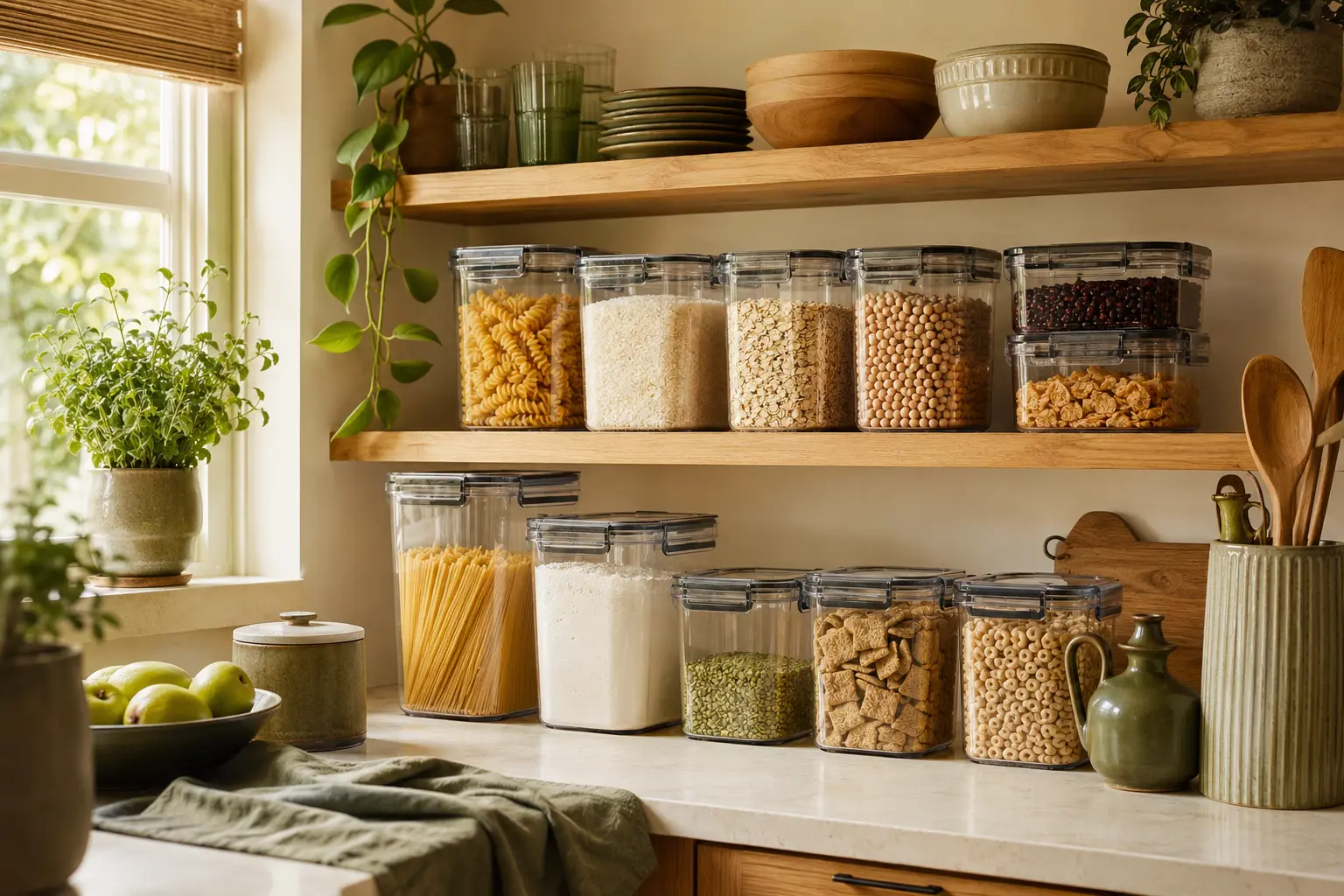
Use stackable food containers
Stackable containers can save space when they replace awkward half-empty bags and boxes you buy repeatedly. Choose straight-sided, food-safe containers that fit the real shelf height, then keep cooking instructions, dates, and allergy information where you can still find them.
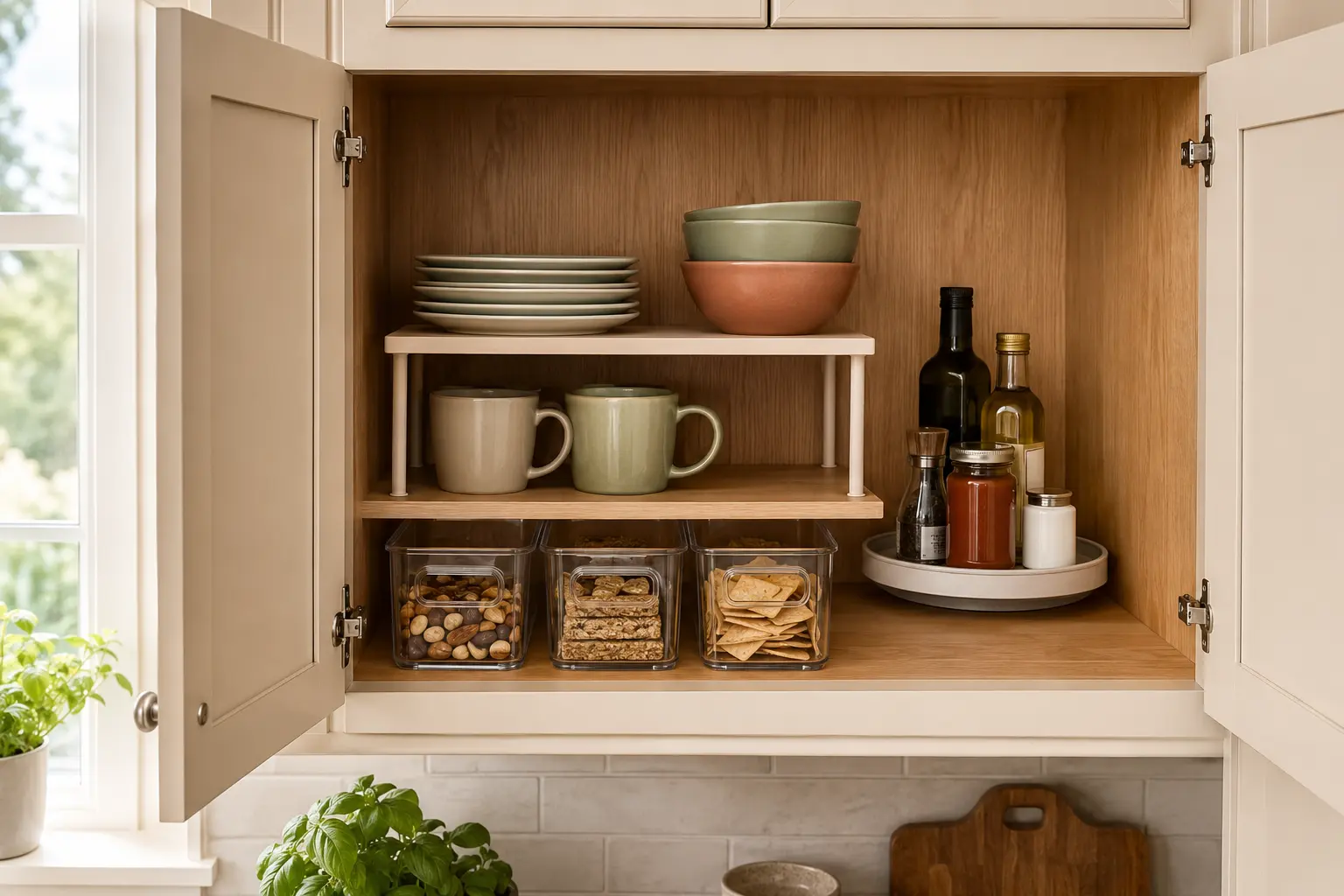
Add shelf risers inside cabinets
A shelf riser turns unused vertical space into a second level for mugs, bowls, plates, cans, or short pantry items. It should let you see both rows clearly and remove one item without lifting everything around it.
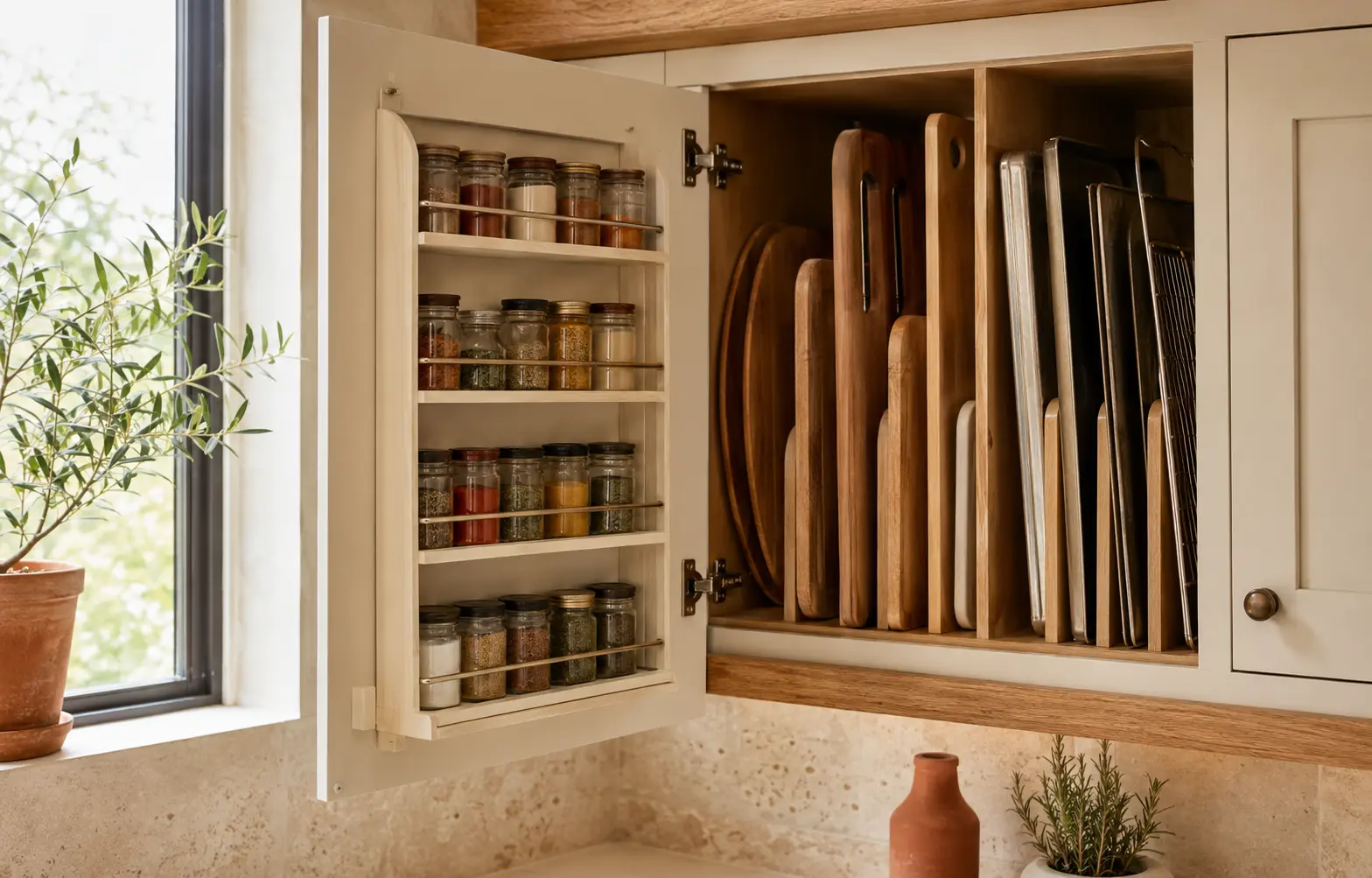
Organize spices with a compact spice rack
Spices waste space when they spread across several shelves or hide behind taller bottles. A compact rack, shallow door shelf, or small stepped insert keeps labels visible and makes cooking faster.
Use drawer dividers for utensils
Drawer dividers stop everyday tools from sliding into one mixed layer. Adjustable dividers are especially useful in small kitchens because they can separate cutlery, cooking utensils, measuring spoons, and small prep tools according to what you actually own.
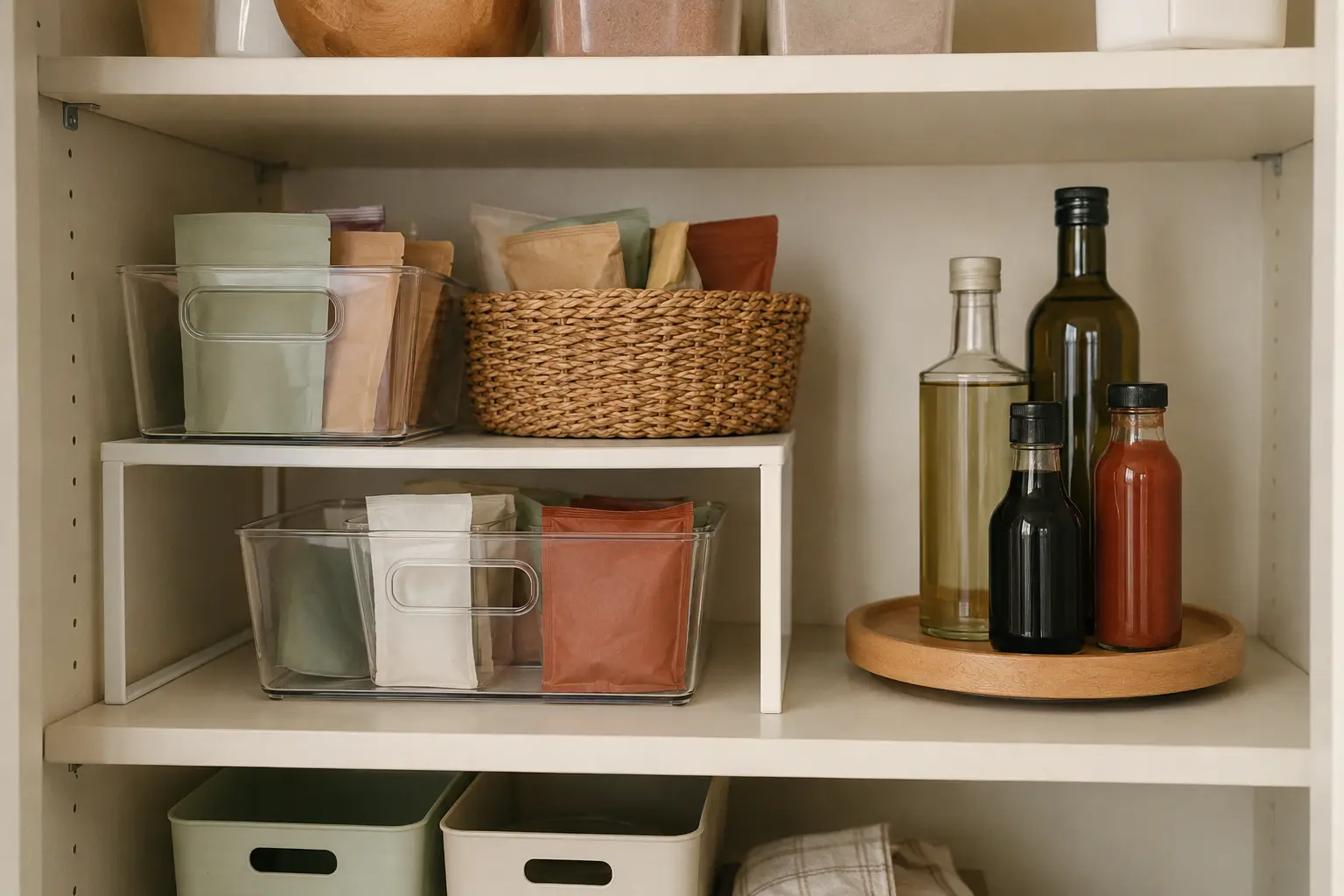
Try clear bins for pantry items
Clear bins help with loose packets, breakfast items, snacks, baking extras, and small backstock that normally spreads across the shelf. Use broad categories rather than making a separate container for every product.
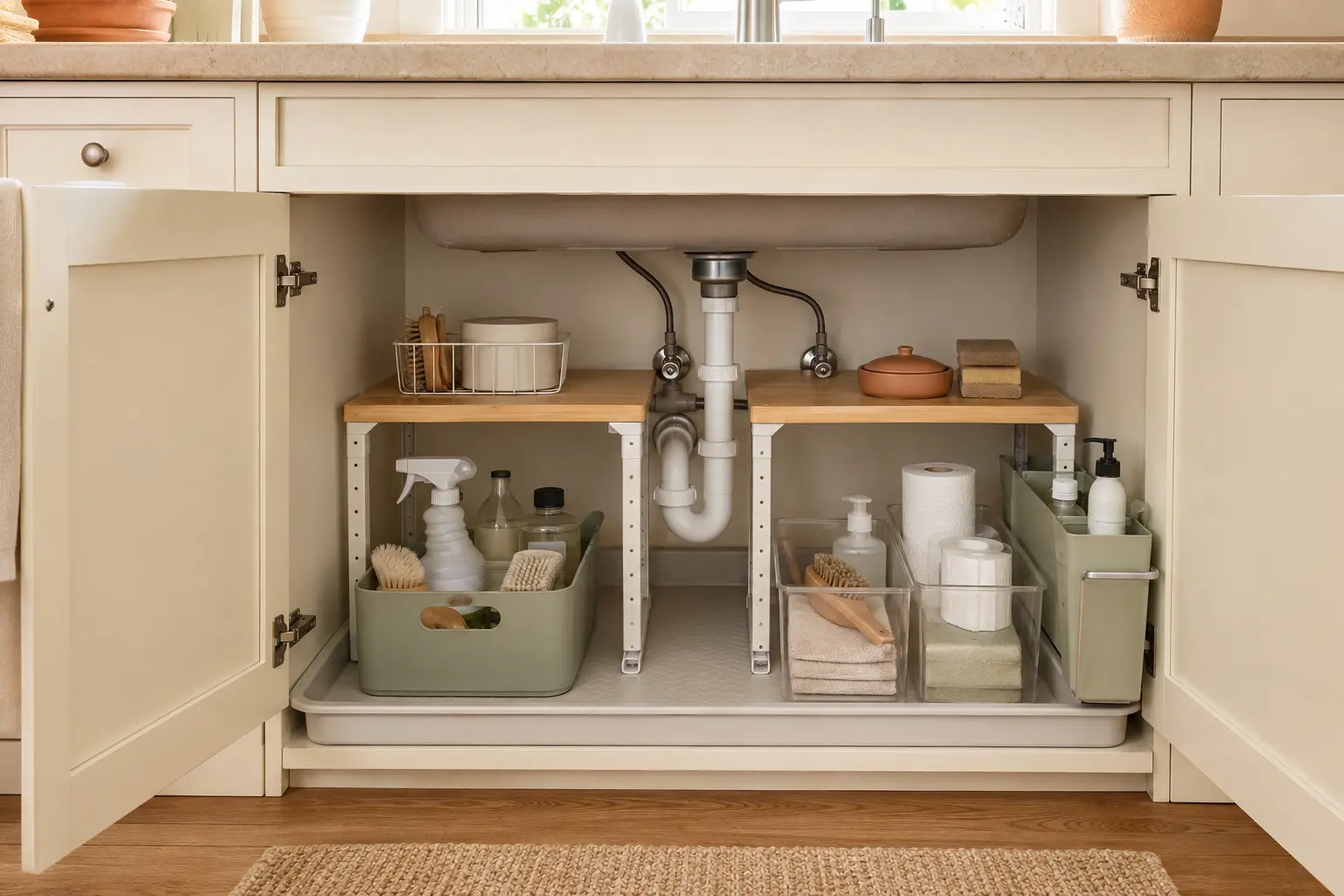
Add an under-sink organizer
The space under the sink can hold daily cleaning supplies, cloths, and bags, but it must stay safe and easy to inspect. Choose a removable organizer that works around pipes and leaves shut-off valves visible.
Use a Lazy Susan for corners
A small turntable can rescue deep corners where jars, sauces, oils, or baking bottles disappear. Choose one with a raised edge, check the full spinning diameter, and avoid loading it with tall unstable items.
Hang tools on wall hooks or rails
Wall hooks or a slim rail can move frequently used utensils, mugs, towels, or small pans out of crowded drawers. Keep the rail away from direct heat and install it according to the wall surface and product instructions.
Add over-the-door storage
An over-door rack can use the back of a pantry, cabinet, or utility door for wraps, light packets, cleaning cloths, or spare bags. Check door clearance, hinge movement, and weight limits before filling it.
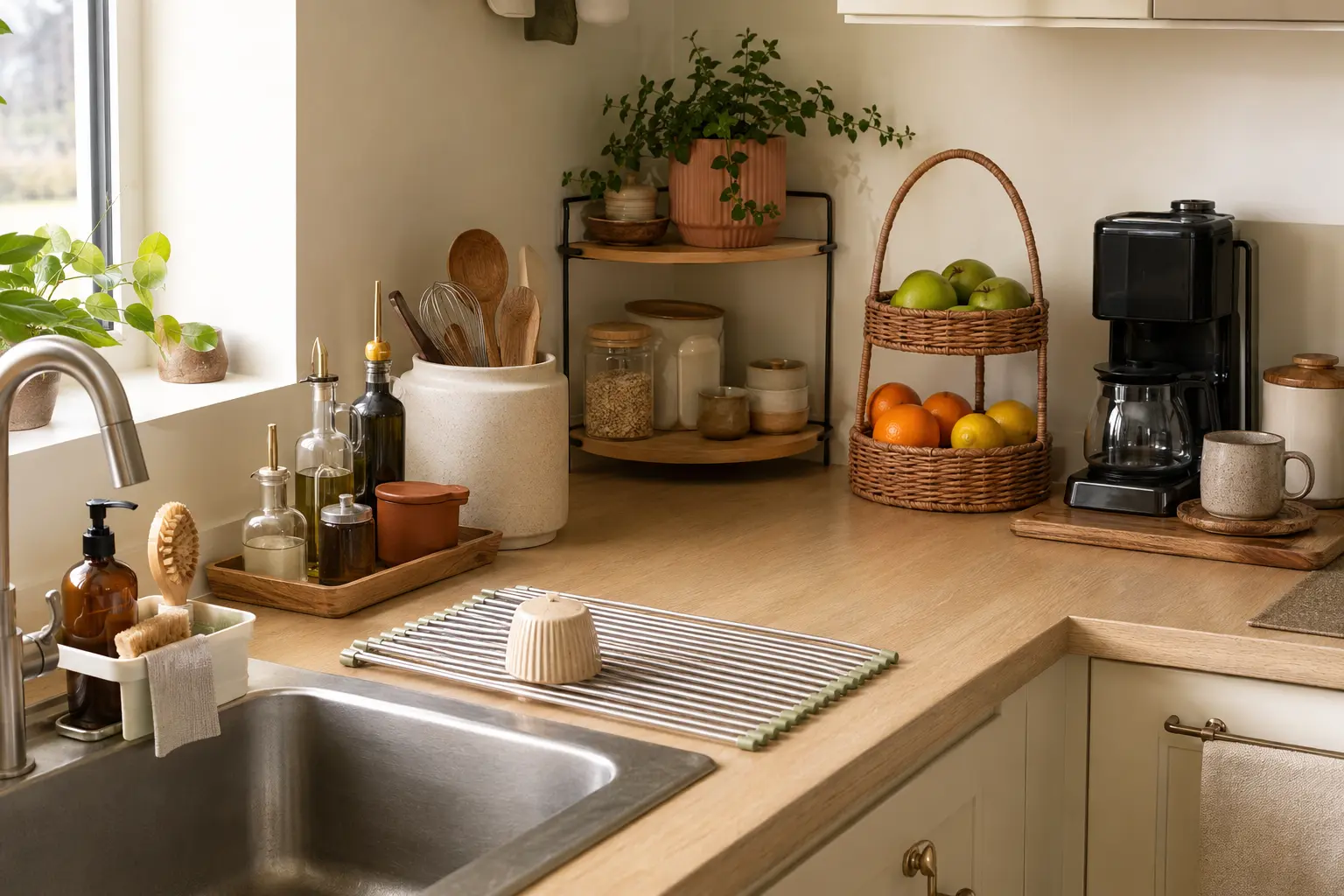
Keep counters clear with smart baskets
A small basket or tray can group items that must stay out, such as produce, tea supplies, lunch snacks, or daily vitamins. The basket should replace loose clutter, not become a permanent holding zone for everything that has no home.
The takeaway
Keep the change easy to live with.
The best small-kitchen storage idea is the one that solves a repeated problem without stealing your prep space. Measure first, choose one frustrating zone, and add only the organizer that makes daily cooking, cleaning, or unloading easier.
Helpful answers
Questions readers often ask
What should I organize first in a small kitchen?
Start with the zone that slows you down every day, usually the pantry shelf, utensil drawer, spice area, or main prep counter. Fix one zone before buying organizers for the whole room.
How do I avoid buying storage that wastes space?
Measure the real opening, check how the organizer works when full, and make sure it protects a clear prep area. If it only hides clutter, wait.
Keep the guide close
Save all 10 ideas for your next home reset.
Keep this visual guide nearby and return when you are ready to make one simple, useful change at a time.
Save on Pinterest