Less clutter, more room
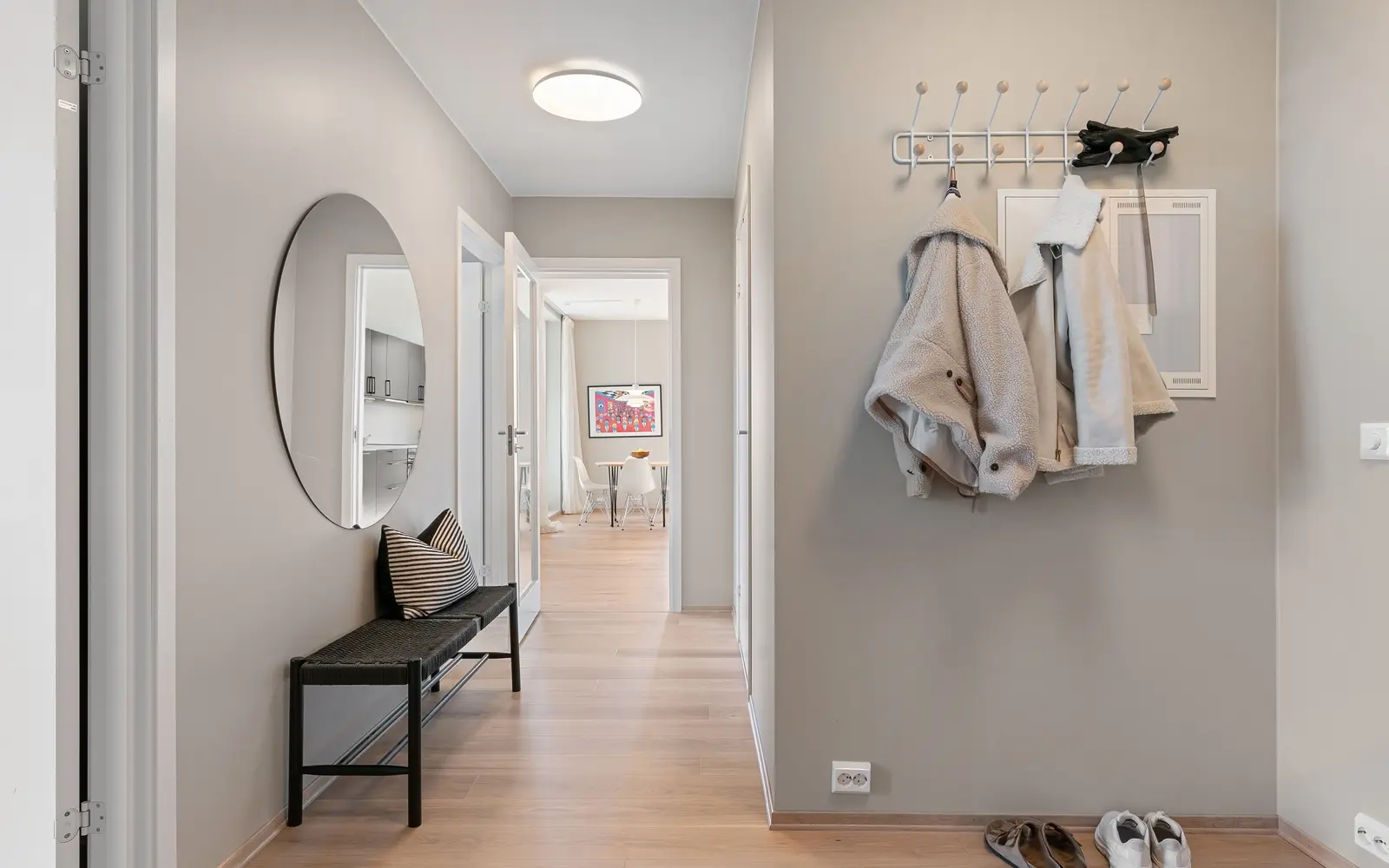
9 Small Entryway Ideas for Homes Without a Mudroom
Create a practical drop zone for shoes, coats, keys, bags, and wet-weather items even when your home opens straight into the living space.
A home without a mudroom still needs somewhere to catch the things that arrive at the door. Shoes, coats, bags, keys, mail, umbrellas, and wet-weather items need a small system before they spill into the living room, kitchen, or hallway. The best small entryway ideas do not try to copy a large mudroom. They create one compact arrival routine, protect the walkway, and keep only the current daily items near the door.
Before you buy
Quick entryway helper
Start with the item that spreads first, then add the smallest landing-zone support that contains it.
| If the problem is | Try | Wait before |
|---|---|---|
| Shoes spread into the living room. | A low tray or rack with one or two pairs per person. | A large shoe cabinet that narrows the doorway. |
| Coats and bags land on chairs. | A short row of sturdy hooks near the door. | A decorative bench if the wall is the real storage problem. |
| Keys and mail disappear. | One shallow shelf or small tray for outgoing items. | A deep console table that becomes a dumping zone. |
Buying notes
Before a product earns space in your home
Use these checks to avoid buying a piece that looks good in a photo but fails in daily life.
Measure the exact space
Check materials and cleaning
Match finish and light tone
Keep access and walkways clear
Use this guide to compare: Narrow storage bench · Heavy-duty wall hooks · Low shoe tray · Umbrella stand · Washable entry mat · Closed storage basket
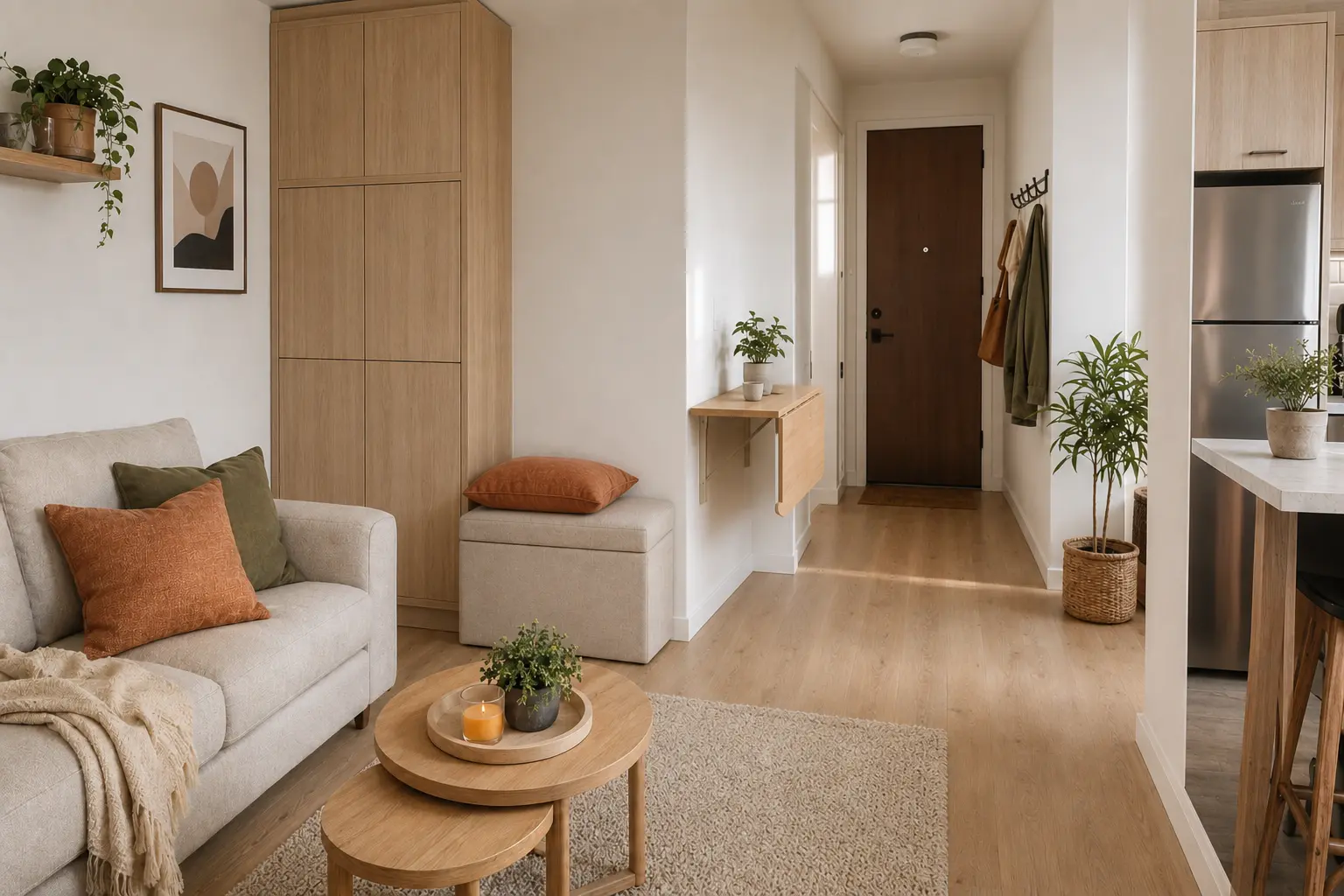
Choose the smallest possible landing zone
Start by choosing one short wall, corner, or strip beside the door as the landing zone. Measure the door swing, the clear walking route, and the depth available before adding furniture. A tight entry usually works better with one defined zone than with several small organizers scattered around the room.
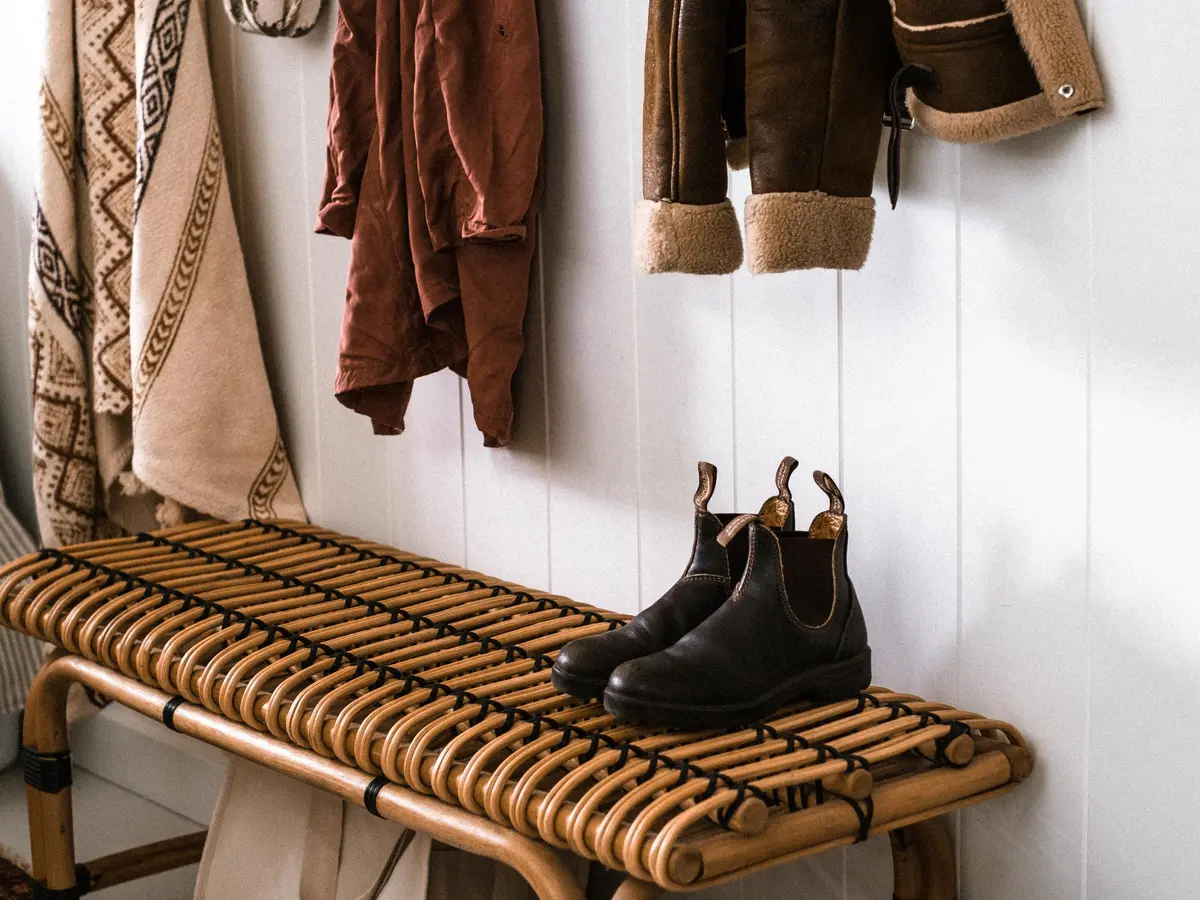
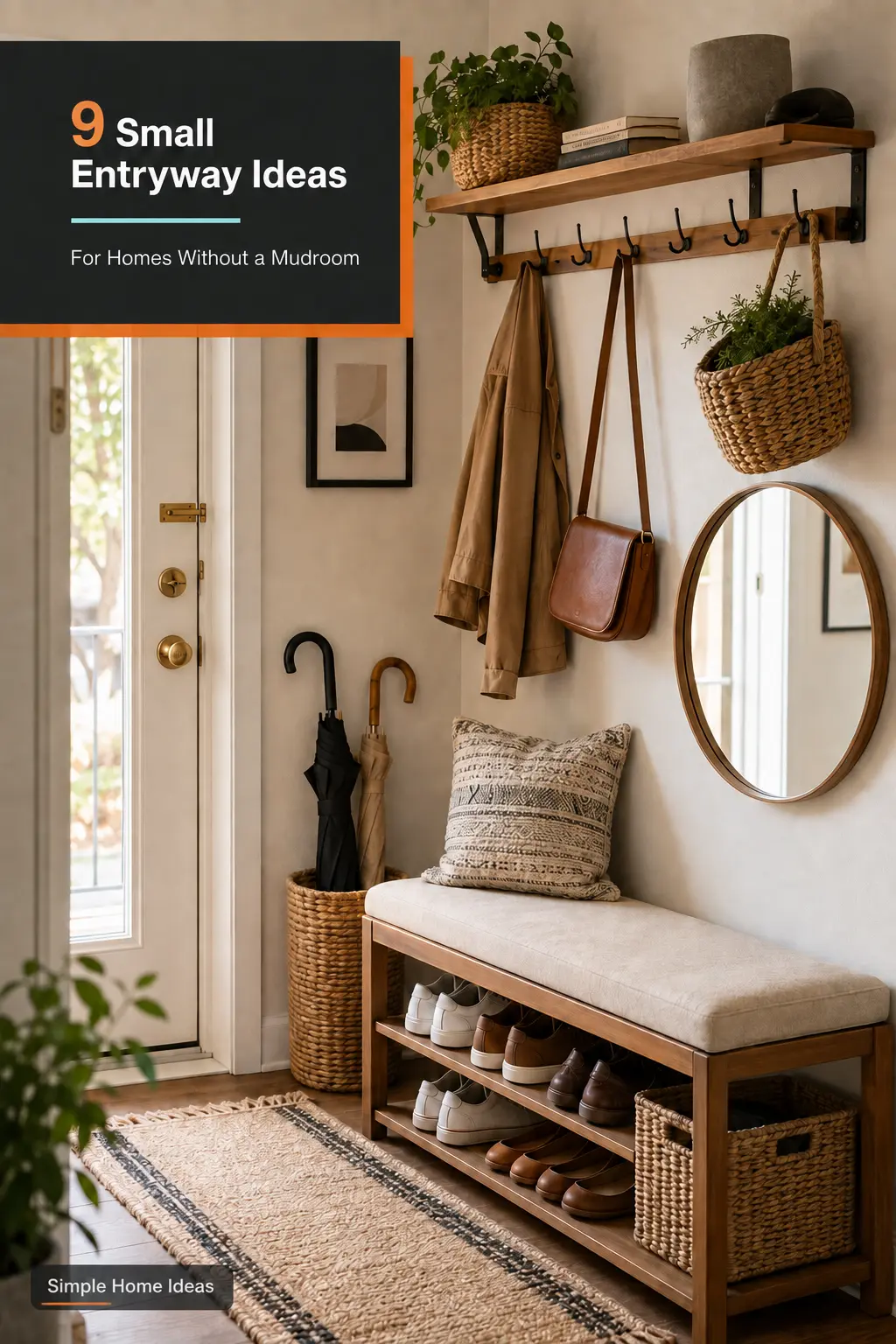
Use hooks as the missing closet
Wall hooks can replace a coat closet when they are limited and placed at useful heights. Give the easiest hooks to the coats, bags, or dog-walk items used every day, then move out-of-season pieces elsewhere. Choose hardware suited to the wall and the expected weight, and avoid overloading removable hooks.
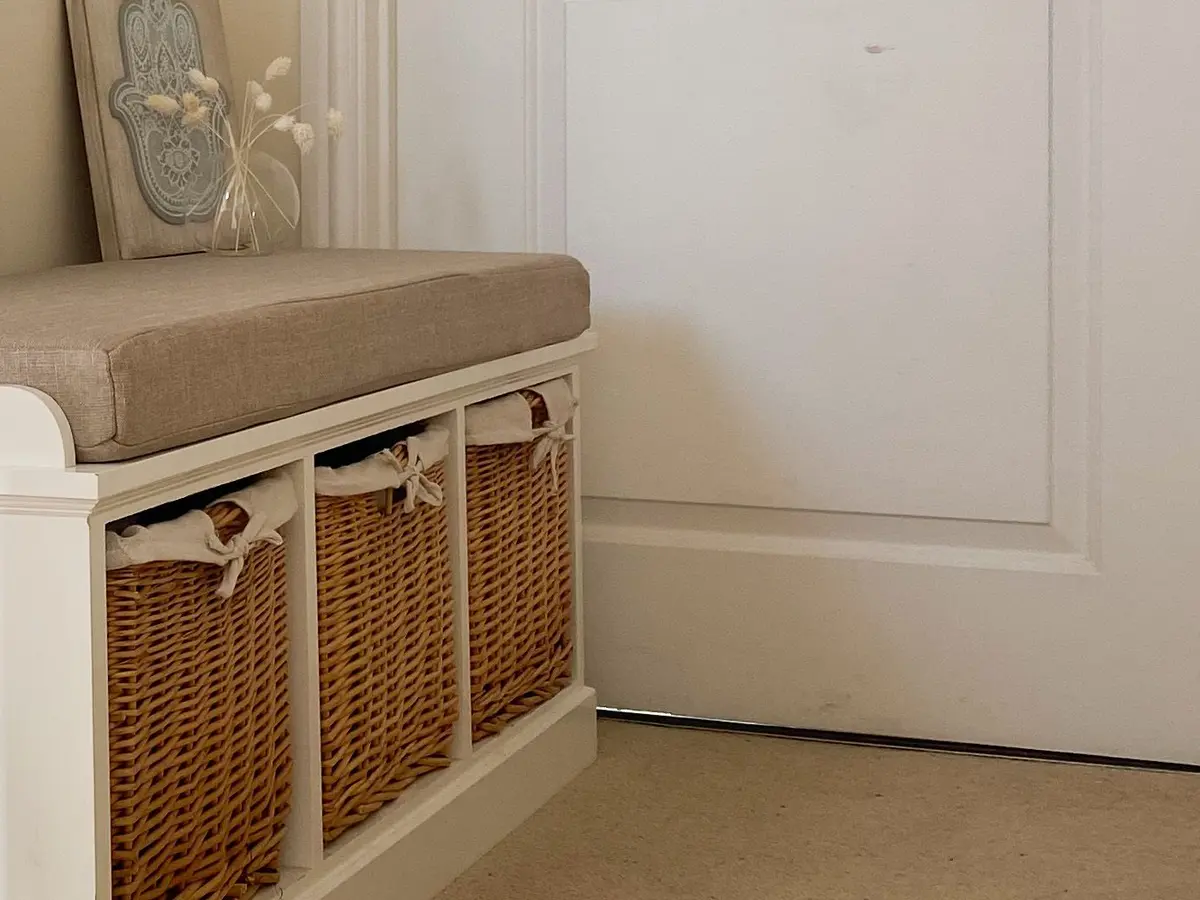
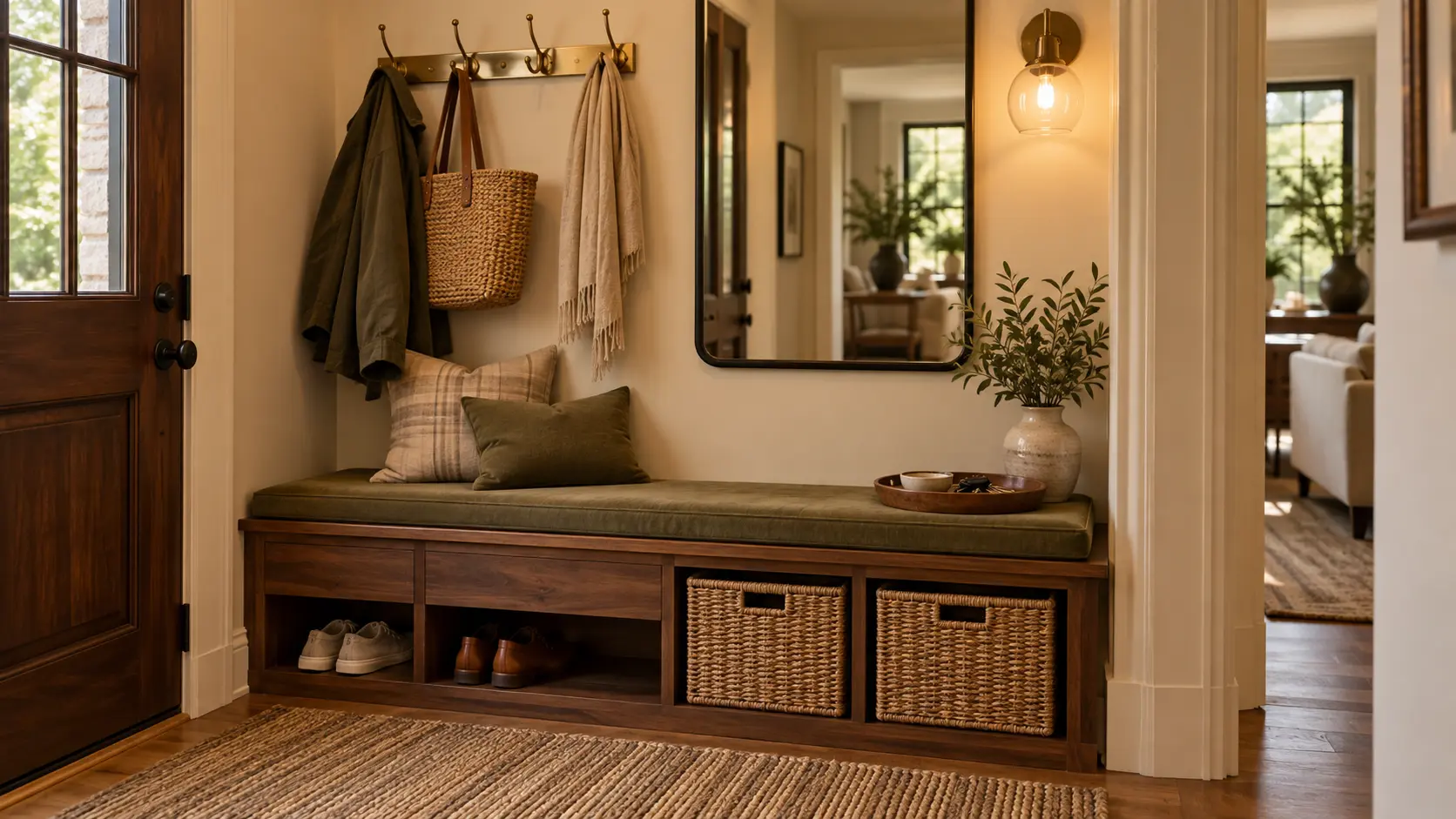
Add a bench only if it also stores shoes
A small bench is useful when it gives people a safe place to sit and creates a clear shoe limit underneath. Choose a shallow, stable piece and leave room to pass without turning sideways. If the entry is extremely narrow, a wall-mounted shelf plus a low shoe tray may be better than a full bench.
Contain shoes with a visible limit
Without a mudroom, shoes can take over the first room quickly. Keep only the pairs used this week by the door and move seasonal or occasional shoes to another closet. A low rack, washable tray, or two shallow baskets makes the limit obvious and keeps the floor easier to clean.
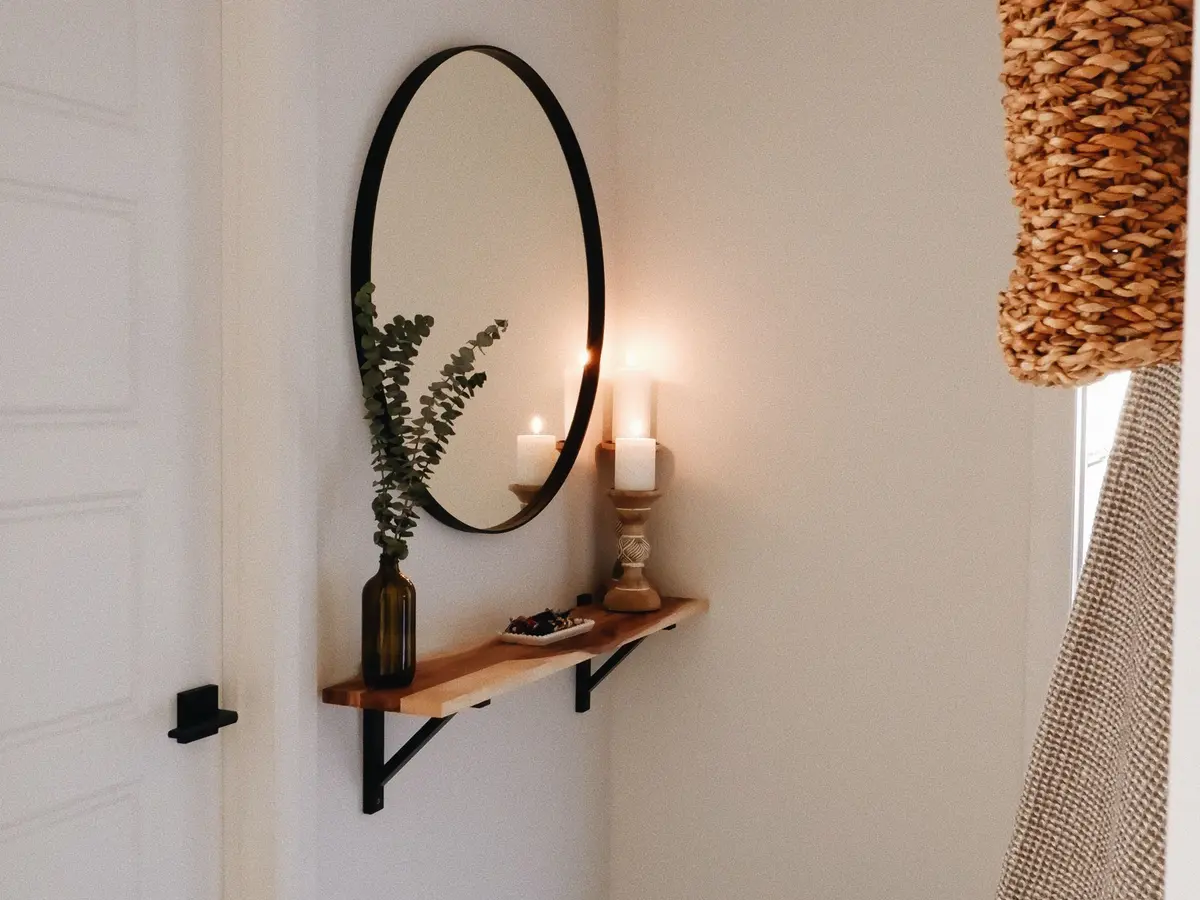
Create a tiny command surface for keys and mail
A shallow wall shelf, narrow console, or small tray can hold keys, sunglasses, and outgoing mail. Keep the surface intentionally small so it cannot become a dumping ground. If mail piles up, move sorting to a desk or kitchen counter and use the entry only for items leaving the house.
Plan for wet items before the first rainy day
Homes without mudrooms still need a place for umbrellas, damp shoes, and wet jackets. Use a washable mat, boot tray, umbrella stand, or one ventilated basket near the door. Keep wet items away from wood furniture and surfaces that can be damaged by moisture, and let them dry before moving them into closed storage.
Use closed baskets for the extras you really need
A closed basket can hide gloves, reusable bags, pet-walk supplies, or scarves while keeping the entry calm. Avoid creating a basket for every tiny category. Broad groups are faster to use, easier to reset, and less likely to become a hidden pile.
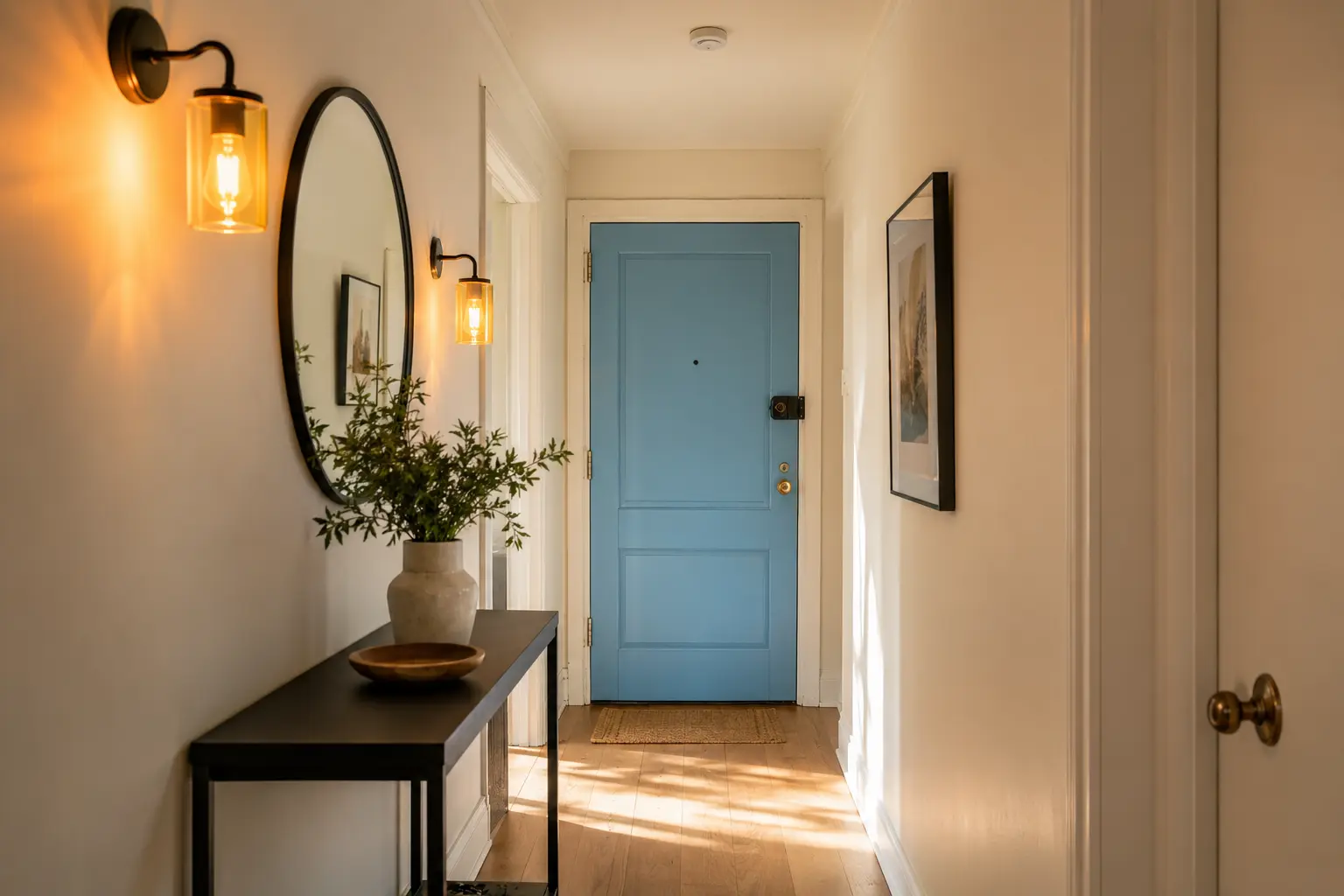
Make the entry feel intentional with one mirror or light
A mirror or small light can make an entry that opens directly into the home feel deliberate rather than improvised. Place the mirror where it helps with a final check or reflects daylight, and choose a lamp only if the cord and depth do not interfere with the walkway.
Reset the zone weekly, not seasonally
A small entryway needs frequent editing because it has no extra room to absorb clutter. Once a week, return shoes, empty bags, recycle paper, shake the mat, and move out-of-season items away from the door. The reset should take minutes; if it takes longer, the zone is holding too much.
The takeaway
Keep the change easy to live with.
A home without a mudroom works best when the entry is treated as a small routine, not a storage room. Protect the walking path, add hooks and shoe limits, prepare for wet items, keep one tiny command surface, and reset the zone before clutter spreads into the rest of the home.
Helpful answers
Questions readers often ask
What can I use if my home has no mudroom?
Use a small landing zone beside the door with hooks, a shoe limit, one tray for keys, and a washable mat or boot tray for wet items.
How do I stop a small entryway from becoming cluttered?
Keep only the current rotation near the door, give each category a visible limit, and reset the zone weekly before overflow spreads into the next room.
Keep the guide close
Save all 9 ideas for your next home reset.
Keep this visual guide nearby and return when you are ready to make one simple, useful change at a time.
Save on Pinterest