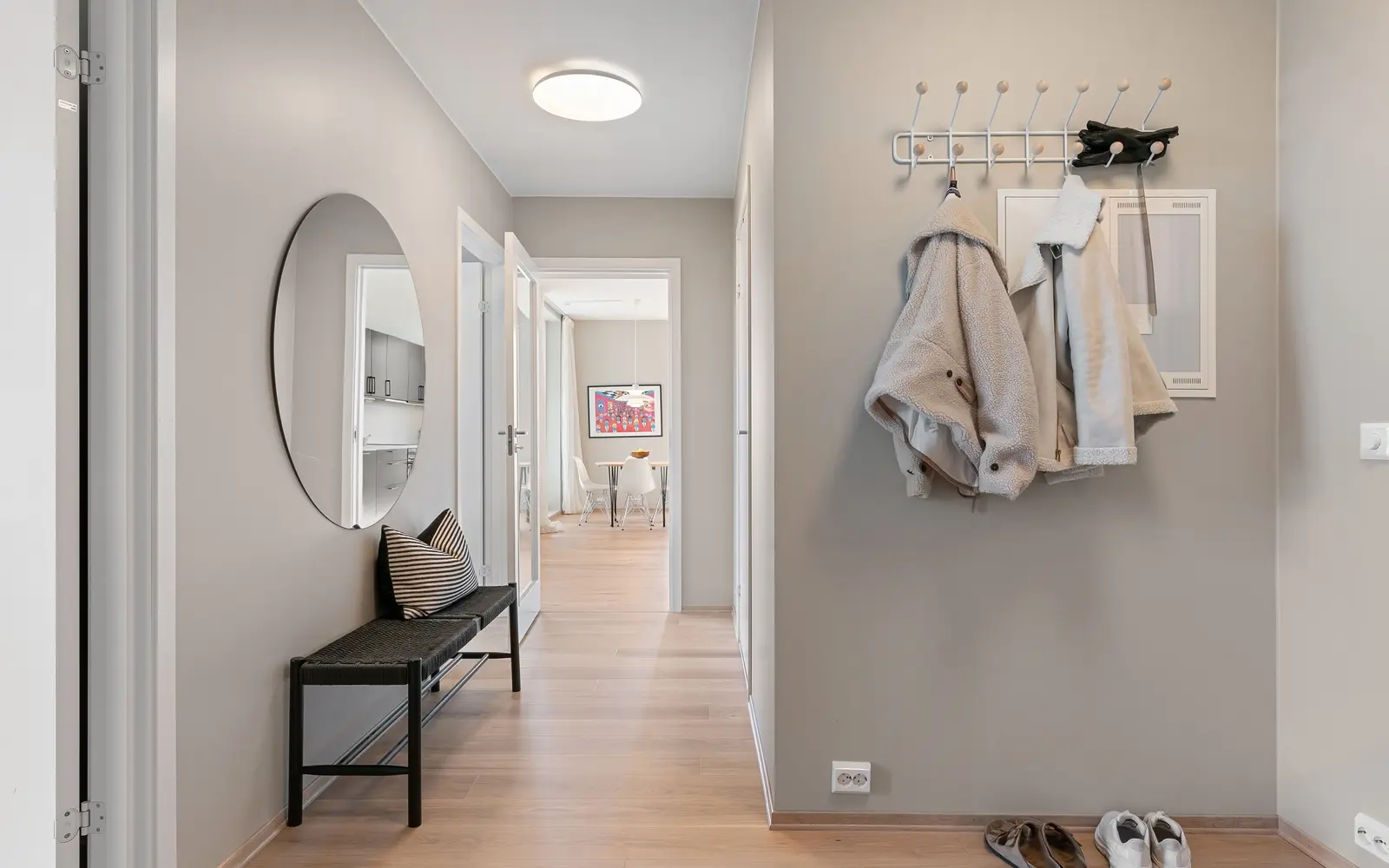
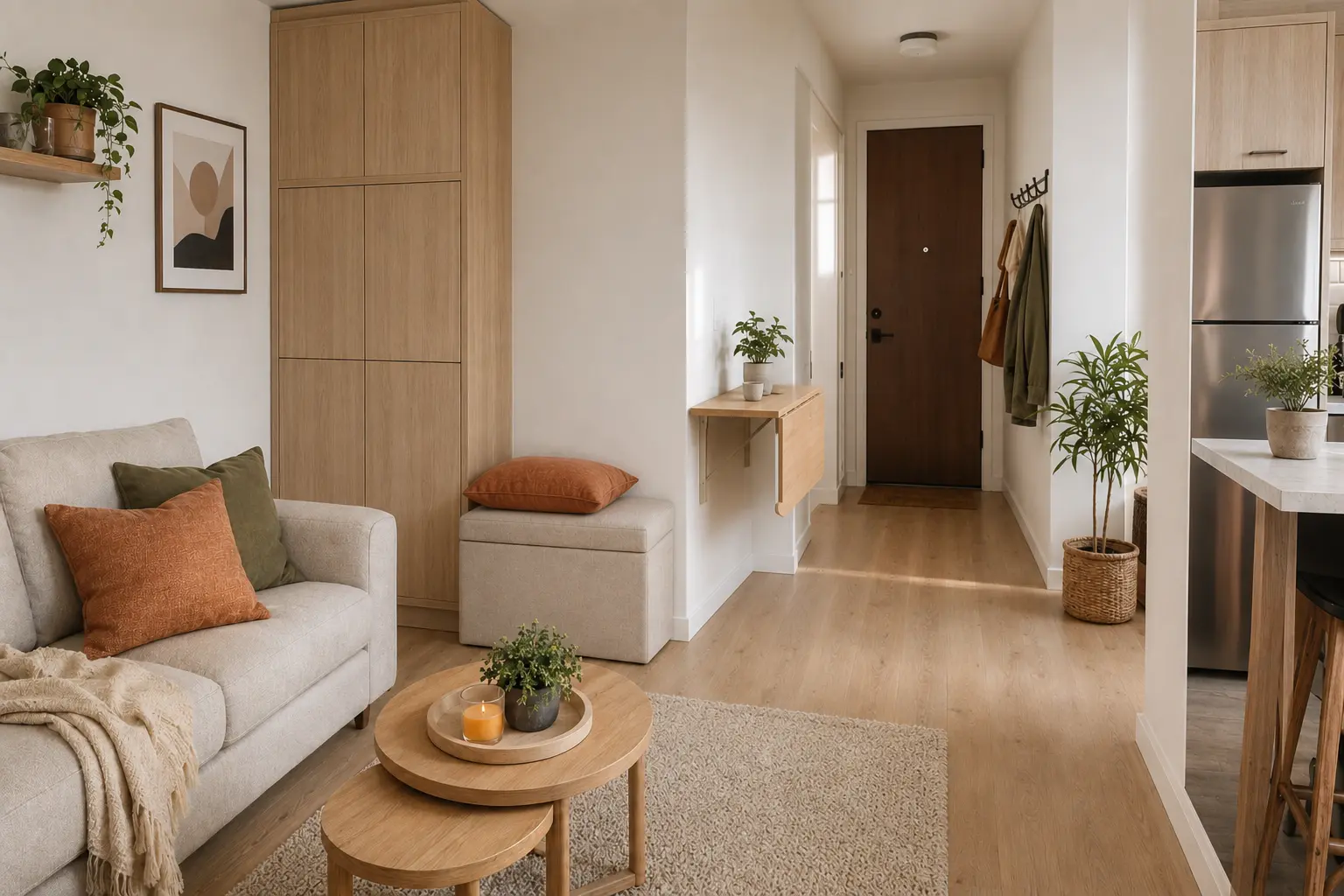
Less clutter, more room
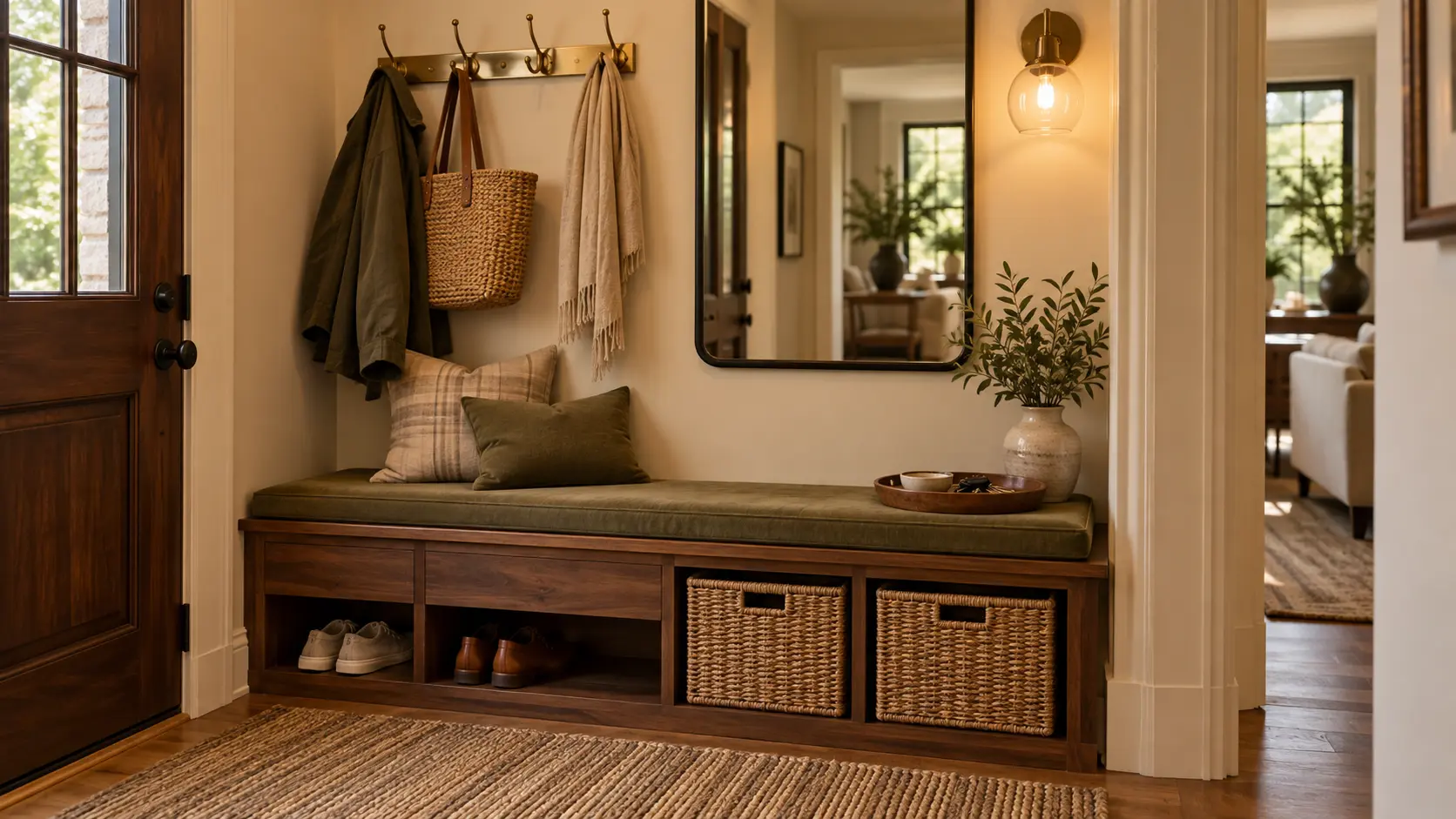
Entryway Storage Bench Measurement Guide for Small Hallways
How to choose an entryway storage bench that adds seating, shoe storage, and drop-zone order without blocking a narrow hallway.
An entryway bench can solve three problems at once: shoes, bags, and a place to sit. In a small hallway, though, the wrong bench can become the obstacle everyone walks around. Start with clearance, door swing, and daily traffic before choosing style.
Buying notes
Before a product earns space in your home
Use these checks to avoid buying a piece that looks good in a photo but fails in daily life.
Measure the exact space
Check materials and cleaning
Match finish and light tone
Keep access and walkways clear
Use this guide to compare: Entryway storage bench · Shoe storage bench · Woven storage baskets · Wall hooks · Entryway mirror · Key tray
Measure the walkway with the bench in mind
Measure the hallway width, then subtract the bench depth. The remaining walkway should feel comfortable while carrying groceries, bags, or laundry. A beautiful bench is not useful if people bump it every time they enter.
Check door swing and closet access
Open the front door, closet doors, and nearby room doors fully. The bench, baskets, cushion, shoes, and hooks should not block the movement path. If the entry door opens inward, a shorter bench may work better than a long one.
Pick storage based on shoe behavior
Open cubbies work when shoes are used daily and can stay visible. Baskets hide visual clutter but need enough space to pull out. Closed drawers look calmer but can become frustrating if everyone leaves shoes beside them instead of opening them.
Keep seating height comfortable
A bench that is too low feels awkward for tying shoes; one that is too high becomes a shelf, not a seat. Compare the height to a dining chair or existing bench and account for the cushion thickness.
Plan hooks and mirror separately
The bench is only one part of the entry system. Hooks should sit where coats and bags do not hit faces or block the door. A mirror should reflect light or create a last-check moment without forcing people to stand in the walkway.
Avoid overloading the drop zone
A tray for keys, one basket for daily shoes, and a small hook zone can be enough. Too many bins and labels make a small entry look busier. Keep seasonal items somewhere else if the bench starts to overflow.
Use the one-week hallway test
Before buying, place a chair or box where the bench would sit for a week. If the temporary footprint annoys you, the real bench will too. If the zone feels useful, measure the exact maximum width and depth before shopping.
The takeaway
Keep the change easy to live with.
The right entryway bench makes leaving and returning easier without narrowing the hallway. Measure clearance, match storage to real habits, and keep the whole drop zone simple.
Keep the guide close
Save all 7 ideas for your next home reset.
Keep this visual guide nearby and return when you are ready to make one simple, useful change at a time.
Save on Pinterest