Make every inch count
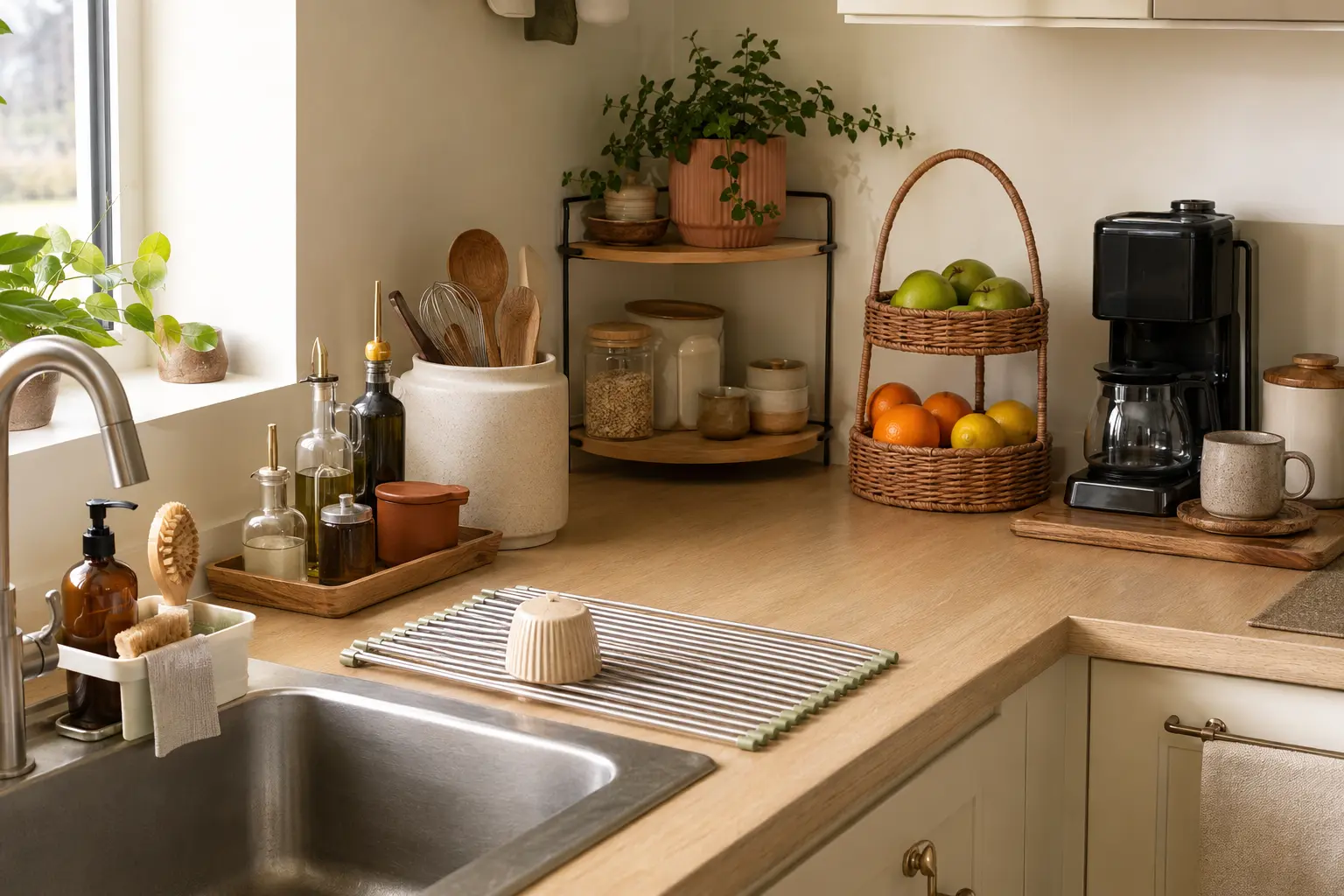
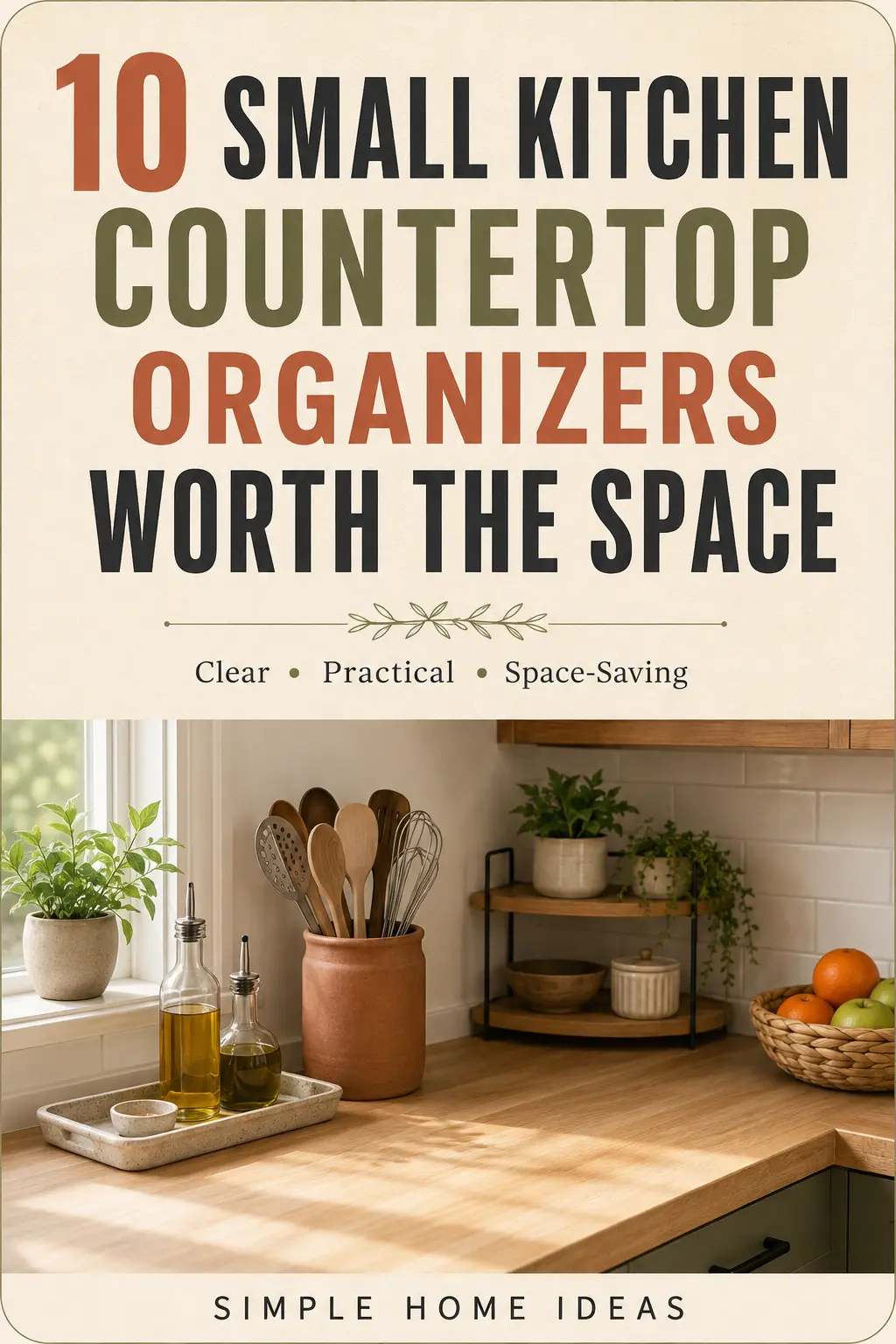
10 Small Kitchen Countertop Organizers Worth the Space
Choose compact organizers that protect preparation space, group daily essentials, and keep a small counter easy to reset.
Countertop organizers help only when they preserve more working surface than they consume. In a small kitchen, every item that stays visible should support a daily routine, be easy to clean around, and have a footprint that matches the space. Begin by clearing the counter completely, then return the essentials in small, defined groups rather than adding containers to existing clutter.
Before you buy
Quick decision helper
Match the organizer to the mess you repeat every day, then buy the smallest piece that solves it.
| If the problem is | Start with | Wait on |
|---|---|---|
| Utensils spread across the prep zone. | A slim utensil crock or divided tray near the stove. | Large countertop towers that take over cutting space. |
| Soap, sponge, and brush crowd the sink edge. | A washable sink caddy with drainage. | Closed bins that trap water or hide dirty tools. |
| Coffee items scatter every morning. | One tray that holds only the daily coffee setup. | A full coffee station if it blocks your main counter. |
Buying notes
Before a product earns space in your home
Use these checks to avoid buying a piece that looks good in a photo but fails in daily life.
Measure the exact space
Check materials and cleaning
Match finish and light tone
Keep access and walkways clear
Use this guide to compare: Narrow oil tray · Compact utensil crock · Two-tier corner shelf · Vertical fruit basket · Coffee station tray · Ventilated sink caddy
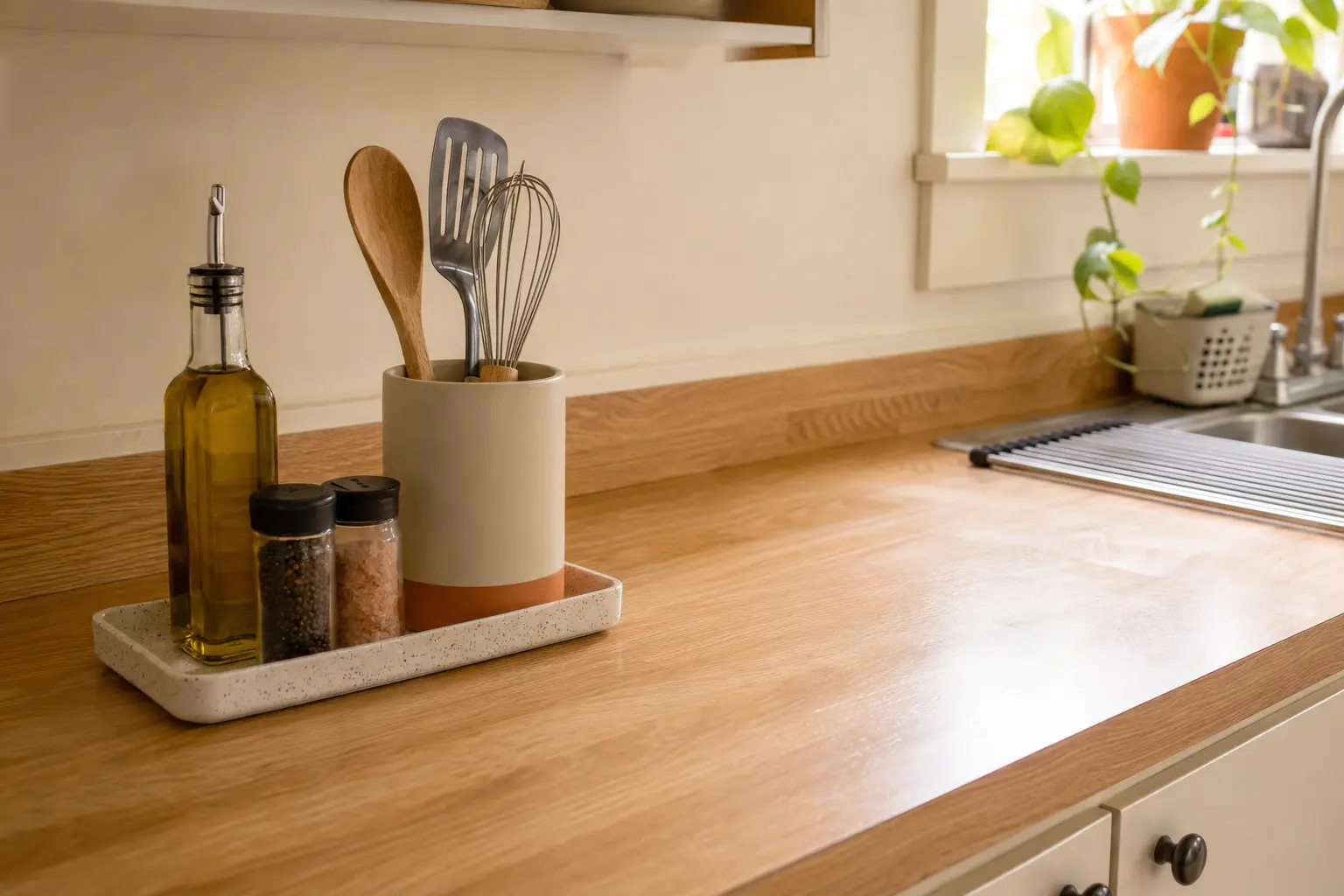
Use one narrow tray for oils and seasonings
A shallow tray turns several bottles into one movable group and catches small drips before they spread across the counter. Keep only the oils and seasonings used most days near the cooking area, leaving safe clearance from heat and following each product's storage instructions.
Choose a compact utensil crock
A utensil crock is useful when it holds a small set of tools used almost every day. Place rarely used whisks, specialty spoons, and duplicates in a drawer so the crock remains easy to scan and does not become top-heavy.
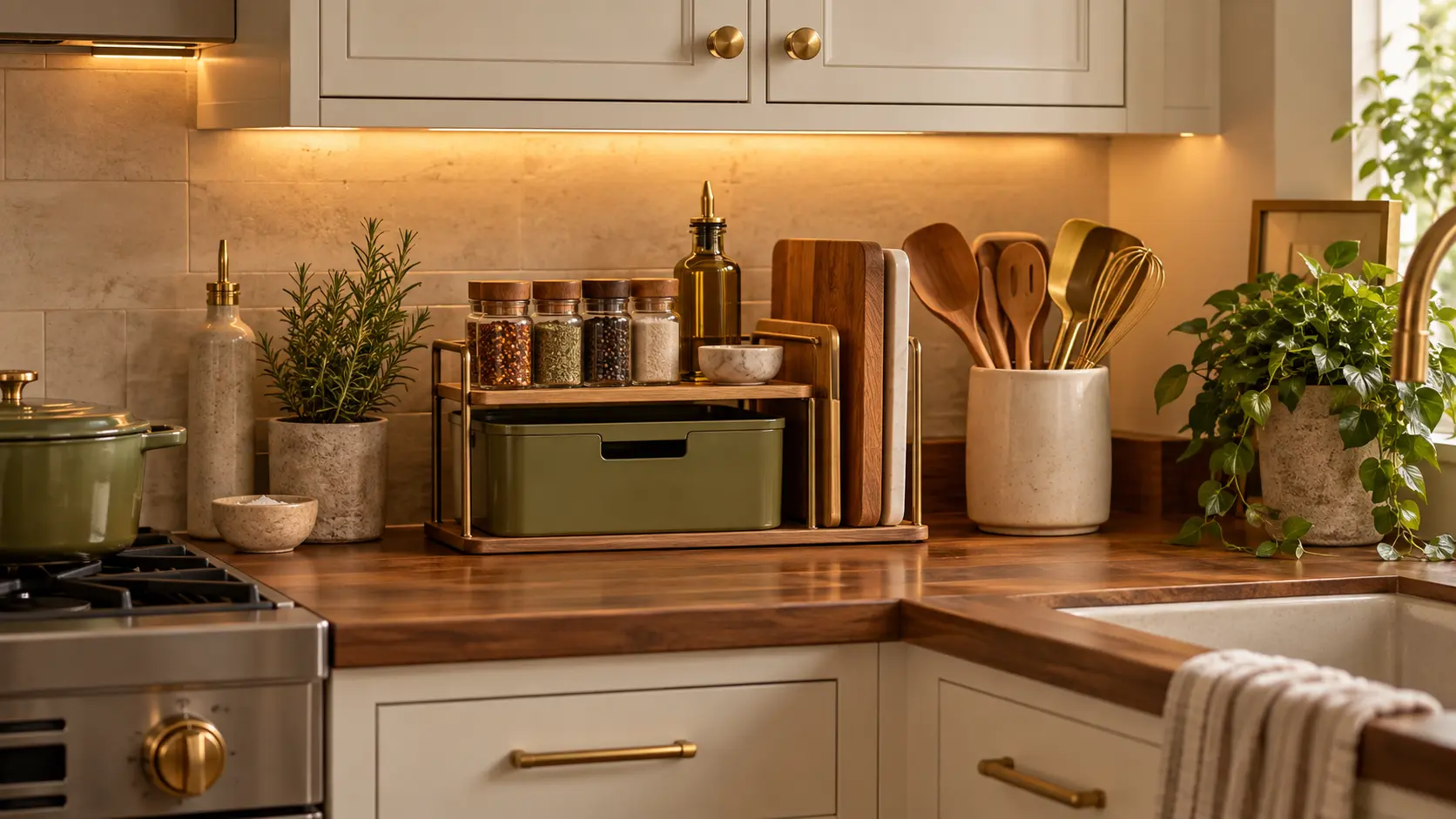
Add a two-tier shelf only in a quiet corner
A small corner shelf can use vertical space for tea, coffee, or breakfast supplies without spreading them across the worktop. It works best away from the main chopping area and only when both levels remain fully visible and reachable.
Use a vertical fruit basket for produce you actually eat
A two-level fruit basket can reduce width when it replaces several bowls, but it should not become long-term storage. Choose an open design for airflow, avoid overfilling, and keep produce that needs refrigeration elsewhere.
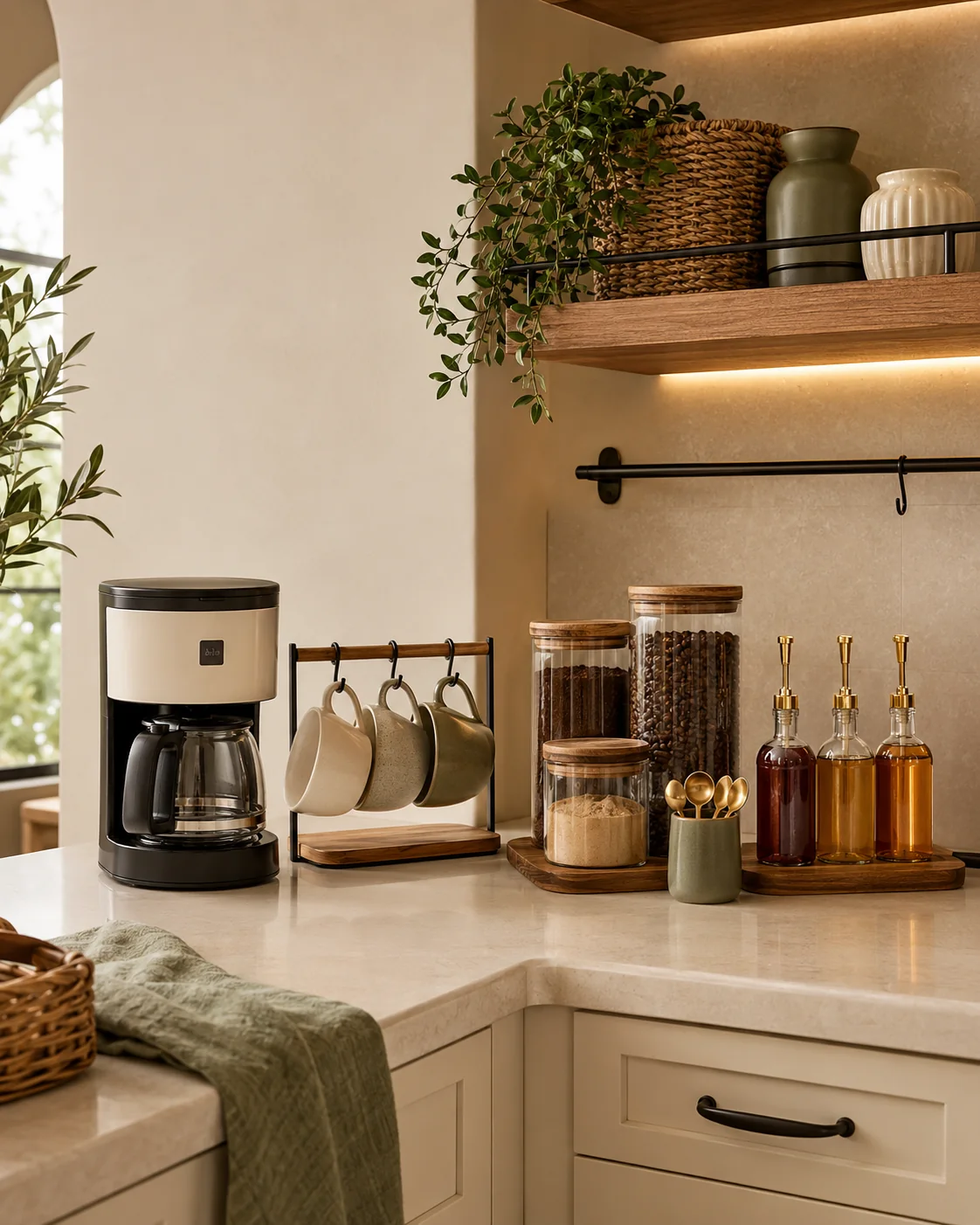
Create a contained coffee or tea station
Group the kettle or coffee maker with the few accessories used for that routine, such as a jar of tea, filters, or two favorite mugs. A small tray visually defines the station and makes it easier to move the accessories when the counter needs cleaning.
Keep the sink caddy small and ventilated
A compact caddy gives the sponge, brush, and dish soap a defined place while allowing them to drain. Look for a removable base or open construction that is easy to rinse, and discard worn tools instead of storing replacements beside the sink.
Try a roll-up drying rack for occasional loads
A roll-up rack can sit over part of the sink while dishes drain, then store in a drawer when dry. Check the sink width and weight capacity before buying, and keep a permanent rack only if you genuinely use it every day.
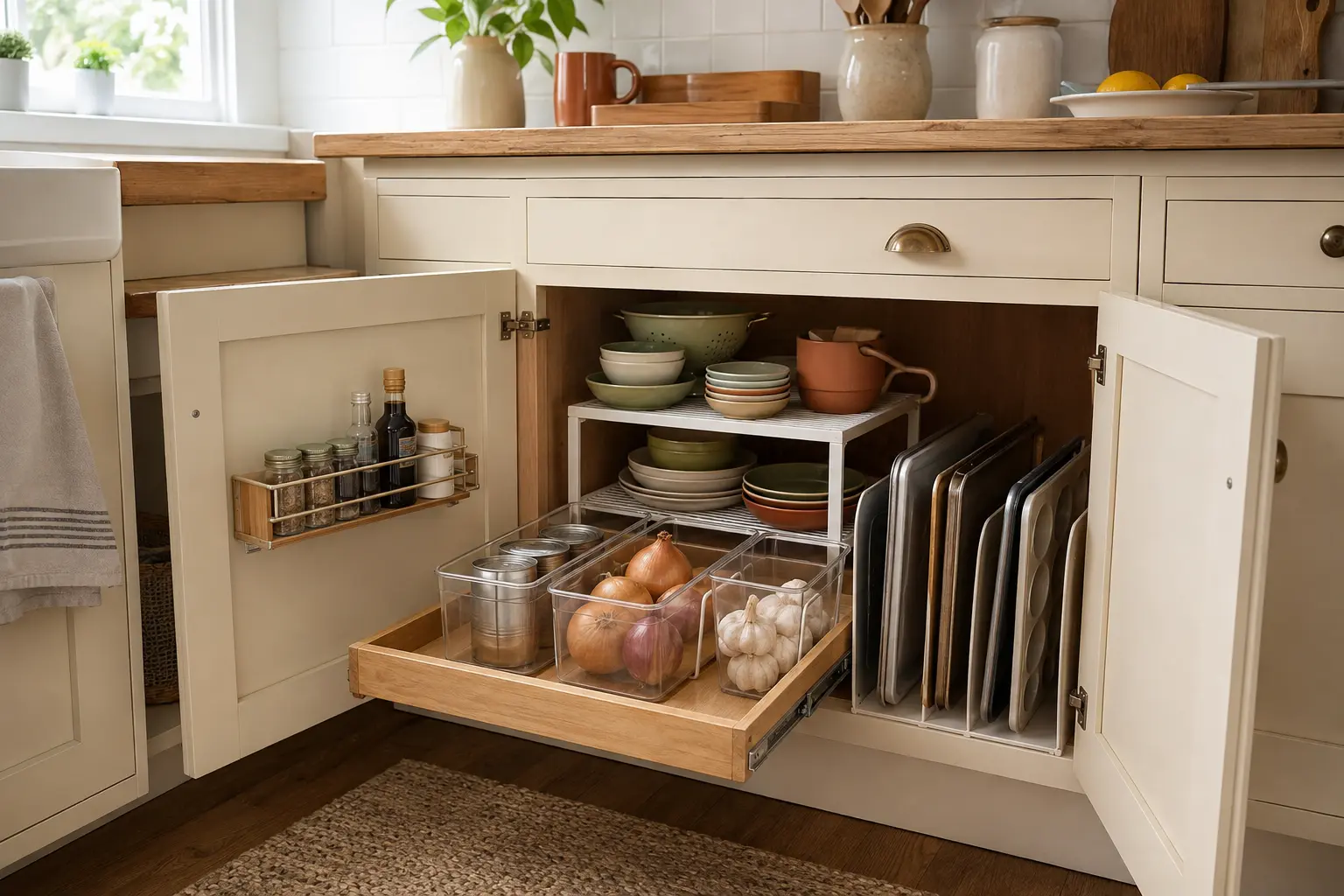
Move paper towels beneath a cabinet
An under-cabinet or inside-door holder frees a small but valuable patch of counter. Use a removable option when renting, confirm that it does not interfere with doors or lighting, and place it where a wet hand can reach without crossing the cooking zone.
Give appliance cables a simple boundary
Loose cables make even a tidy counter appear busy. Use the appliance's built-in cord storage where available, keep cables away from heat and water, and position frequently used appliances close to the correct outlet without stretching the lead.
Apply the daily-use rule before buying anything
An organizer deserves counter space only when it supports something used nearly every day. Before purchasing, mark its proposed footprint with paper, live with that reduced work area for a day, and confirm that the organizer will make the routine faster rather than simply more decorated.
The takeaway
Keep the change easy to live with.
A calm small-kitchen counter is built from a few compact zones and generous empty space. Group daily essentials, move occasional tools into storage, and judge every organizer by the preparation space and cleaning effort it saves.
Helpful answers
Questions readers often ask
How much of a small countertop should stay empty?
Keep one continuous preparation area at least as wide as your largest cutting board. Organizers should group daily tools around that zone, not occupy it.
Which countertop organizer should I buy first?
Start with the routine that creates the most loose items, usually cooking oils, sink tools, or coffee supplies. Measure its footprint before buying.
Keep the guide close
Save all 10 ideas for your next home reset.
Keep this visual guide nearby and return when you are ready to make one simple, useful change at a time.
Save on Pinterest