Less clutter, more room
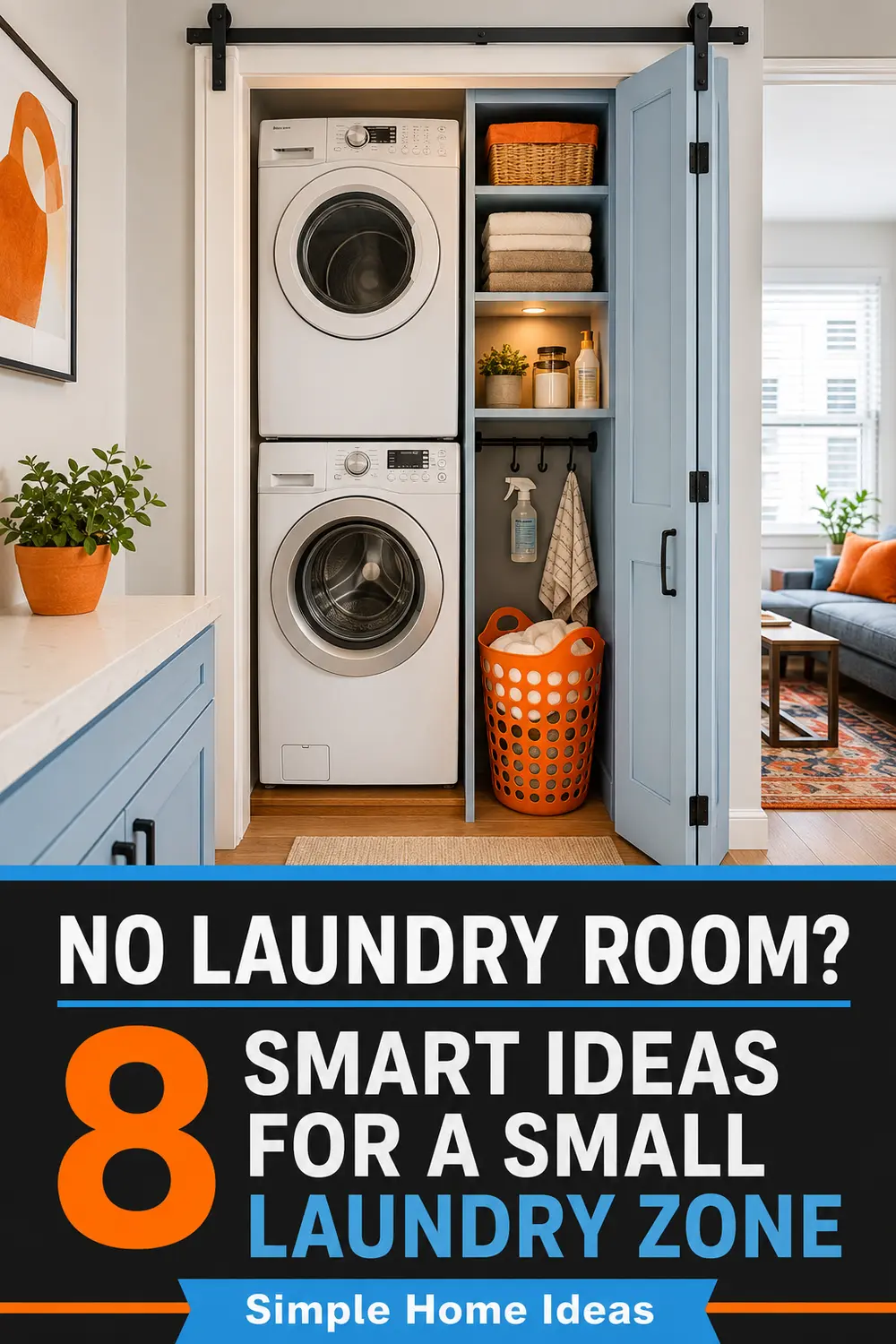
8 Small Laundry Area Ideas for Homes Without a Laundry Room
Create a practical laundry zone in a closet, bathroom corner, kitchen alcove, or hallway without letting supplies take over your home.
A home does not need a dedicated laundry room to have a calm, workable laundry routine. The goal is to define one compact zone around the appliances or washing supplies, protect ventilation and access, and give each stage—sorting, washing, drying, folding, and putting away—a simple place. These eight ideas work with small alcoves, closets, bathrooms, kitchens, and hallway niches without pretending every home has spare square footage.
Before you buy
Quick laundry-zone helper
Start with the part of the routine that spreads into the room, then add the smallest support that contains it.
| If the problem is | Try | Wait before |
|---|---|---|
| Dirty laundry spreads across several rooms. | One divided or handled hamper near the approved laundry location. | Buying several wide sorting baskets. |
| Supplies crowd the appliance top. | One shallow shelf and a removable handled tray. | A deep cabinet that blocks controls or service access. |
| Clean laundry has nowhere to be folded. | A temporary stable surface used only when the appliance is off. | Adding a permanent counter without checking clearances. |
Buying notes
Before a product earns space in your home
Use these checks to avoid buying a piece that looks good in a photo but fails in daily life.
Measure the exact space
Check materials and cleaning
Match finish and light tone
Keep access and walkways clear
Use this guide to compare: Slim laundry hamper · Over-washer shelf · Divided laundry basket · Wall-mounted drying rack · Fold-down laundry surface · Handled supply tray
Choose one laundry zone before buying organizers
Start with the place where washing actually happens or where supplies can live closest to it. Mark the appliance doors, water connections, outlets, ventilation clearances, and the path people use through the room. A useful zone supports the routine without narrowing the only walkway or spreading baskets across several rooms.
Use height without blocking appliance access
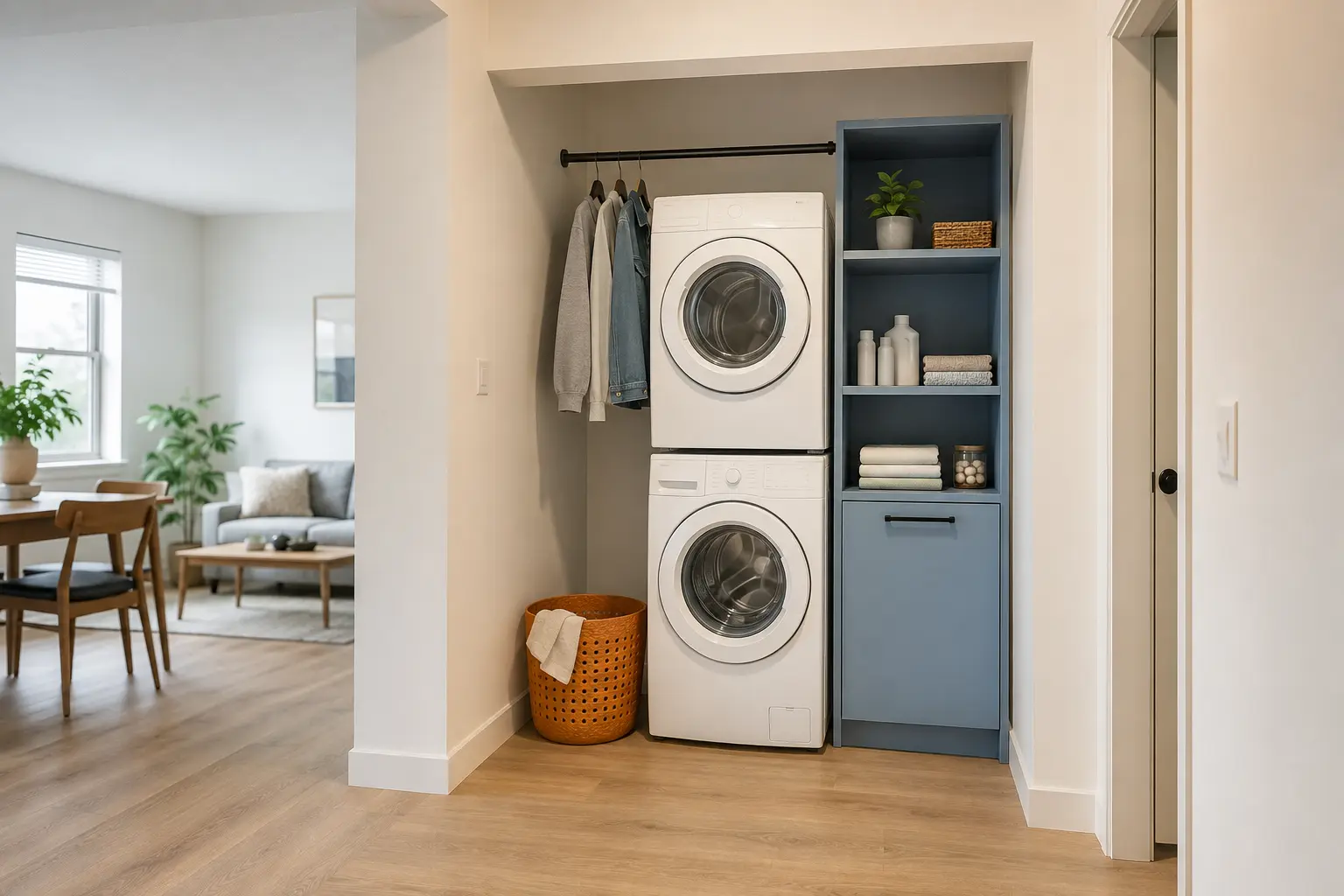
A shallow shelf or slim cabinet above a washer can hold detergent, stain supplies, and spare cloths while keeping the floor free. Keep controls, lids, doors, hoses, filters, and shut-off points accessible. Storage is not useful if it must be dismantled whenever the machine needs cleaning or service.
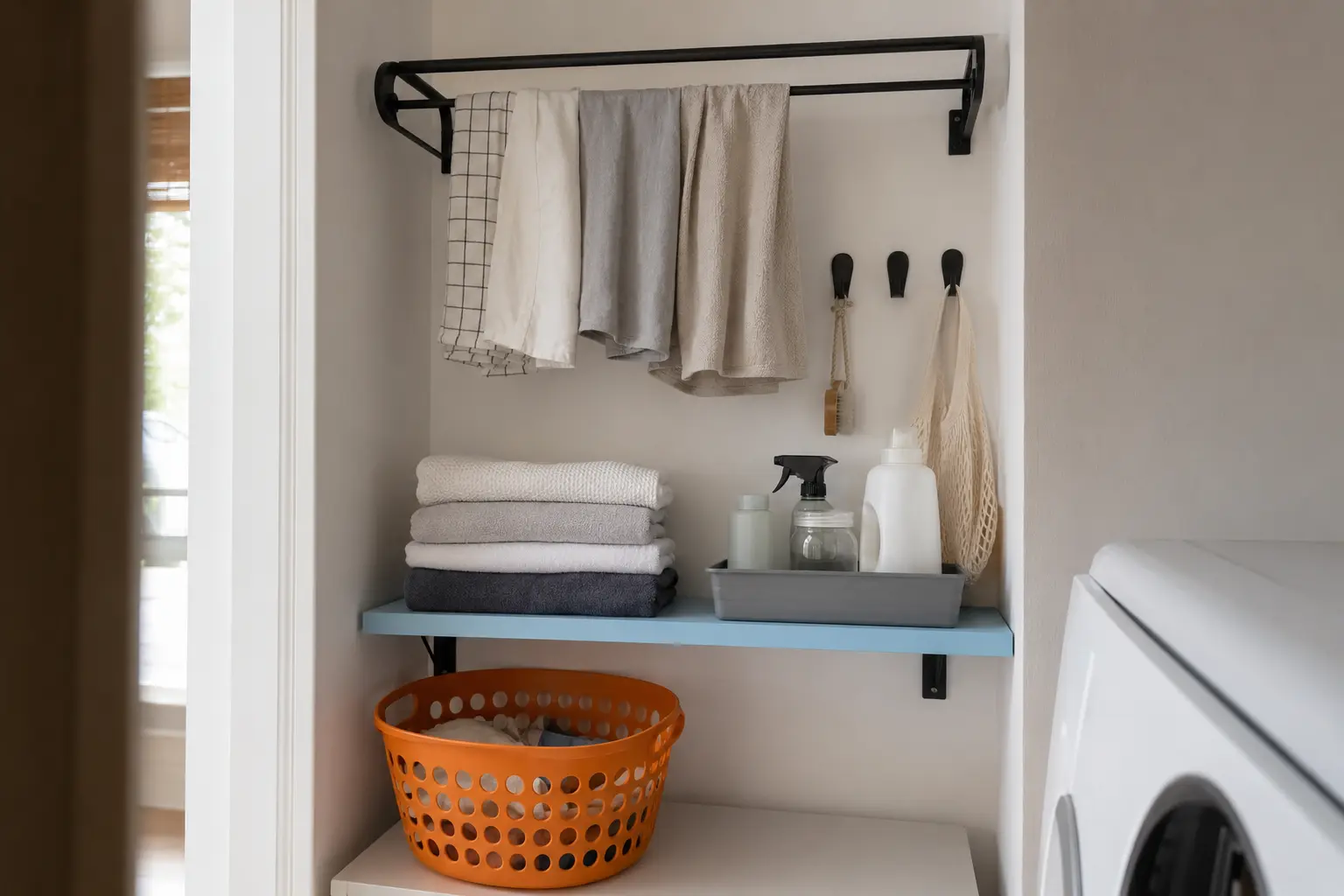
Create a narrow sorting system
Instead of several wide hampers, use one divided basket, two slim bags on sturdy hooks, or a single handled hamper that moves to the machine. Label only the categories your household truly separates. The smallest system that matches your real routine will be easier to maintain.
Add a temporary folding surface
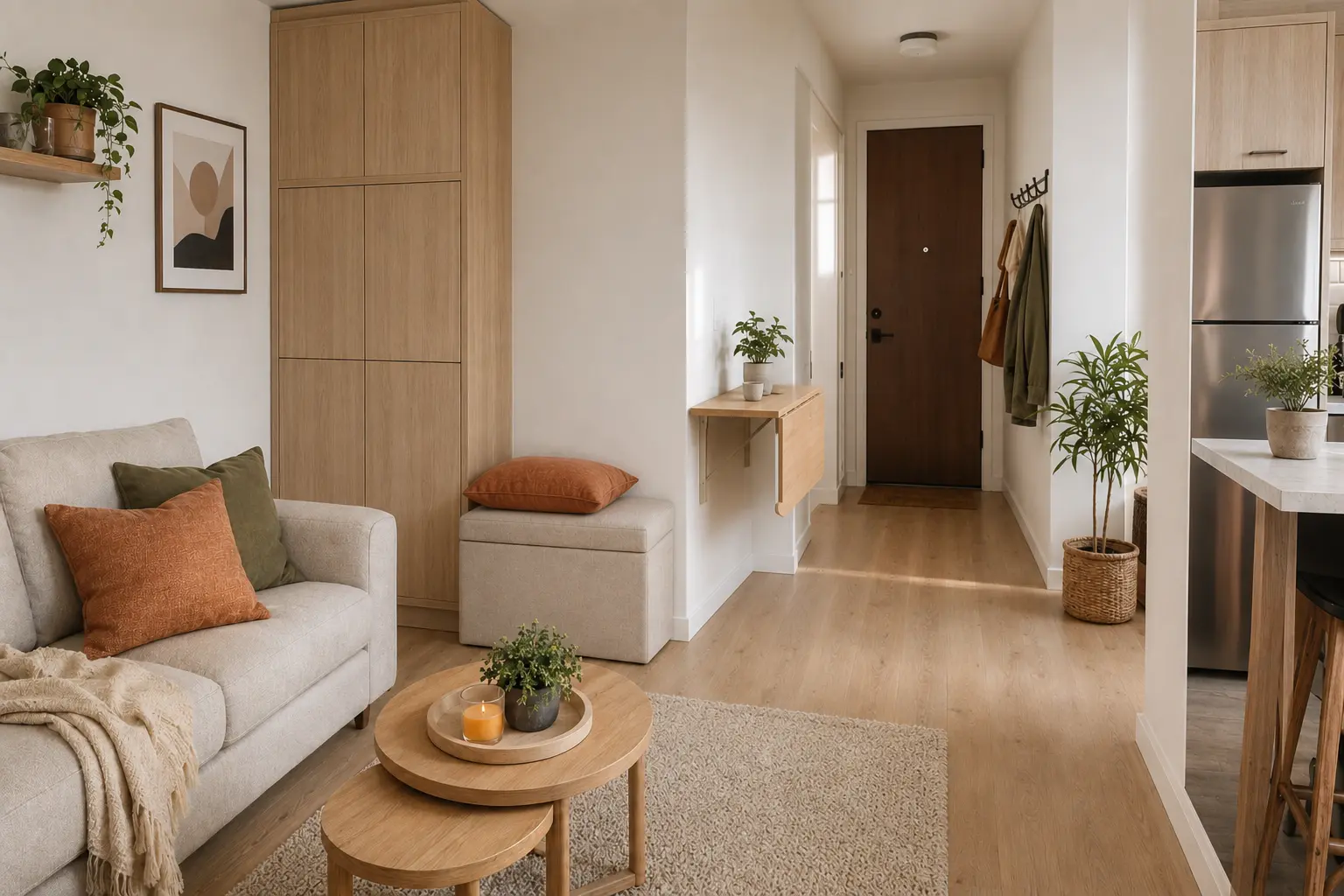
A permanent counter is not always possible. A stable tray placed on a front-loading machine when it is not running, a wall-mounted drop-leaf surface, or a nearby table can provide a short folding zone. Clear it after each load so it does not become a new place for household clutter.
Dry small items vertically
A short removable rail, over-door rack, or fold-flat drying rack can handle cloths and lightweight garments without occupying the floor all day. Position it where damp items will not touch electrical controls, block airflow, or drip onto surfaces that cannot handle moisture.
Keep daily supplies in one removable tray
Group the products used for most loads in a washable handled tray. Backstock and occasional treatments can live elsewhere. A removable group is easier to wipe, inspect, and move when you need access behind or above the appliance.
Hide the zone only when it can still breathe
A curtain, sliding door, or existing closet door can reduce visual noise, but it must not interfere with appliance ventilation, heat release, door swing, hoses, or service access. An open, tidy zone is better than a beautiful enclosure that ignores safety requirements.
Finish each load with a five-minute reset
Return supplies to the tray, empty lint according to the appliance instructions, hang the drying piece flat, wipe damp surfaces, and move clean laundry to its destination. This short reset keeps a small laundry corner from overflowing into the room around it.
The takeaway
Keep the change easy to live with.
A successful small laundry area is not a miniature showroom. It is one clearly defined zone with protected appliance access, shallow vertical storage, a movable sorting basket, a temporary folding surface, and a quick reset. Build around the real washing routine and safety instructions first; add decorative concealment only after the zone works.
Helpful answers
Questions readers often ask
Where can I create a laundry area without a laundry room?
Use the location already approved and equipped for the appliances, then organize the nearest closet, alcove, bathroom, kitchen, or hallway niche without blocking ventilation, connections, or the walking path.
How do I hide a small laundry area safely?
Use a curtain or existing door only when the appliance manufacturer’s ventilation, heat, clearance, door-swing, and service-access requirements remain fully protected.
Keep the guide close
Save all 8 ideas for your next home reset.
Keep this visual guide nearby and return when you are ready to make one simple, useful change at a time.
Save on Pinterest