Make every inch count
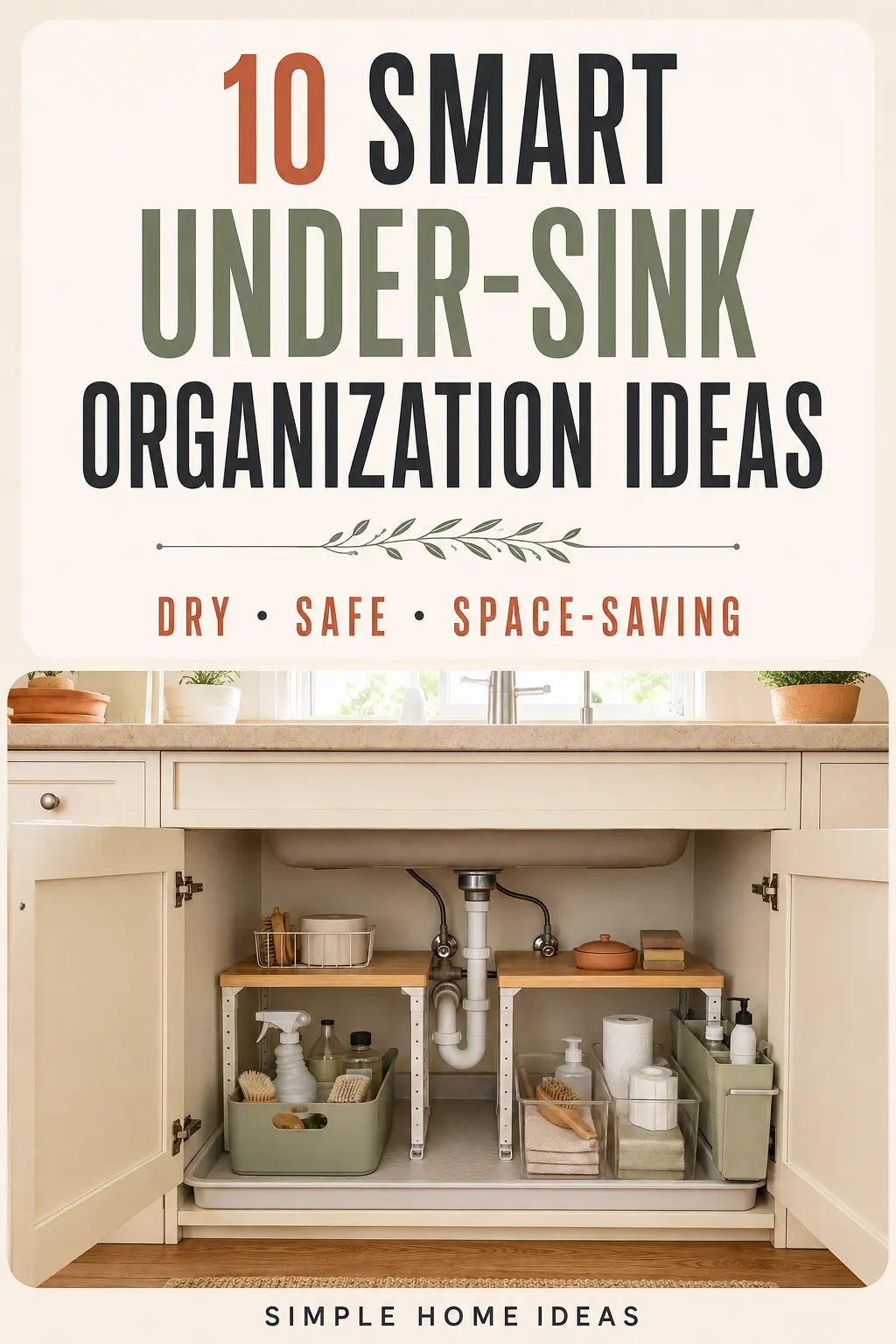
10 Under-Sink Kitchen Organization Ideas for Small Spaces
Turn an awkward cabinet into a dry, visible, and easy-to-maintain home for cleaning supplies and everyday essentials.
The cabinet beneath a kitchen sink is difficult because pipes, hinges, and the basin interrupt the usable space. It also needs to remain easy to inspect. A good system does not hide the plumbing or fill every gap; it keeps the base dry, makes daily supplies simple to lift out, and leaves enough clearance to notice a leak quickly. Empty the cabinet first, then build a removable arrangement around the obstacles you actually have.
Before you buy
Quick decision helper
Under the sink, the safest organizer is the one you can lift out quickly and clean easily.
| If the problem is | Start with | Wait on |
|---|---|---|
| Bottles fall over and leak. | A washable tray or handled caddy. | Fabric baskets that absorb spills. |
| Pipes split the cabinet in half. | A half shelf or narrow bin on each side. | Full-width organizers that fight the plumbing. |
| You cannot see what is running low. | Clear bins grouped by use. | Opaque boxes that hide duplicates. |
Buying notes
Before a product earns space in your home
Use these checks to avoid buying a piece that looks good in a photo but fails in daily life.
Measure the exact space
Check materials and cleaning
Match finish and light tone
Keep access and walkways clear
Use this guide to compare: Waterproof under-sink tray · Pull-out under-sink drawer · Handled cleaning caddy · Pipe-friendly shelf · Clear cleaning bins · Cabinet door sponge holder
Empty the cabinet and check for moisture
Remove everything, wipe the base, and look around pipe joints, the disposal, supply lines, and the back corners for dampness, staining, swelling, or a musty smell. Resolve a leak before adding organizers, and let the cabinet dry completely so a new liner does not trap moisture underneath.
Measure around the plumbing and hinges
Record the usable opening width, internal depth, height beneath the basin, and the position of every pipe, hinge, valve, filter, and disposal unit. Measure the narrowest point an organizer must pass through, not only the widest part of the cabinet box.
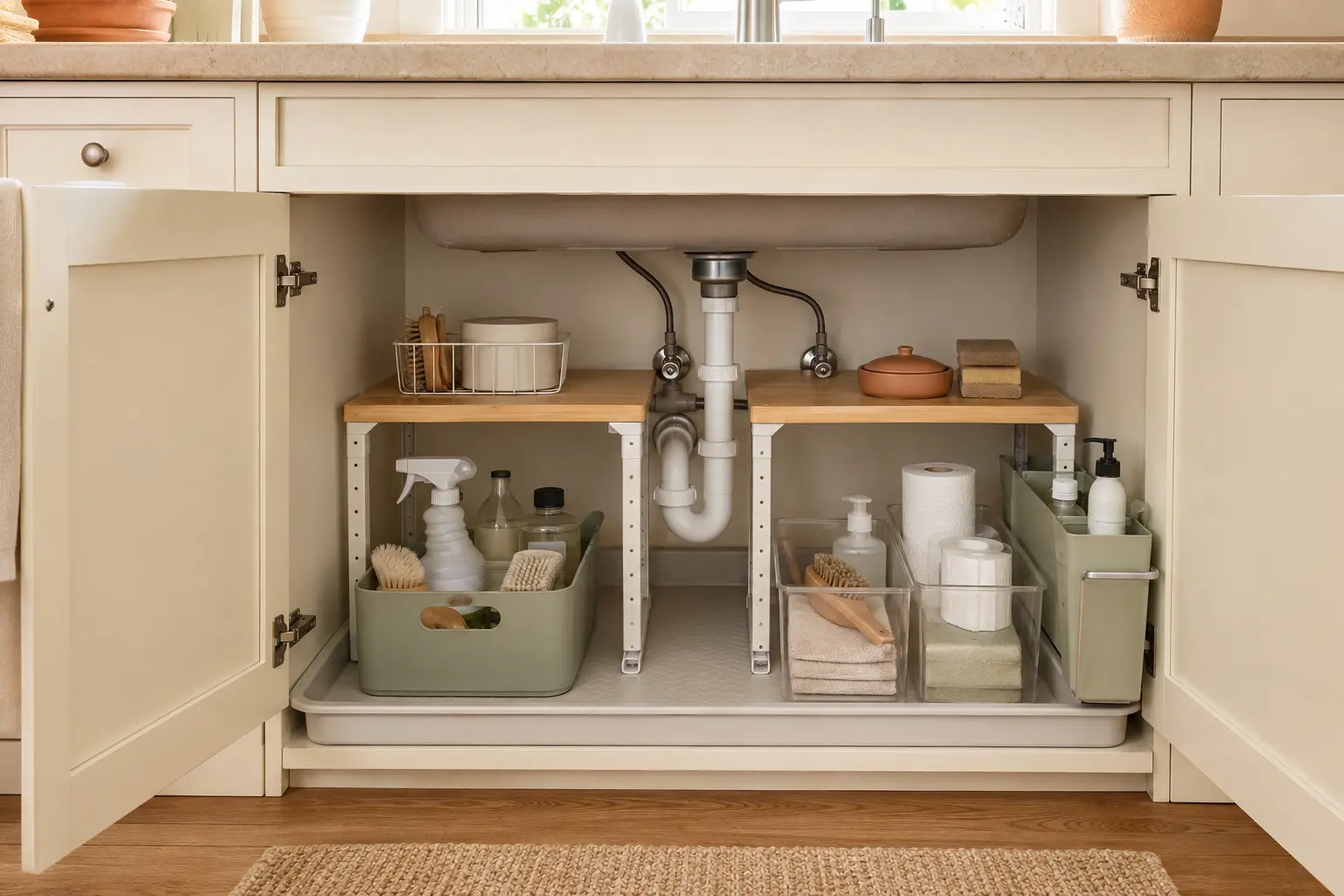
Protect the base with one washable tray
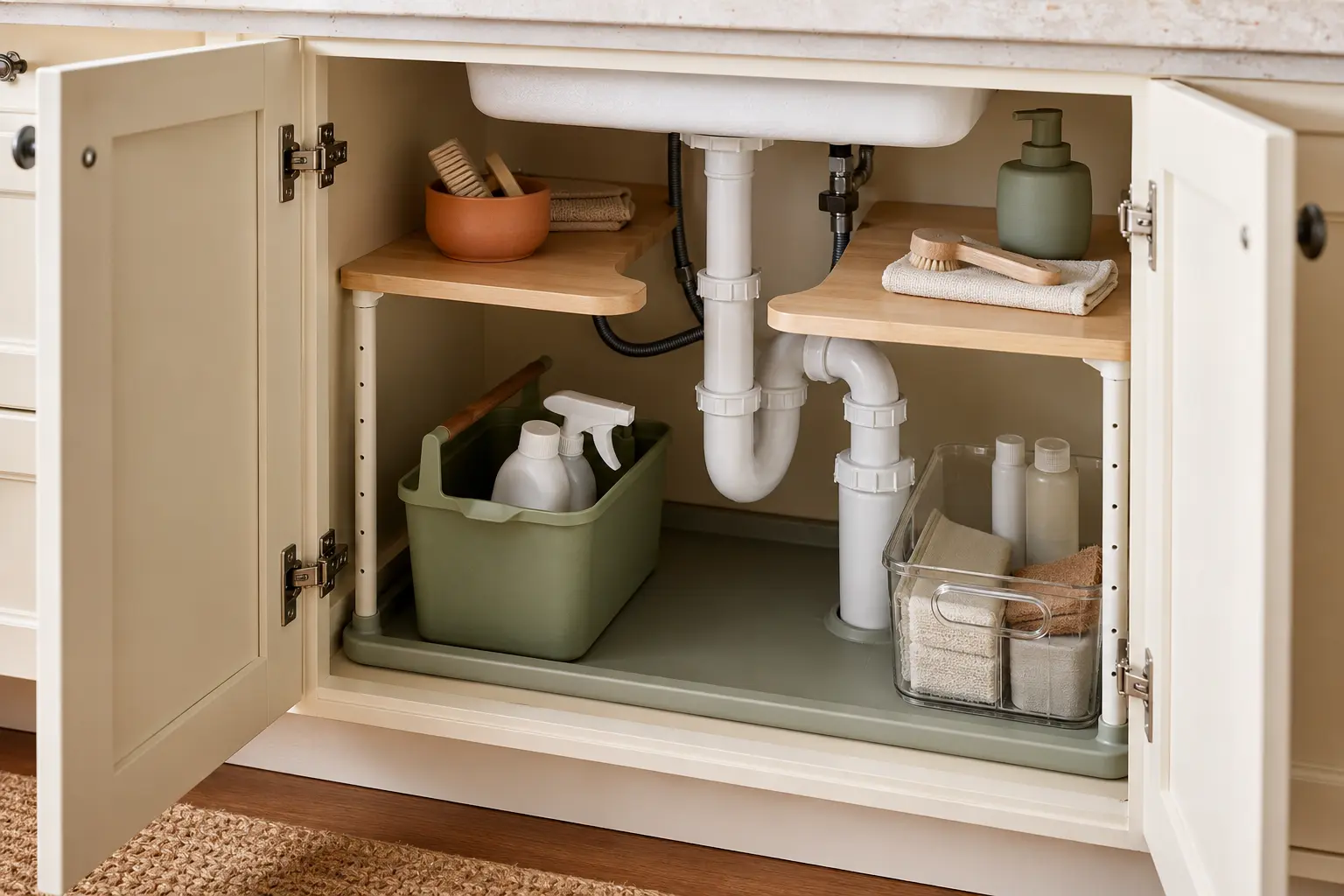
A single waterproof tray or removable liner catches small drips and makes the base easier to wipe. Choose a light colour so moisture and residue are visible, and use a size that can be lifted out without disconnecting plumbing or unloading the entire cabinet.
Give daily supplies a handled caddy
Keep the few products used for everyday sink and surface cleaning in one handled caddy. You can lift the whole group out in one movement, clean the cabinet easily, and carry the supplies to another room without searching through several bins.
Add a pipe-friendly shelf only where it fits
A U-shaped or adjustable shelf can create a second level around the drainpipe while keeping bottles and cloths visible. Check the shelf feet, basin depth, valves, and door clearance before buying; a simple half-shelf is often more useful than a large system forced into an awkward cabinet.
Use clear handled bins for separate categories
Group dishwasher supplies, spare sponges, reusable cloths, and rubbish bags in separate shallow bins. Transparent sides show what is running low, while handles make each category easy to remove for cleaning or maintenance.
Keep door storage shallow and lightweight
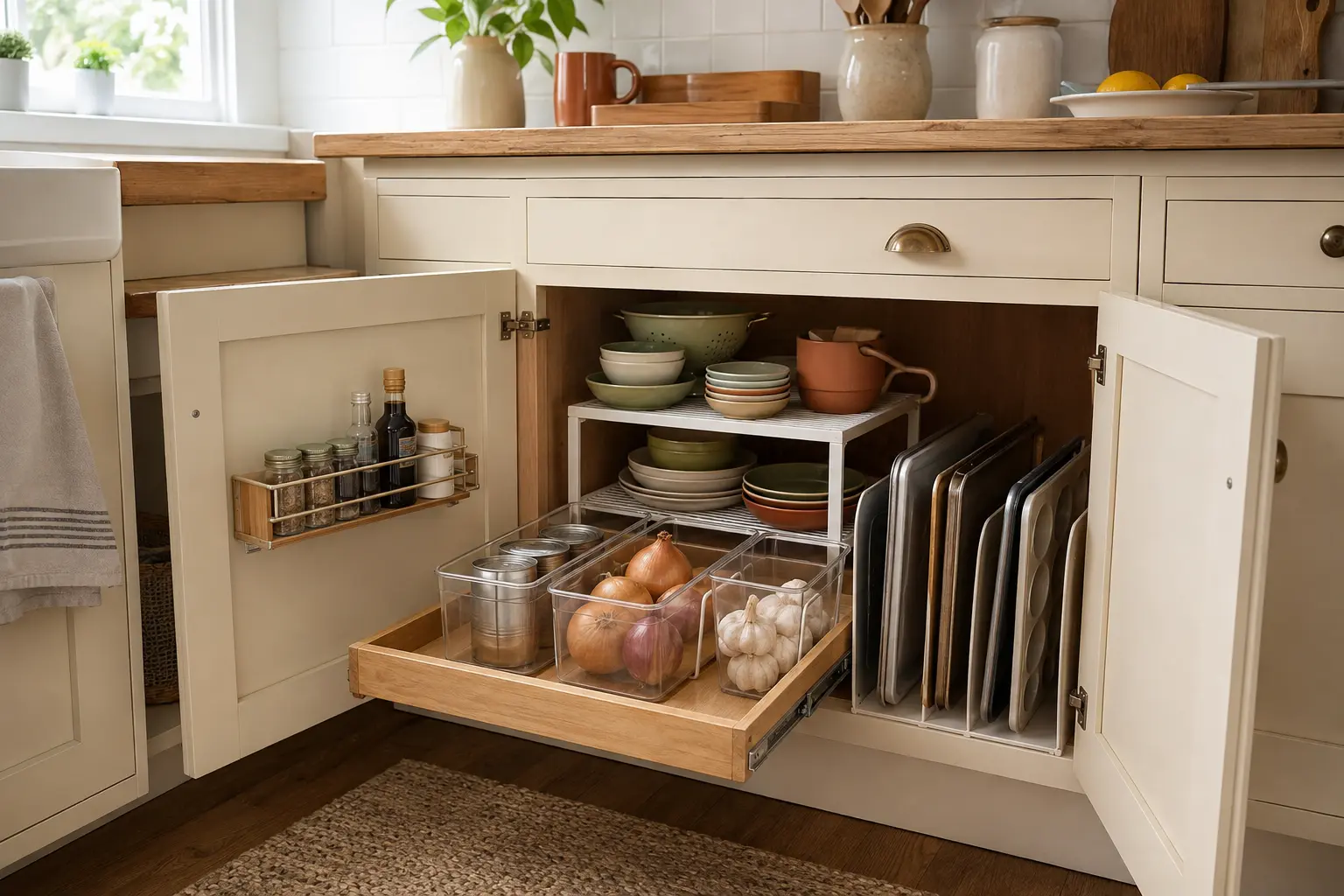
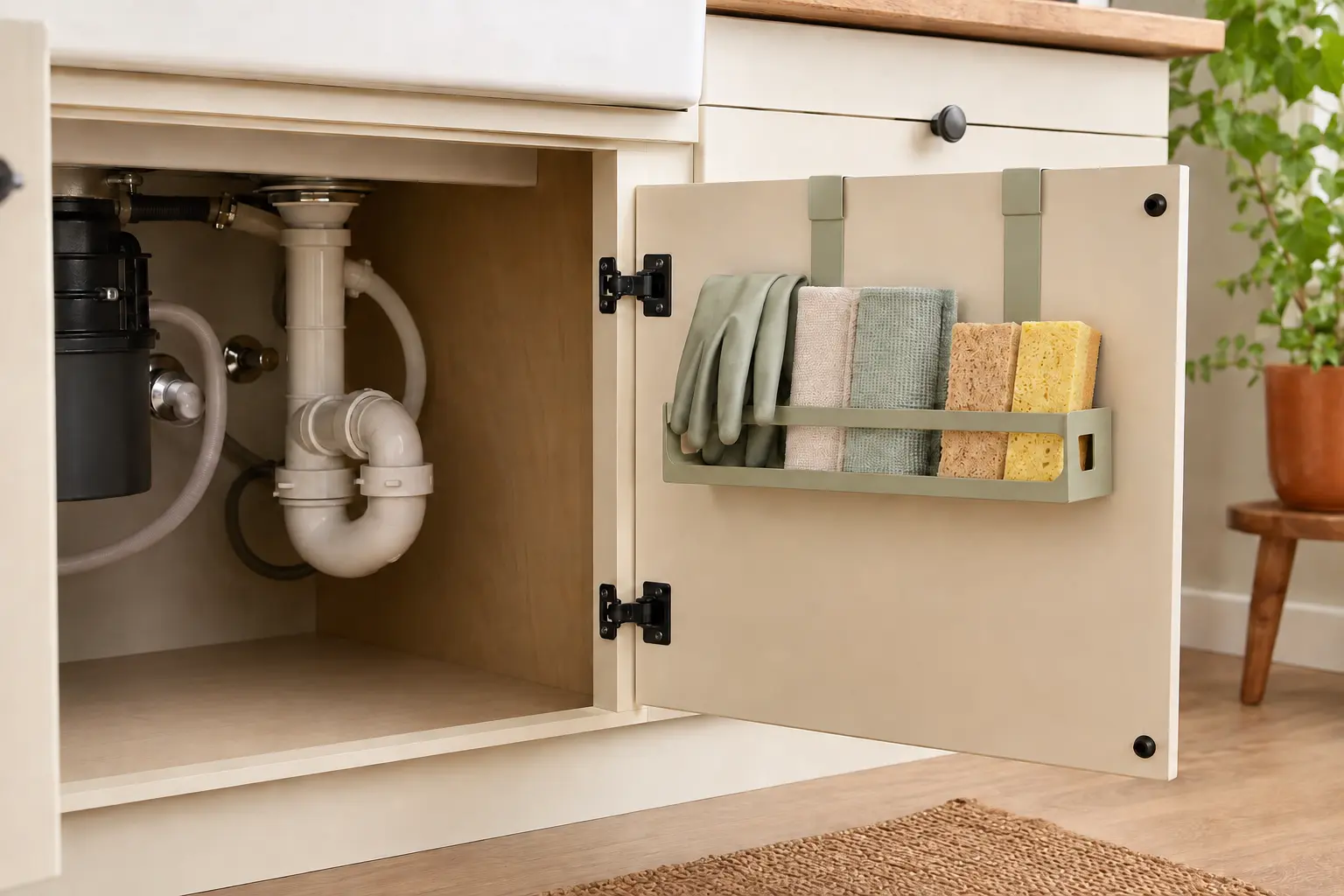
A removable hook or slim over-door rack can hold gloves, folded microfibre cloths, and spare sponges. Keep bottles and other heavy items inside the cabinet, and close the door slowly to confirm that the rack clears the shelf, hinges, and pipes.
Use one narrow sliding bin for deeper space
If the opening and pipes allow it, a narrow pull-out or smooth-sided bin can make the back of the cabinet easier to reach. Test its full path with the door open and make sure it does not catch on a hinge, valve, disposal unit, or the lip of the waterproof tray.
Keep cleaners in their original labelled containers
Follow each product label, never mix household cleaners, and do not transfer them into food or drink containers. Keep products securely away from children and pets, and separate anything the labels say should not be stored together. The under-sink cabinet is only suitable when it can be secured and the products can remain upright.
Finish with a five-minute monthly inspection
Lift out the caddy and bins, wipe the tray, check for dampness, and return only the supplies you still use. This short reset catches leaks and expired or damaged containers early while preventing the cabinet from slowly becoming an overflow zone.
The takeaway
Keep the change easy to live with.
A useful under-sink cabinet is dry, visible, safe, and easy to empty. Protect the base, leave plumbing accessible, group daily supplies in removable containers, and resist the urge to fill every inch.
Helpful answers
Questions readers often ask
What should never be blocked under the sink?
Keep shut-off valves, pipe joints, and the cabinet base visible enough to inspect. Storage should lift out quickly if there is a leak.
Is it safe to store cleaners under the sink?
Only when product labels permit it and the cabinet can keep them securely away from children and pets. Never mix cleaners or transfer them to food containers.
Keep the guide close
Save all 10 ideas for your next home reset.
Keep this visual guide nearby and return when you are ready to make one simple, useful change at a time.
Save on Pinterest